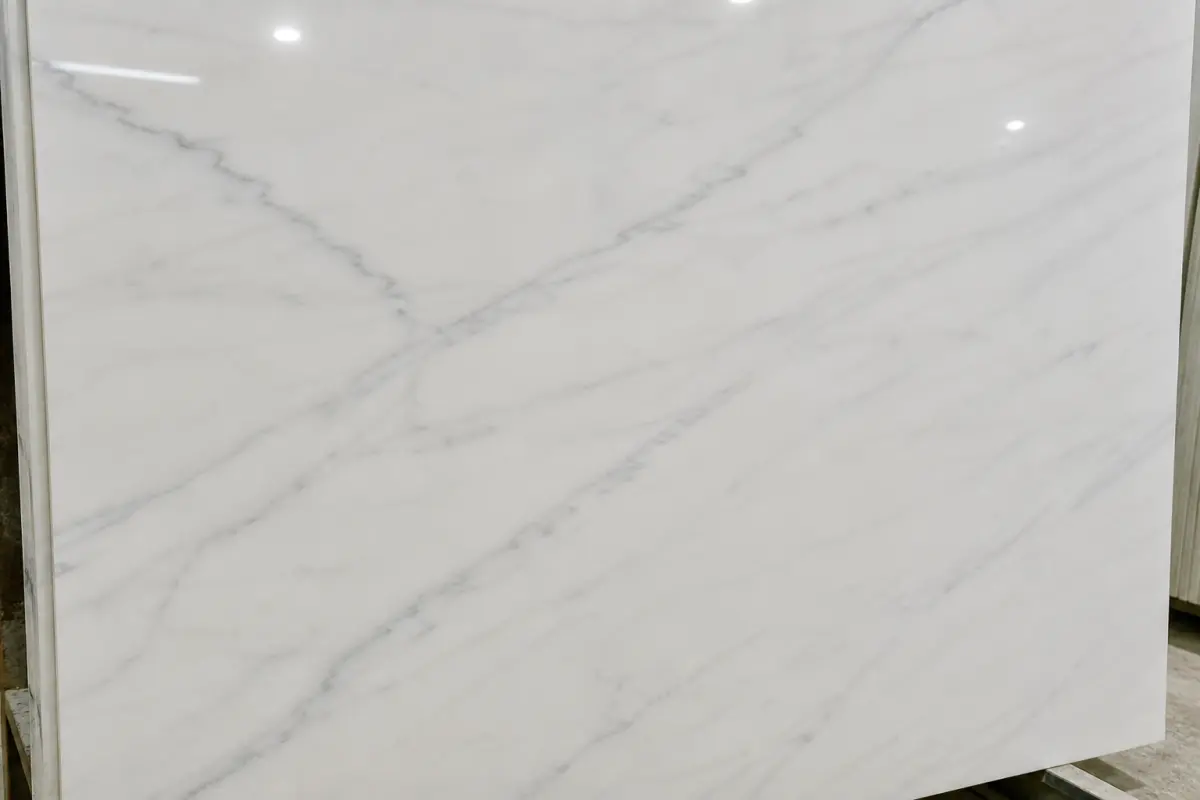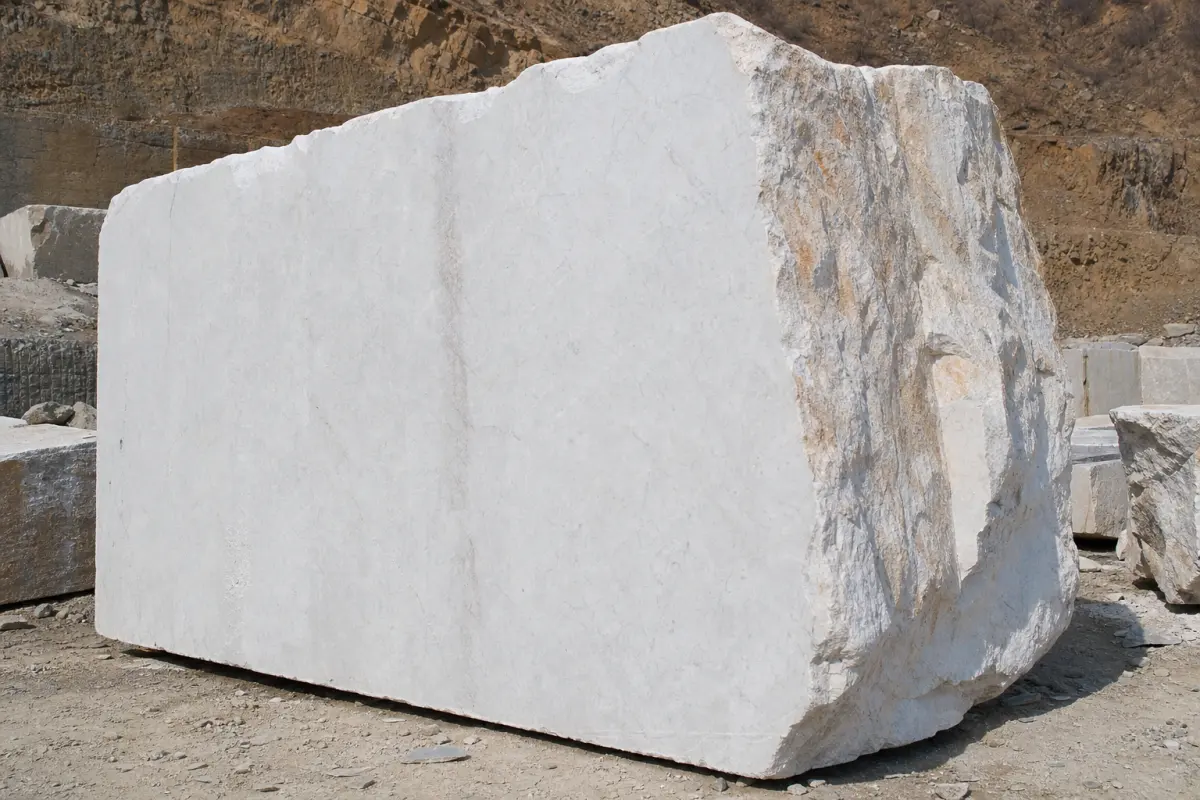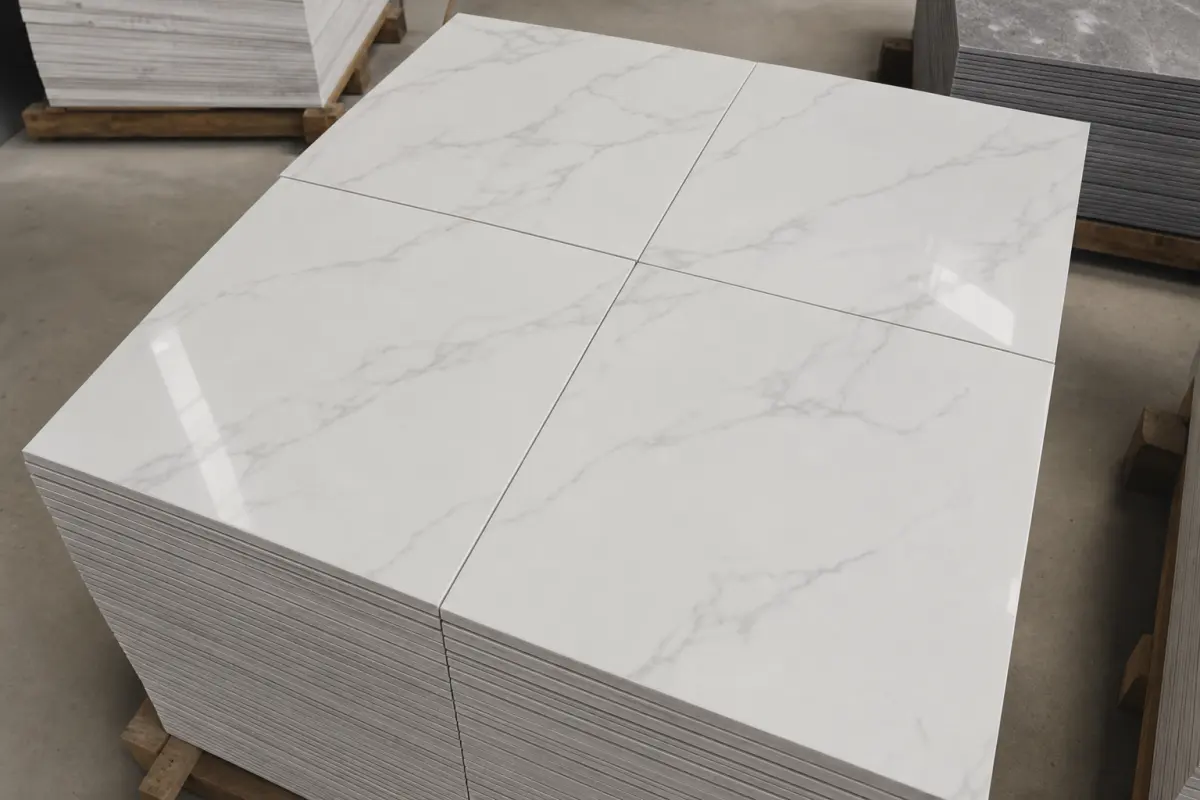
UAE importers already know Jebel Ali yards. What they still get wrong is the Buner mill: lot-locked Bampokha white, 2 cm A-frames, and FOB Karachi that actually matches the crate photos. This is the Dubai path for Pakistani marble—not a generic GCC brochure.
Al Quoz and Ras Al Khor already know Pakistani marble Dubai as a category: white slabs on A-frames, a price under Italian, a look that can pass a villa mock-up if the lot is honest. What the yard often does not know is which Buner mill sawed last month’s “Sunny White,” whether the next container is Bampokha No.1 or a Chamla leftover, and whether FOB Karachi included packing that survives a Jebel Ali unstuff. This guide is for UAE importers and project buyers who want Pakistan marble UAE as a repeat SKU from Khyber Pakhtunkhwa—not as a one-off bargain that fights the sample board.
Dubai is a stock-and-sell market as much as a project market. Yards turn 2 cm polished whites quickly. Fabricators in Sharjah and Ajman expect jumbo slabs they can cut for kitchen islands and lobby walls. Hotels and developers still run FF&E packages that want shade continuity across phases. Those three jobs need different RFQs. One WhatsApp “container white” serves none of them. Regional demand context sits in Gulf demand positioning; below is the importer’s operating manual.
How UAE yards actually use Buner stone
Stock yards want predictable whites they can sell by the slab. Bampokha No.1 and Super White from the Torwarsak–Swari belt fill that bin when lots are sorted. Commercial Bampokha fills a cheaper bin. Mixing them on one crate because “it is all white” is how a yard ends up with unsaleable cloudy pieces and a fight with the mill. Write selection on the PO. Photograph the fence: three approved, three rejected.
Project importers buying for a Palm villa or a Business Bay lobby should freeze a lot, not shop the yard’s leftover A-frames unless the leftover is the same lot. Yard stone is real; it is not your mock-up. If the designer approved a chip in March, the August yard stack is a different conversation. Either buy from the mill against the chip, or re-approve the yard slab in the project lighting.
Tile programmes for labour camps, back-of-house, and some residential floors pull Buner 60×60 when calibration is honest. UAE installers are unforgiving of calibre. If the mill’s tile line is a side hustle, say so and inspect. Slab-only mills that subcontract tiles must be named. A villa that wants slab walls and tile floors in one white must be one mill, one lot, or an accepted visual gap.
Jebel Ali, documentation, and the Karachi-to-Dubai lane
The physical lane is FOB Karachi or Port Qasim to Jebel Ali (or occasionally other UAE ports). Transit is short compared with Far East or US lanes. That is why marble import UAE from Pakistan stays attractive when Italian prices spike. Short sea does not forgive bad packing. A-frames that survived a Buner mountain road can still fail a hook if strapping is theatre. Require mill-gate crate photos and stuffing photos. Name Incoterm: FOB versus CIF Jebel Ali. CIF quotes must name the line and a realistic sailing, not a number invented to win the chat.
UAE import files want a clean commercial invoice, packing list, bill of lading, and origin. Your broker will add whatever the current customs practice requires; do not invent certificate numbers in an RFQ. Describe goods as they are: 2 cm polished marble slabs, origin Pakistan, Buner / Bampokha if that is true. Vague “natural stones” invites classification delay. HS form (block versus worked slab) should match what is in the crate. Identity of the exporter is the KPK article; landing in Dubai still needs that name to be real.
Duties, VAT, and port fees belong in your landed-cost sheet, not in a mill’s WhatsApp. The mill’s job is FOB and a truthful packing list. Your job is Jebel Ali. Importers who ask Torwarsak owners to “do CIF including UAE VAT” are asking a mountain factory to practise Emirates accounting. Split the work. Use FOB Karachi from KPK so the mill’s number is comparable, then add your ocean and local charges.
Typical UAE specs: 2 cm, polished, A-frame, jumbo enough
Default stock spec: 2 cm polished, honed on request, A-frame packed, lengths in the 240–320 cm band, widths that a fabricator can nest. Three centimetre appears for stairs and some commercial floors. Do not mix thicknesses in a shade lot. Bookmatch is a project add-on, not a yard default. Mesh and resin should be stated for wet areas—Dubai bathrooms and spa walls are where cheap fill shows.
Brightness: UAE lighting is high-CCT and unforgiving. Photograph lots dry and wet. Super White from Buner Super White listings is the brighter bin; Bampokha No.1 is the classic export white with more grey movement. They are not synonyms. If a client said “Carrara look,” run a mock-up; do not relabel Bampokha. The international spec sheet is Bampokha white for international projects—use it as the mill-facing appendix to this Dubai page.
Grey and black are second SKUs. Badal grey and Nanser-type black sell in UAE as contrast, not as a substitute white. Yards that stuff leftover grey into a white container to fill weight create two unsaleable products. Write SKU lines separately. Feature onyx belongs on a feature RFQ, not in the white stock order.
Landed cost versus Indian and Turkish whites
UAE buyers compare Pakistani white with Indian whites (including material that is not Rajasthan’s best, relabelled) and with Turkish whites that have a different vein library. Pakistani Buner stone often wins on FOB and on factory density—you can re-order from the same Torwarsak belt. It loses when the lot is unsorted or when the mill’s packing is weaker than a Turkish factory used to EU crates. Landed cost is FOB plus ocean plus local plus waste. Waste from fracture and shade reject can erase a cheap FOB.
Do not win a tender on FOB and lose it on yield. Wire-sawn lots waste less than blasted lots. Ask. The method note is blasting versus wire saw. Indian comparison at category level is Indian versus Pakistani marble; this page is the UAE importer’s SKU reality. Turkish material may still win a luxury brand narrative. Pakistani material wins a volume villa programme if you lot-lock.
Currency and freight swing. A quote from June is not an October container. Re-validate FOB and ocean when the PO is real. Mills in Buner quote rupees or dollars depending on habit; lock the currency on the RFQ. UAE importers who keep a dollar FOB and a dirham yard price know their margin. Those who keep a WhatsApp number do not.
Stock container versus project container
A stock container for a Dubai yard can accept commercial selection if the price is right and the photos are honest. A project container for a hotel or a developer cannot. Hotel shade lots across repeat POs are a different discipline—see GCC hotel marble from Buner. If you are both a yard and a project supplier, do not feed the project from random stock without a mock-up. Designers in Dubai remember.
MOQ: yards think in 20-foot A-frame loads. Small fabricators want a few slabs; that is a yard sale, not a mill RFQ. Do not ask a Buner factory to courier two slabs as “the container.” Samples yes; two-slab commercial orders no. Project buyers who need 400 m² should say 400 m² plus waste, not “half container maybe.” Mills plan blades around numbers.
Lead time: short sea tempts people to promise three weeks door to yard. Polish time in Buner plus inland haul plus port plus sea is longer when PESCO is ugly. Put a range on the RFQ. Electricity context is in the load-shedding note. Dubai clients hear dates; they should hear ranges from you, not fantasies from a mill that wants the deposit.
Inspection when you will not fly to Peshawar
Many UAE importers never visit Buner. That is allowed if you buy evidence. Mill-gate video, bundle photos with a gauge, crate numbers, stuffing photos at Karachi, and optionally a third-party inspector. First containers from a new mill deserve stuffing inspection even if you skip mill-gate. Repeat SKUs with a named mill can ease off. Yards that skip all of it are gambling their Al Quoz reputation on a PDF.
When you do visit, the loop is Dubai–Peshawar–Torwarsak–Swari, maybe a Bampokha face if access is arranged. One day on the ground beats three months of chat. Take the approved chip. Reject in person. Factories such as those behind Zeex Naturals and Ayaz Marble that publish Buner identity are visitable in principle; a Karachi-only email is not a visit.
Payment: UAE buyers sometimes push 100 percent against B/L because they are used to other lanes. For a new KPK mill, milestones still earn their keep—deposit, polish photos, balance against documents. Established repeat mills can tighten. Third-party accounts remain a no. Scam patterns are in the buyer protection guide; Dubai is not immune because the destination is glamorous.
Fabricators, wet areas, and the mock-up room
Sharjah and Ajman fabricators will tell you if the slab is too short, too resin-heavy, or too yellow under LED. Bring them into the sample loop. A yard that sells to fabricators without a wet-area warning on mesh-less 2 cm will eat returns. Write resin and mesh on the mill RFQ for bathrooms and spas. Honed for some floors; polished for most lobbies. Exterior courtyard in marble is a maintenance conversation, not a default.
Mock-up rooms for hotels should use the actual lot, not a cousin stone. If the FF&E package repeats in Abu Dhabi and Riyadh, you are no longer only a Dubai importer—you are a GCC programme. Keep lot IDs. The Saudi article covers mosque and villa scale; Dubai still starts with the first crate that matches the chip in Business Bay lighting.
Bookmatch feature walls are a premium SKU. Charge for them. Do not promise bookmatch from blasted blocks. Wire-sawn Bampokha with sequential numbering is the path. If the mill cannot number, you cannot sell bookmatch to a Palm villa and survive the handover.
How to RFQ from Dubai without feeding twelve mills
One RFQ: origin Buner / Bampokha or Super White as named, selection, 2 cm polished, crate standard, FOB Karachi, destination Jebel Ali, inspection rights, lot photos. Publish on the Pakistan marketplace. Shortlist two. Sample. Then PO. The RFQ template mindset is in marble RFQ on a B2B marketplace and the safer online path in buy marble from Pakistan online.
Name the mill. If a Dubai-based “Pakistan desk” answers, they may be useful as a consolidator—then run the identity tests in Pakistan marble exporter from KPK. If they will not name Torwarsak or Swari, you are buying a yard story, not a mill.
Keep Qatar and Saudi as separate specs even if the same mill ships all three. Doha hospitality lighting and Riyadh mosque scale are not Al Quoz stock. Link those programmes out: Qatar hospitality, Saudi sourcing. Dubai is the hub. It is not the same SKU by default.
Al Quoz, Ras Al Khor, and Sharjah fabricators
Dubai’s stone geography is not one warehouse. Al Quoz still holds many showrooms and fabricators who sell to villas. Ras Al Khor and nearby industrial pockets hold more yard-scale A-frames. Sharjah and Ajman take the cutting. If you import as a yard, say which pocket you restock; crate sizes that fit one yard’s forklift may annoy another. If you import as a project buyer, decide whether the mill ships to your fabricator’s door after Jebel Ali or whether you will pick slabs from a yard. Those are different waste factors and different shade risks.
AED price lists on a yard wall are not FOB Karachi. A slab that looks cheap in Al Quoz may already include ocean, duty, local trucking, and the yard’s reject allowance. When you compare a mill RFQ to a yard tag, you are comparing two products. Use the mill number for replenishment. Use the yard tag for one-off villas. Do not beat a mill up with a yard photo of a different lot.
Labour and installation quality in the UAE is generally higher than a first-time importer expects from a mountain mill’s packing. That gap is why crate photos matter more than charm. A Sharjah fabricator will not forgive lippage because the mill in Swari had a feeder outage. Your job is to translate PESCO reality into a date range, not into an excuse after discharge.
What “Pakistani marble Dubai” should mean on your website
If you are a UAE importer writing your own catalogue, name the stone. Bampokha, Super White, Badal, Nanser black—not only “Pakistan white.” Your fabricator customers will thank you. Your mill will be able to re-supply. Your competitor who sells mystery white will undercut you once and then eat shade claims. Honesty is a stock-turn strategy.
StoneVaults is how you make that honesty operational: listings with origin, RFQs with Incoterms, supplier profiles with Buner addresses. Use the B2B marketplace guide if you are new to the platform. Use contact if you need help attaching a Jebel Ali programme to a mill RFQ. Pakistani marble in Dubai works when the crate in Jebel Ali is the lot you approved in Buner—not a cousin, not a leftover, not a PDF.