GCC hotel marble from Buner fails on the second purchase order when shade lots, attic stock, and 2 cm walls versus 3 cm floors were never locked. This is the FF&E playbook for chain lobbies fed by Buner whites—not a generic northern-Pakistan commercial brief.
A Gulf hotel does not buy marble once. It buys a lobby, then a corridor release, then a spa change-order, then a patch crate five years later when a suitcase cracks a tile. Hotel marble Pakistan programmes that treat each release as a new WhatsApp haggle are why one tower looks like two stones. Buner can feed that programme—Bampokha No.1, Super White, Badal grey, a measured black or onyx feature—if you buy like a chain FF&E desk, not like a one-off villa. This article is that desk: repeat purchase orders, attic stock, shade lots, 2 cm walls versus 3 cm floors, and mock-up rooms. It is not a general hotel-and-mall briefing for Islamabad towers; that northern-Pakistan commercial note is already written. This is GCC hotel marble and hospitality marble from Pakistan as a multi-property, multi-year colour problem.
Brand design manuals still print Italian names. Procurement still opens Pakistani mill quotes when the FF&E budget meets a opening date. The mill in Torwarsak does not care which operator logo is on the napkins. It cares whether PO-2 must match the bundle IDs from PO-1. If you cannot answer that, you are not buying hotel stone. You are buying leftover white and hoping the photographer shoots at dusk.
Repeat purchase orders are a shade-lot system
Lock a shade lot at mock-up, not at the third container. A shade lot is a defined band from named blocks or a named mill run, photographed, and referenced on every later PI. Write the lot ID on crate stencils. When the Dubai property reorders for the ballroom extension, the RFQ says “continue lot HTL-2026-01” rather than “same as last time.” Last time is not a colour. Factories forget; staff change; a different nephew answers the phone.
Buner whites move by bench and by season of extraction. Bampokha can run quieter or more gold depending on the face. Super White can run brighter than the approved sample if the mill “upgrades” you without asking. Upgrades ruin corridors that already meet the lobby. Instruct the mill that continuity beats brightness. If they cannot hold the band, they must stop and send new photos before sawing PO-2. That pause costs a week. Relaying a mismatched tower costs a brand standard.
Split SKUs by zone and keep the lot relationship. Lobby field in Bampokha No.1 or Super White; corridors in a commercial white or Badal grey; wet guest bathrooms often in calibrated tile. Feature walls may pull honey onyx or a small black marble lot. Each SKU is its own shade lot. The FF&E package is the matrix that says how they sit together, not a single “hotel white” PO that the mill fills with whatever is on the yard. Grade language for export whites is in Buner white export grades; international project use-cases for Bampokha sit in Bampokha for international projects. Use those when selecting the SKU. Use this page when the SKU must repeat.
Attic stock: the crate hotels forget to buy
Operators who have lived through a renovation already know attic stock. Everyone else learns at year four, when the mill’s current white is a different bench and the original lot is gone. For GCC hotels, buy attic stock on the first container—not as a nice-to-have variation order after opening. Typical hospitality practice is a closed crate of the lobby SKU at 5–10 percent of installed area, plus a smaller hold of corridor and wet-area modules. Store it in the operator’s warehouse, not at the mill. Mills are not hotels; they will sell your hold when a cash buyer appears.
Write attic stock on the BOQ so it is not value-engineered out by a contractor chasing the FF&E lump sum. The crate should carry the same lot ID, thickness, and finish as the installed stone. A “similar white” attic crate is useless. Photograph the stored slabs annually; marble in a hot warehouse can stain if packing fails. Attic stock is cheaper than flying a designer to Buner to recreate a colour that no longer exists.
For multi-property chains, attic stock is per property unless the brand truly runs one global white—which Pakistani calcite will not support at Carrara-library scale. A Ras Al Khaimah resort and a Riyadh business hotel may both use Buner Super White and still need separate lots. Do not rob Peter’s attic to patch Paul. That is how two logos start fighting over one crate in Jebel Ali.
Two centimetres on walls, three centimetres on floors
This split is where GCC hotel marble from Buner gets physically honest. Floors in lobbies and porte-cochères often specify 30 mm for traffic, rolling luggage, and lippage control. Walls and elevator reveals often specify 20 mm to save weight and cost. Those are two mill set-ups, two crate weights, and two container payloads. A mill that averages them into one square-metre price will either under-saw the floor or overcharge the wall. Split the RFQ lines.
Payload maths matters on ocean programmes. Three-centimetre floors fill a container by mass before they fill by area. If PO-1 is walls and PO-2 is floors, you cannot copy the square-metre freight from the first invoice. Importers who recycle the first CIF number onto the floor release are the ones surprised at Karachi. Name thickness on every PO, even when the shade lot stays the same.
Tiles in guest bathrooms and BOH corridors are a third format. 60×60 Buner white tiles repeat more cleanly than slab offcuts on small floors, and replacement from attic stock is easier. Do not assume the tile calibre matches the lobby slab shade unless both were sorted from the same run. Mock a bathroom and a lobby corner in the same lighting before you bless two formats as “the same marble.”
Mock-up rooms beat PDF renders
Chain operators approve stone in a mock-up room: a bay of lobby floor, a wall return, a bathroom wet zone, under the specified CCT. Do this in Dubai, Riyadh, or Doha with mill samples large enough to show movement—not a 10×10 cm chip on a board next to Carrara. Buner whites can look cold on a phone and warm on a chandelier. The mock-up is where you accept gold vein, reject a cloudy bench, or switch Super White for Bampokha because the brighter stone flattened the joinery.
Ship mock-up material as a paid sample PO with the same thickness and finish as production. Deduct it from the first container if you proceed. Photograph the approved mock-up with a grey card and keep it in the FF&E file. Send those photos back to the mill with the production RFQ. A mill that never sees the mock-up lighting will optimise for “whiter,” which is not what the brand signed.
When the brand standard names an Italian stone, document the value-engineering path in the mock-up minutes: Pakistani Buner white approved as alternate, with lot photos attached. That paper protects the designer when a later operator visitor asks why the lobby is not Carrara. It also protects the mill when a contractor tries to swap in cheaper commercial grey after award.
FF&E versus the main contract: who actually buys the stone
In GCC hotels, marble sometimes sits in the main contractor’s package and sometimes in FF&E. The split changes who writes the repeat PO. If FF&E buys lobby stone and the contractor buys corridor tile, you already have two purchasing brains and one lobby. Appoint a single shade owner—usually the interior designer or the operator’s FF&E lead—with authority to reject mill photos. Put that name on the mill PI. Factories in Buner will not referee your organogram.
Phasing must respect mill queues and PESCO hours, but the GCC-specific risk is operator opening dates stacked across properties. A group that opens Abu Dhabi in March and Jeddah in November will try to reuse the Abu Dhabi mill without checking whether the shade lot still exists. Put an option quantity on PO-1 with a validity window. If the mill cannot hold blocks that long, buy and store, or accept a new mock-up for Jeddah. Do not assume Buner is a warehouse.
Country desks differ. UAE importers often stuff through Jebel Ali and speak FOB Karachi fluently—see Pakistani marble for Dubai and UAE importers. Saudi programmes mix hotels with mosque and villa stone, with different inspection cultures—Buner marble for Saudi mosques and villas. Qatar hospitality compresses programme dates around openings and often wants tighter crate standards—Pakistan marble for Qatar hospitality. Use those market notes for local clearance habits. Keep this page for the chain-level colour system that should not change with the airport.
What Buner actually supplies to GCC hotels
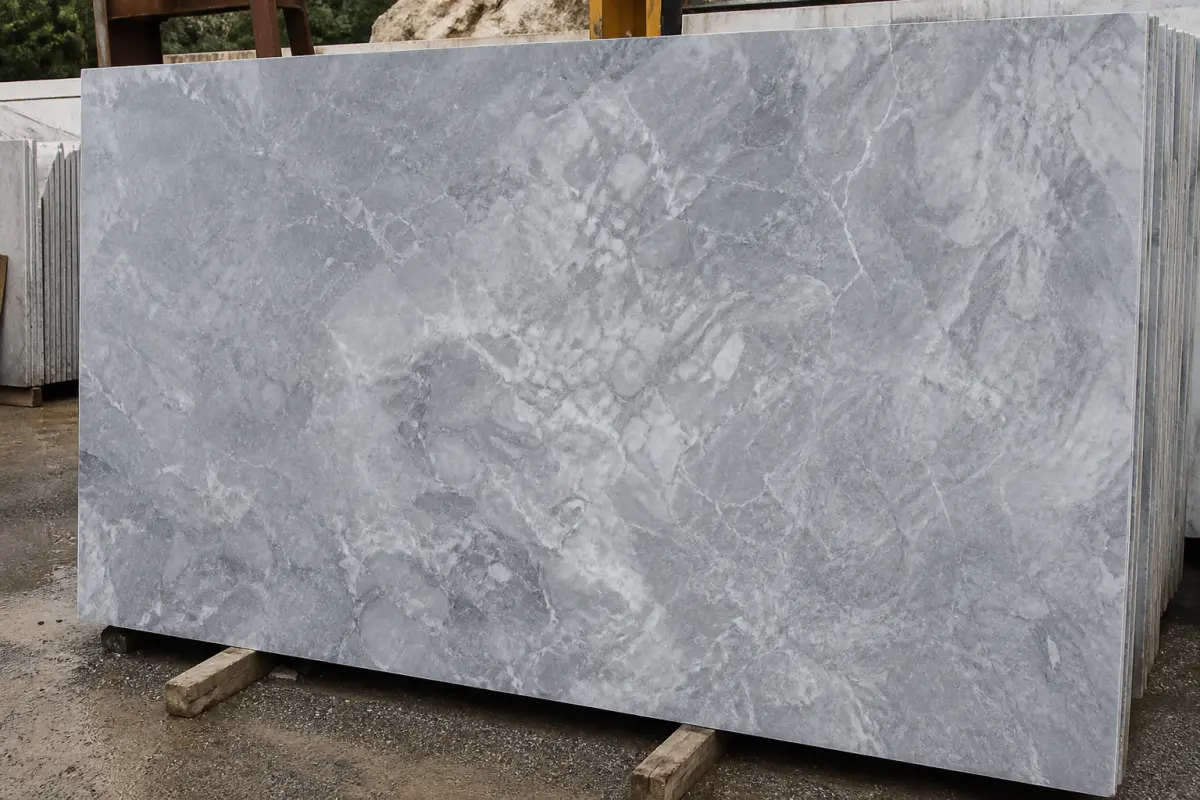
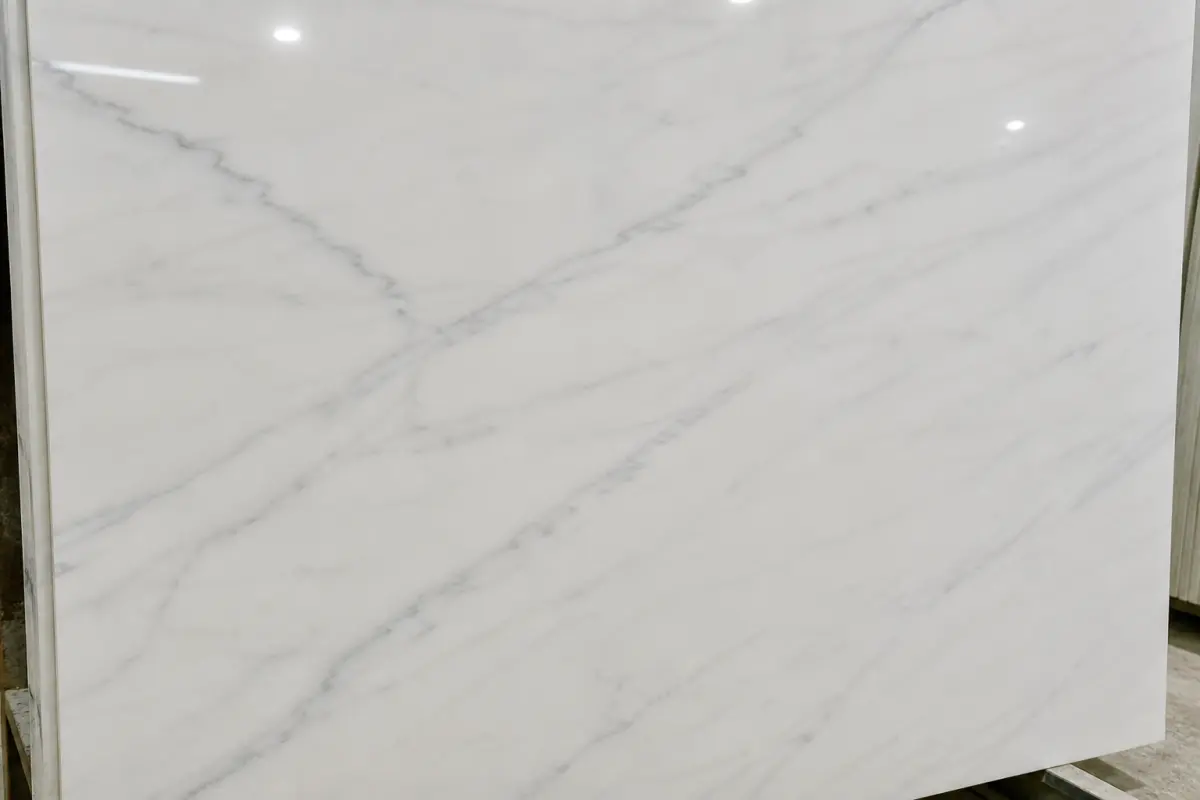
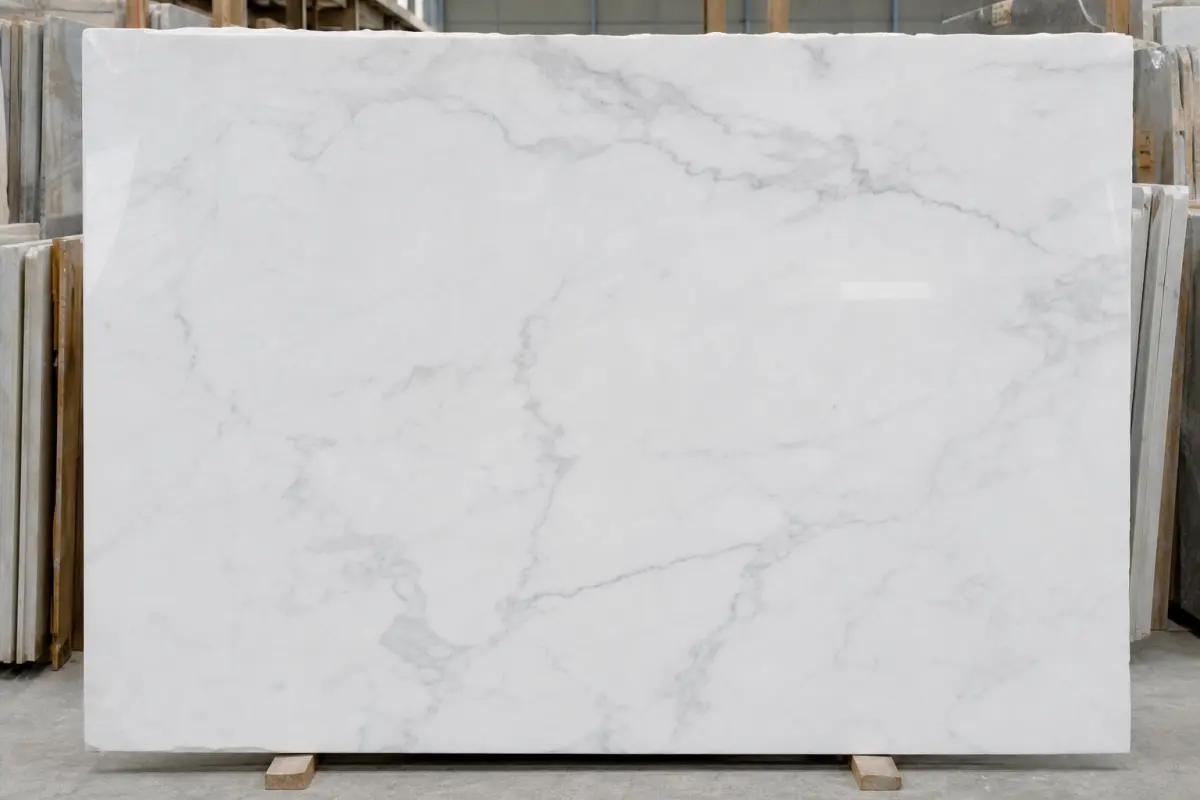
The volume SKU is still a bright to mid-white calcite from the Bampokha–Super White family, polished 20 mm for walls and either 20 or 30 mm for floors. Grey Badal-type material fills large corridor plates where traffic and furniture hide movement. Black from the Nanser side of the district is an accent, not a field stone, at hospitality scale. Honey onyx is a feature, booked early, packed harder, never thrown into the white container as stuffing.
Buner will not be your outdoor pool copings in a hard-chemical programme without an honest finish and maintenance brief. Calcite etches. Honed wet areas and a sealing schedule belong in the FF&E manual, not as a surprise for housekeeping. If the brand insists on a mirror polish in a spa, budget refinishing. The mill can polish. It cannot repeal chemistry.
Domestic northern-Pakistan hotels—Peshawar, Islamabad, hill resorts—share the same mills and a different logistics and tax story. Their phasing, BOQ splits, and crate notes are in hotel and commercial marble supply from northern Pakistan. Do not copy that playbook onto a Jebel Ali FF&E calendar without adding shade-lot IDs, attic stock, and mock-up approval. The stone is related. The buyer is not.
QC that a chain can audit
Pre-shipment: bundle photos with lot ID, thickness gauge, and crate stencil. Random slab IDs recorded against the mock-up photos. A mill video of the polished faces under two light temperatures if the designer cannot fly. Third-party inspection at the mill or at the Karachi stuffing yard on PO-1; lighter photo QC on later POs if the lot holds.
On site: check thickness and lippage on the first bay before the contractor lays the whole lobby. Reject silent thickness swaps (18 mm sold as 20). Record crate numbers as they open so a defect traces to a mill bundle, not to “Pakistan marble” as a smear. Replacement slabs should come from attic stock first, then from a mill top-up of the same lot, then—and only then—from a newly approved band.
Publish the hospitality RFQ on StoneVaults with zone map, thicknesses, lot language, and destination port. Invite mills that already show white SKUs and export packing, not traders who discovered “hotel” in your email subject. The contact form is fine for a first operator introduction; production POs still need the lot ID on a marketplace thread so the second property can find it two years later.
A repeat-PO checklist for FF&E teams
- Mock-up approved under project lighting; photos in the FF&E file.
- Shade lot ID on PI, crates, and attic stock.
- Separate lines: 20 mm walls, 30 mm floors, tile wet/BOH, feature stone.
- Attic stock percentage bought on PO-1 and stored off-mill.
- Option quantity and validity for the next property or phase.
- Mill declaration: same shed as PO-1, or a documented successor lot.
- Incoterm and port copied from PO-1 unless freight is re-bid on purpose.
Frequently asked questions
Can one Buner mill supply a whole GCC brand?
One mill can supply a property and sometimes a cluster if blocks and hours exist. A regional brand standard across many hotels needs a lot system and a backup mill in the same colour family, not a monopoly fantasy. Dual-source the field white after PO-1 proves the first shed.
Is Super White always better than Bampokha for lobbies?
No. Super White is brighter; Bampokha No.1 is often the more repeatable hospitality field once approved. Choose in the mock-up. Do not upgrade mid-programme because a mill has a brighter leftover.
How much attic stock is enough?
Five percent is a floor for a simple lobby; ten percent is saner where the stone is a feature under hard luggage traffic. Guestroom tile programmes may need less if the module is still in production. Lobby slabs go out of print.
Should FF&E or the main contractor hold the mill relationship?
Whoever holds shade authority should hold the mill relationship. If the contractor buys, the designer still signs mill photos. Split buying without split authority is how PO-2 looks like a different hotel.
GCC hotel marble from Buner is a continuity product. The mill can saw it. The chain has to number it. Shade lots, attic stock, thickness splits, and mock-up rooms are how a Pakistani white survives a second opening date without looking like a value-engineering leftover. Write those into the first purchase order, or you will write them into a snag list in a lobby that already has guests.