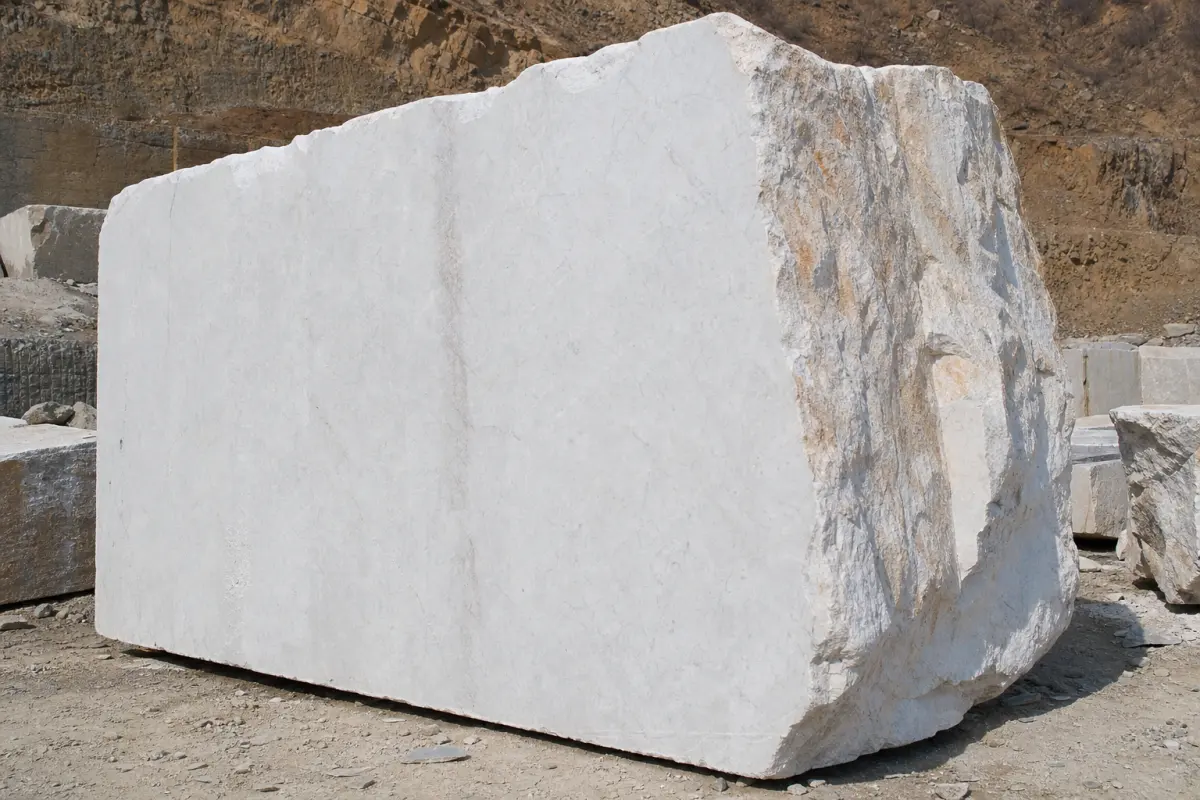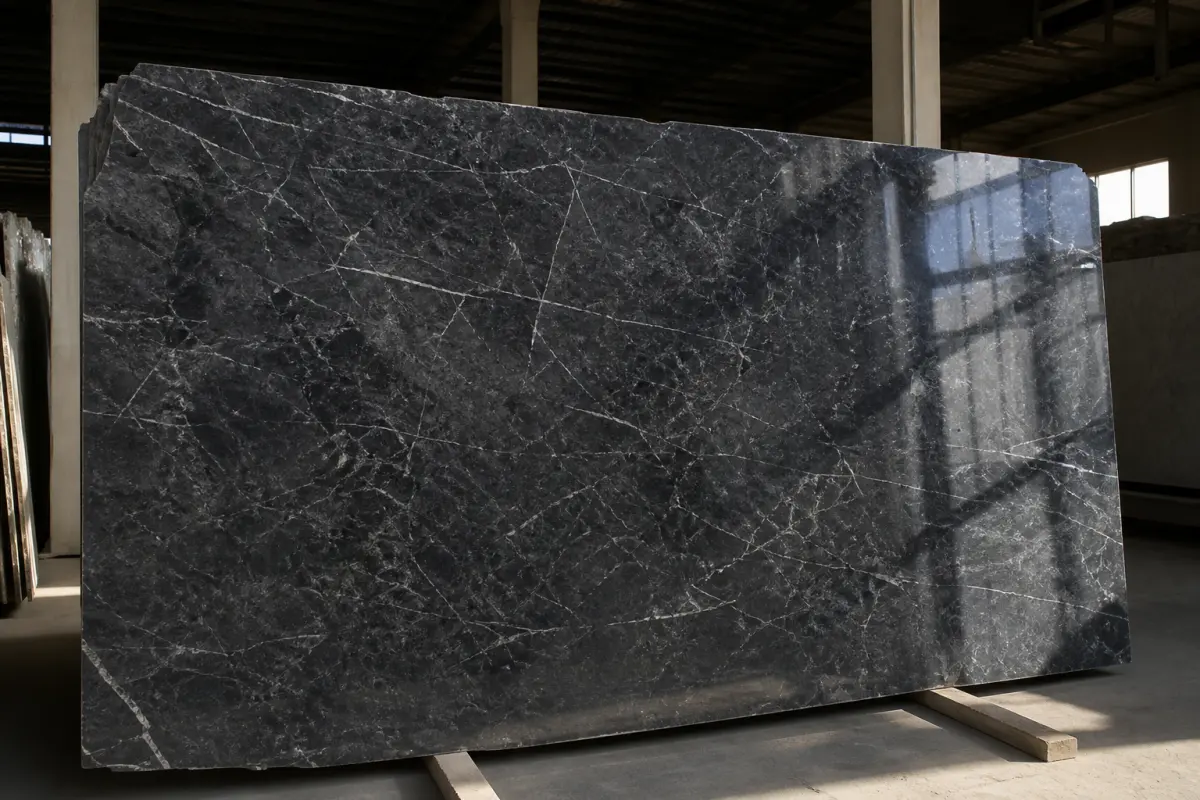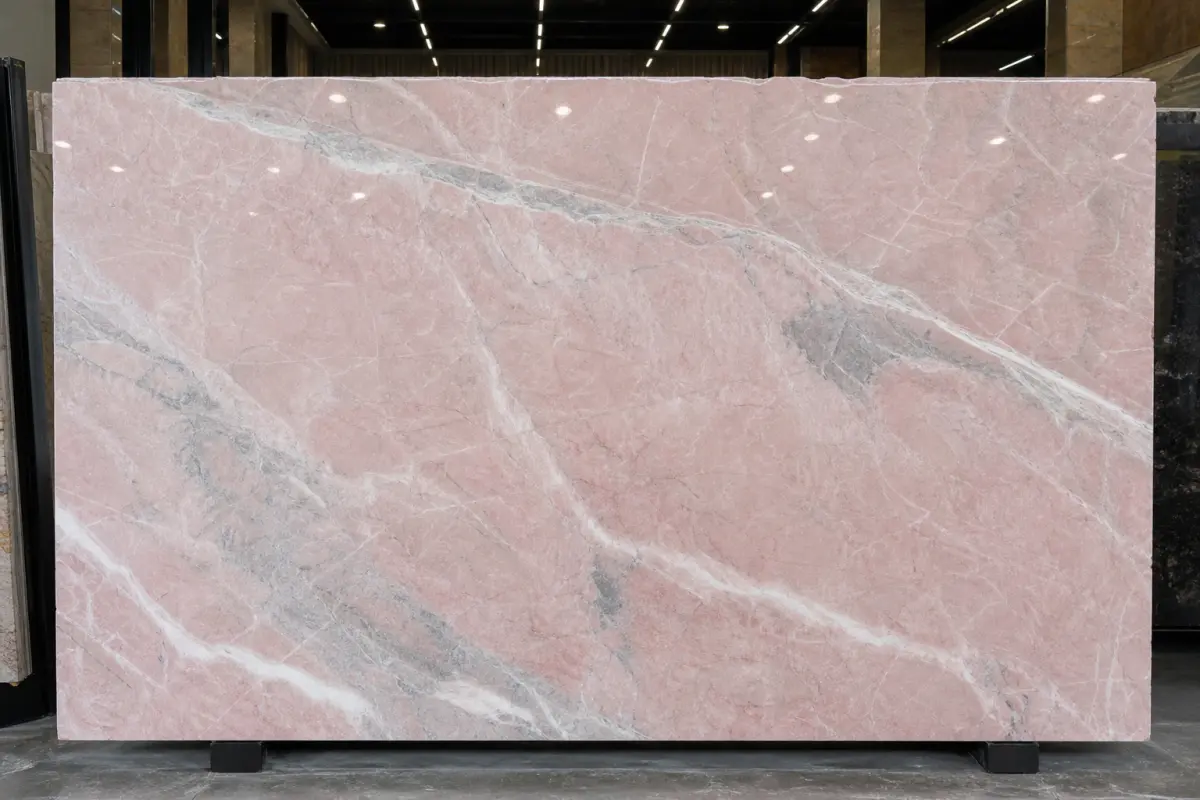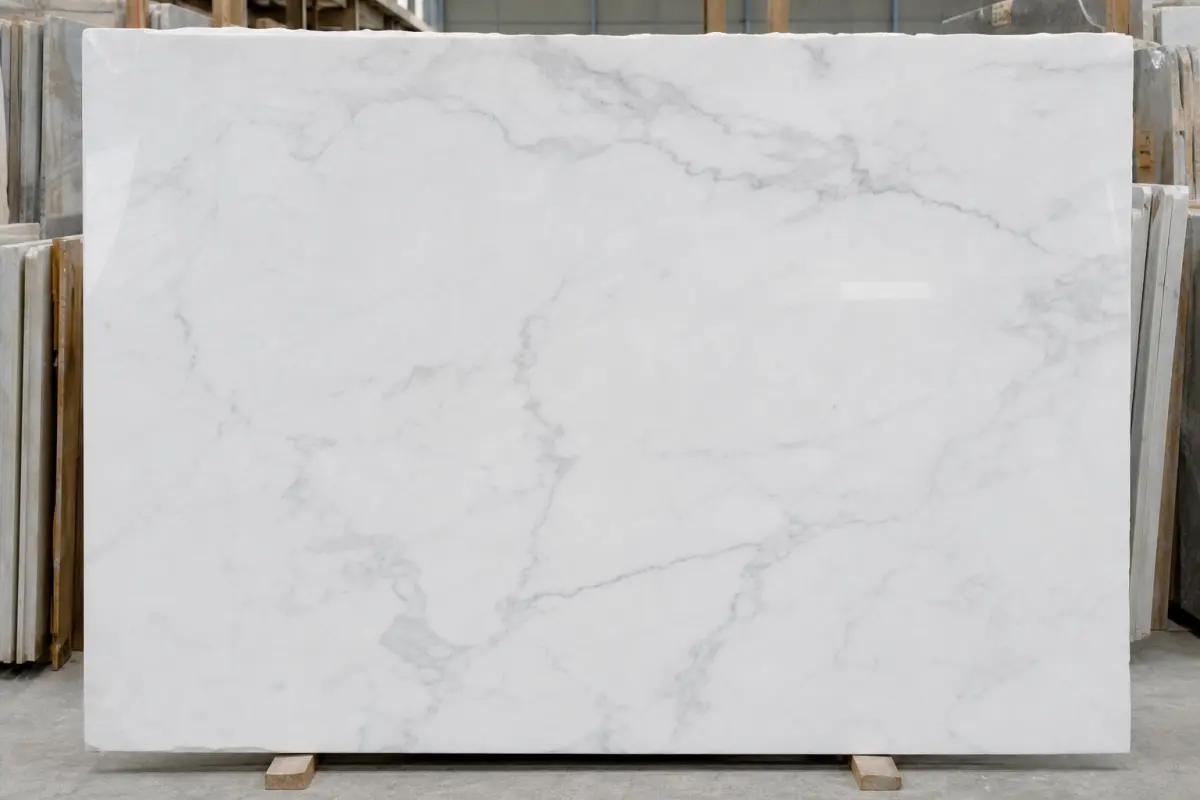
International buyers who want to buy marble from Pakistan online still land on WhatsApp catalogues and stock photos. This guide shows a safer RFQ path: samples, inspection, payment milestones, HS 2515 versus finished-slab codes, and how StoneVaults keeps the paper trail.
Google does not sell stone. It sells phone numbers. An importer in Muscat, Nairobi, or Manchester who types buy marble from Pakistan still lands on directories, Instagram reels of gangsaws, and a WhatsApp catalogue of slabs that may have been photographed in Torwarsak, Karachi, or someone else’s mill in 2019. That path can work if you already know the factory. For a first container it is how people buy a PDF. This guide is for the international buyer who wants Pakistan marble for sale with a paper trail: a written RFQ, a sample that matches a lot, inspection rights, and payment that moves with production—not with charm.
StoneVaults exists because the mill is real and the chat thread is not a contract. You can buy Pakistani marble online in the only sense that matters for B2B: you publish spec, quantity, port, and photos, and factories that actually saw in Buner or Swat answer. You still need samples. You still need to know HS codes. You still need to read our northern Pakistan scam patterns before you wire a deposit. Online does not mean unsupervised. It means the enquiry is structured instead of trapped in a disappearing chat.
Why Google-plus-WhatsApp is a weak buying path
WhatsApp catalogues fail in predictable ways. The photo is not the lot. The price has no Incoterm. The thickness is “2/3 cm as you like.” The factory address is a pin that opens a trader’s house in Mingora. The bank account name does not match the letterhead. When the container is wrong, the chat history is not a packing list. GCC buyers who already keep a trusted mill can use WhatsApp as a messaging layer. First-time buyers who treat it as a storefront are shopping in the dark.
Search ads and trade-directory listings freeze time. A unit that exported in 2018 may be dark in 2026; a number that rings may be a broker who subcontracts three sheds and owns none. Buner’s cluster—on the order of 500 factories in a Malakand Division total near 700—makes this worse, not better: density produces lookalike photos. Ask for a dated video of the gangsaw plate and the stockyard, then match it to an NTN. If that request ends the conversation, the conversation was never a mill.
Online buying should move the same diligence into a durable record. An RFQ on StoneVaults keeps spec, bids, and supplier identity in one place. It does not replace inspection. It replaces the moment where you cannot remember which photo was “the good white.” For a map of who sits where in Khyber Pakhtunkhwa, use the KPK buyer map before you shortlist chat contacts.
What “buy marble from Pakistan online” should actually mean
It means you can see live listings for slabs, tiles, and blocks, compare origin and thickness, and send one RFQ to more than one mill. It does not mean a shopping-cart checkout with a credit card and a courier bag of 2 cm slabs. Stone is made to order or pulled from a yard; MOQ is a crate or a container; payment is a commercial transfer. Anyone promising Amazon-like delivery of Buner marble to your villa is selling a different product—or a scam.
Start on the marketplace, filter Pakistan, and open SKUs you can name. A first white programme often begins with Super White or Bampokha No.1; a tile programme with 60×60 Buner white; a re-saw programme with raw blocks. Click through to supplier profiles such as Zeex Naturals and Ayaz Marble and read whether they declare a mill location. Then write the RFQ against those SKUs instead of against a mood board.
Online also means you can attach files. Upload the approved sample photo, the rejected photo, the drawing that needs 280 cm lengths, and the destination port. Mills in Torwarsak will not guess your wet-area resin rule. If you do not attach it, they will quote polished dry slabs and you will discover the difference in a Dubai bathroom. The longer RFQ template lives in marble RFQ on a B2B marketplace; this page is the international buyer’s landing logic.
Write an RFQ a Torwarsak mill can actually price
Price without spec is entertainment. A mill can quote when you state commercial name, origin district (Buner / Bampokha / Nanser / Chamla as applicable), format (slab, tile, block), thickness, finish, quantity in square metres or cubic metres, shade tolerance, resin and mesh, crate standard, Incoterm, and destination. Add inspection rights and a production calendar. Add whether sales-tax-compliant invoicing is required. That last line matters after the PATA goods-tax change; WhatsApp rates often omit it.
Name the handoff. Ex-factory Torwarsak or Swari is a different number from FOB Karachi or Port Qasim. The mill that quotes “FOB” without a stuffing yard is leaving a hole your forwarder will fill at your expense. If you do not have a forwarder, say so and ask the mill who they use—and whether that forwarder’s fee is inside the quote. Hybrid deals (mill produces, you appoint the Karachi agent) are normal; they only work when both names are on the RFQ.
Quantity honesty saves weeks. “One container” is not a quantity. A 20-foot stuffed with 2 cm A-frames is a different metreage from a 40-foot with mixed tiles. Give square metres plus a waste factor, or give a crate count you will accept. Hotels that phase floors should say so: one shade lot across phases, or permission to re-select. Mills cannot hold a frozen lot forever while your client changes the lobby drawing.
Samples, courier, and shade-lot discipline
A sample is a contract object, not a souvenir. Agree size (a 30×30 tile or a slab offcut with a polished face), who pays DHL, and that the sample is cut from the candidate lot, not from a showroom hero piece. Ask for a video of the cut: chalk mark on the parent slab, saw, offcut in the box. Stamp your return address on the box so a swapped Italian chip is harder to pass off. Deduct sample courier cost from the first invoice if you proceed; mill owners understand that sentence.
Approve in the lighting of the project, not only in your office. GCC marble looks different under 4000 K lobby LEDs than under a Peshawar afternoon. Photograph the sample next to a grey card. If the project is a mosque hall, approve at the scale of a prayer-row mock-up, not a coaster. If you cannot wait for courier, a live video with a tape and a colour card is a second-best—not a replacement for the first container.
Shade lots lock after approval. Write the lot ID on the RFQ thread. Further metres come from that lot or from a new approval. This is how you buy marble from Pakistan without discovering a yellow container after a white sample. Commercial lots of Bampokha and Super White will still move; the mill needs a fence. Send three reject photos. Silence is how grade bait-and-switch starts—the pattern described in the scams guide, which you should treat as mandatory reading, not optional colour.
Photos versus the physical bundle
Phone photos lie in both directions. HDR hides yellow. Dust hides pits. A single beauty slab on a stand hides the tenth slab in the crate. Require bundle photos: edge stack, face of three consecutive slabs, thickness gauge, crate number. Require them twice if the stone trucks from Buner to Karachi: once at the mill gate, once at stuffing. If the mill sends stock art from a listing, reject it. Listing photography, including demo covers, is marketing. Your lot is production evidence.
Video still wins over stills for first orders. A slow pan along the polish line and the A-frame row costs the mill ten minutes and saves you a flight. Ask them to say the date and the RFQ number on camera. Serious factories in the Bampokha cluster do this; brokers do not. Combine video with a third-party inspector when the order is large enough that a plane ticket is cheaper than a wrong container.
Keep a folder: RFQ PDF, sample photos, approval email, mill video, crate photos, packing list, bill of lading. That folder is how you buy Pakistan marble for sale as a repeat SKU. Without it, your second project renegotiates shade from scratch with a new WhatsApp number.
Inspection: mill, Karachi yard, or both
First containers deserve eyes. Options: you fly to Peshawar and drive to Torwarsak; you hire an inspector in Peshawar or Karachi; the mill agrees to a live inspection window. Inspect against the written spec, not against “looks nice.” Check thickness, finish, mesh, crate build, and whether slab sizes meet the minimum. Check that black or grey pieces have not been stuffed into a white crate to fill space.
If you cannot reach Buner, inspect at the Karachi stuffing point. That catches inland breakage and substitutions on the truck. It does not catch a mill that polished the wrong shade two weeks earlier—those slabs are already beautiful and wrong. For high-value whites, mill-gate inspection is cheaper than a Jebel Ali argument. For repeat SKUs with a trusted mill, Karachi stuffing photos may suffice.
Power and calendar affect inspection windows. PESCO load shedding can idle a polish line the day your inspector arrives. Book a window, not an hour. Read the electricity note so you do not treat a dark shed as a scam. Scams exist; so do real outages. The difference is whether the mill reschedules with photos or vanishes.
Payment milestones that survive a first container
Do not pay 100 percent in advance to a new account. Do not pay a personal mobile wallet because “the factory account is under the uncle.” Match the beneficiary company to the NTN and the proforma. Typical first-order shape: deposit to start sawing, second slice against polish-complete photos, balance against packing list and bill of lading or against stuffing photos if you use documentary collection. Letters of credit favour exporters who already know document sets; new mills may need your bank to explain fields. That is a reason to use a factory-exporter with a file, not a reason to skip milestones.
Pressure phrases—“pay today before load shedding stops the saw,” “another buyer is waiting on this container”—are not production planning. They are the deposit-grab pattern. Legitimate Torwarsak owners will wait for a structured transfer. If the mill is real and hungry, they will still put the company name on the invoice. Walk away from third-party payment requests “for tax reasons.”
Hold a retention only if the contract says so and if you have a practical way to release it. Arbitrary 10 percent holds after the vessel sails create bad blood and do not fix shade. Inspection before sailing fixes shade. Write replacement thresholds: cracked slabs, thickness out of tolerance, shade outside the approved fence. Then you have something to retain against.
HS 2515, 6802, and why the code on the invoice matters
Buyers say “marble HS 2515” because that chapter covers crude or roughly trimmed marble and travertine. Rough blocks from Buner often sit there. Worked monumental or building stone—polished slabs, tiles—more often moves under heading 6802. If your broker, your bank, and the Pakistani Goods Declaration disagree, the container sits. Put the physical form on the RFQ: blocks versus polished slabs versus tiles. Let the mill and your customs broker confirm the line before production, not after stuffing.
Invoice description must match the goods. “White marble slabs, 2 cm, polished, origin Pakistan” is usable. “Stones” is not. Mixed containers of white slabs and black marble or onyx should be described as mixed, or split, so classification does not collapse into a dispute. China-bound block programmes and Gulf slab programmes should not share a vague HS line just because both left Karachi.
This is not a substitute for the full document map in exporting marble from Pakistan. Online buyers still need commercial invoice, packing list, origin, and a named exporter. The HS line is the piece Google never mentions and WhatsApp catalogues never print.
Ex-factory Buner versus FOB Karachi on an online order
An online RFQ that says “price please” will be answered in whatever Incoterm the mill prefers that day. Force the comparison. Ex-factory Torwarsak means you own the truck to port, the inland breakage risk, and the stuffing. FOB Karachi means the mill or their forwarder delivers on board, and you own ocean freight and insurance if you did not buy CIF. CIF Jebel Ali means someone priced ocean; ask who, and whether it is a real sailing or a guess.
Buner is not a port. Daggar, Swari, and Torwarsak are inland. The vessel is Karachi or Port Qasim after a long haul. Online buyers who skip this geography pay twice: once in a “cheap” ex-mill number, once in a panicked truck. Our quarry-to-Karachi logistics note is the cost map; the FOB Karachi from KPK factories article is the Incoterm map. Put one Incoterm on the RFQ so bids are comparable.
If you are a small Gulf buyer with no Pakistan agent, FOB Karachi from a mill that actually controls packing is often rational. If you buy several containers a year of the same white, ex-factory plus your own forwarder usually beats a hidden broker margin. Either way, the mill name must appear. A Karachi email that will not name the Buner shed is not an online factory. It is a catalogue.
StoneVaults RFQ as the audit trail
Publish the RFQ, attach the spec, and let verified KPK suppliers respond. That is how you buy Pakistani marble online without feeding twelve chat threads that cannot be audited. Compare bids on the same Incoterm and thickness. Shortlist two mills, not ten. Run sample and inspection on the winner. Keep the thread. Next year, reorder against the same SKU and the same lot language.
Marketplace mechanics—filters, supplier verification, how an RFQ is structured—are covered in B2B marketplace for marble in Pakistan and verified KPK exporters on StoneVaults. Factory-direct Buner buying is in the factory-direct guide. Use those pages for platform and cluster detail; use this page as the international landing: Google brought you here, WhatsApp is not enough, write the RFQ.
If something feels off—new bank account, refused video, 100 percent advance—stop and contact StoneVaults rather than negotiating with a ghost. Honest mills in Buner want the same thing you want: a repeat container of the stone they actually produced. Give them a spec they can saw. Give yourself a record you can show a bank. That is the safer path to buy marble from Pakistan online.