WhatsApp, Alibaba, and StoneContact dominate marble buying in Pakistan, but they hide the quarry trail from Bampokha to Torwarsak. This guide explains how a native B2B marketplace for marble in Pakistan works: listings, RFQ, verified factories, and a clean split between Karachi traders and KPK mills.
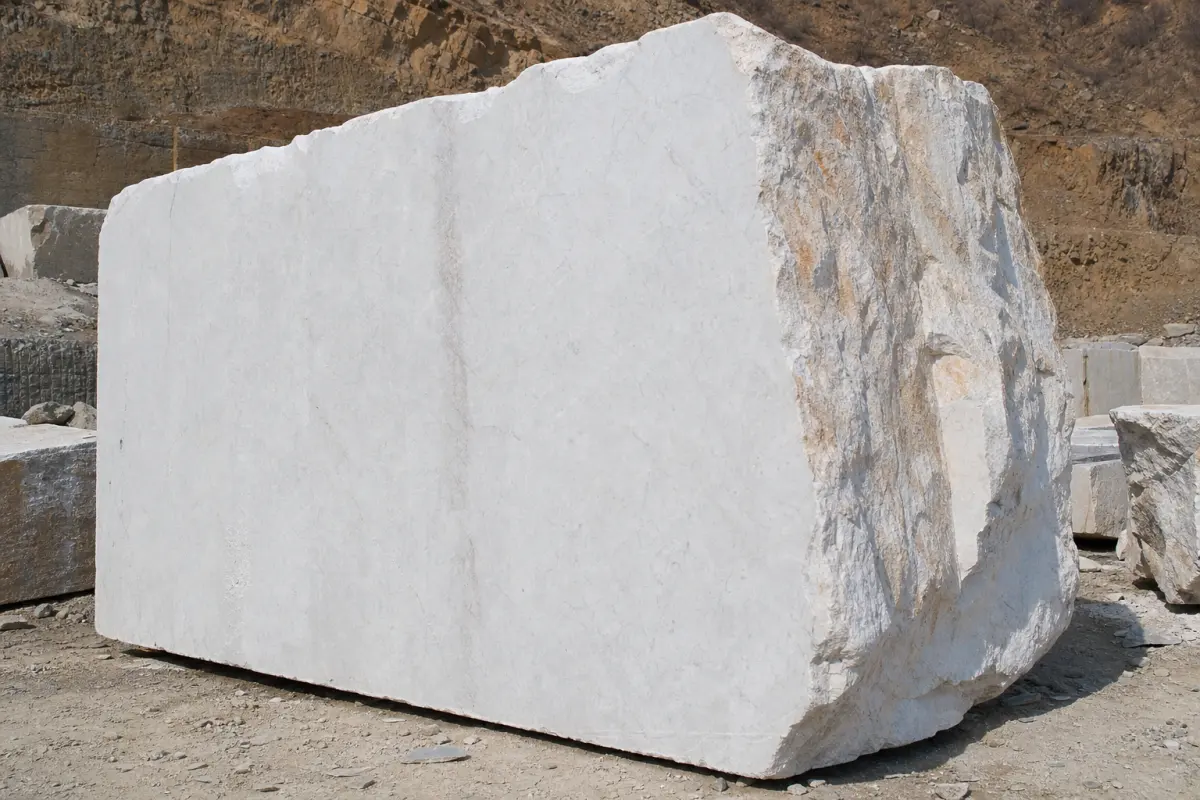
If you search for a B2B marketplace for marble in Pakistan, you will mostly land on WhatsApp groups, Alibaba storefronts photographed in Karachi yards, and StoneContact pages that list a mobile number and a stock photo of Italian-looking white. That is not how Buner stone actually moves. The commercial trail starts on a lease face at Bampokha or Nanser, runs through a gangsaw shed in Torwarsak or Swari, and only later meets a forwarder who knows Port Qasim stuffing. Importers who skip that trail pay for two extra hands and still cannot name the block. StoneVaults exists because RFQ, not cart checkout, is how this trade works: you publish thickness, finish, shade band, and loading point, and factories that actually saw the stone can answer without pretending they keep a showroom on Shahrah-e-Faisal.
I have sat in those Torwarsak yards while PESCO cut the line mid-polish and watched a Karachi trader, two districts away, send the same slab photo to three Gulf buyers as “our factory stock.” The mill owner had never seen the enquiry. That gap is the product problem. A natural stone marketplace Pakistan buyers can trust has to show origin, processing town, and who issues the FBR invoice—not a collage of whites. This article is a working map of that gap, written for importers, fabricators, and specifiers who want KPK material without losing the quarry trail in a chat thread.
Why WhatsApp still runs the trade—and why it fails quarry-direct work
WhatsApp is the default because it is already on every mill manager’s phone in Daggar and Swari. You send a photo of a lobby, he replies with a photo of a bundle, you argue about “Super White” versus “Bampokha No.1,” and three weeks later a truck shows up in a Karachi packing shed with a different vein direction. The tool is not the scandal. The missing record is. Chat has no block number, no shade-lot letter, no thickness gauge in the frame, and no audit trail when the second container does not match the first. For a one-off villa, that chaos is survivable. For a hotel floor package or a mosque cladding grid, it becomes a claims file.
Factory-direct buyers also discover that the person who answers the chat is often a nephew in Peshawar, not the gangsaw owner. He can quote. He cannot promise blade time when load shedding stacks night shifts. He cannot show you which blocks in the yard are wire-sawn and which came off a blasted face with hairline fractures that only appear after resin. If your procurement policy says “verified supplier,” a green tick on WhatsApp is not verification. You need NTN, a mill address in Torwarsak or Swari, and photos tied to a lot—not a personality. That is the job a marketplace listing should do before anyone opens a chat.
Alibaba, StoneContact, and the Karachi-photo problem
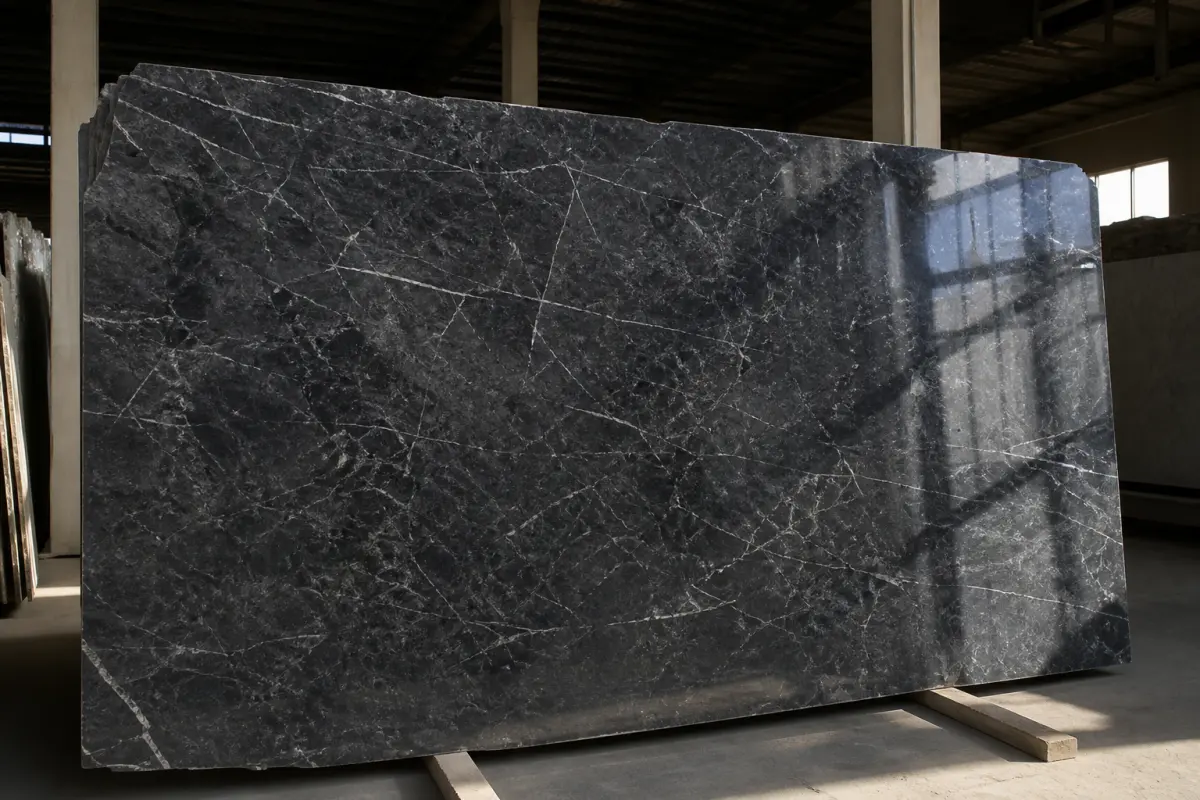
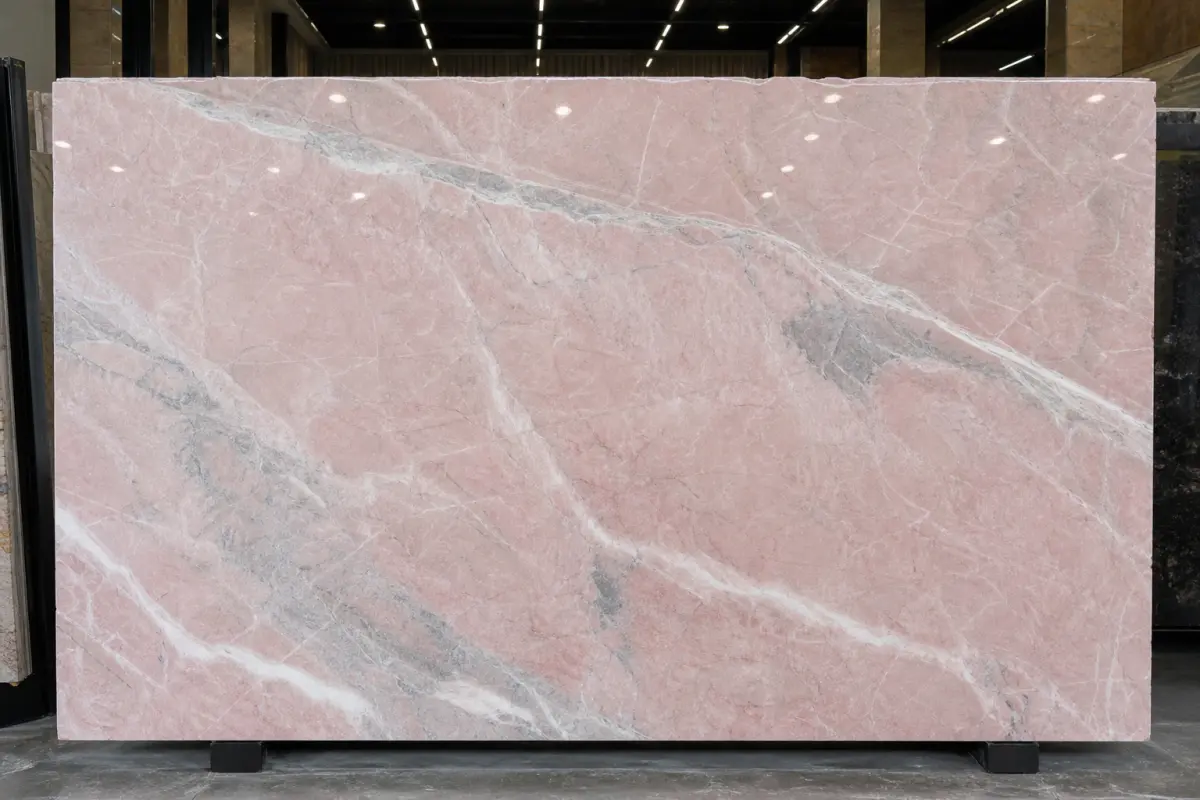
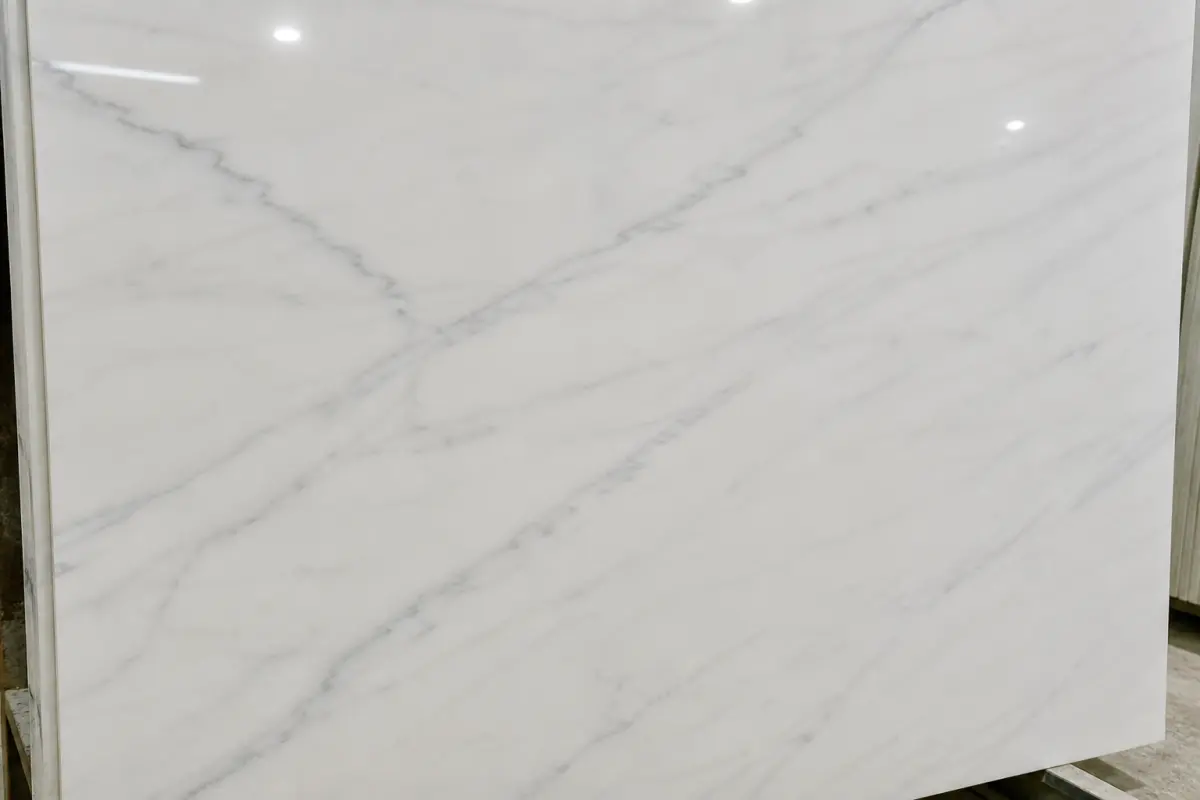
Global directories are useful for discovering that Pakistan sells marble. They are weak at telling you whether the seller controls a lease at Bampokha, rents gangsaw hours in Torwarsak, or buys polished slabs in Hub and relabels them. Karachi packing yards are full of honest, necessary work—A-frames, fumigation, stuffing—but they are not quarries. A page that shows a white slab on a wooden crate in West Wharf does not tell you if the block was 18 tons from Nanser or a mixed lot from Chamla with a bright face photographed for the listing. Buyers then argue about “Pakistan white” as if it were one SKU. It is not.
StoneContact-style catalogues also flatten Incoterms. A factory in Elai quoting ex-works and a trader quoting FOB Karachi look identical in a grid of thumbnails. Freight, breakage, and sales tax after the old PATA holiday sit in different pockets. If you want the longer Incoterms walk-through, use our note on MOQ, containers, and Incoterms; the point here is simpler. Directory photos rarely survive a first inspection. A Pakistan-native platform has to make origin and loading point first-class fields, the way thickness already is on a serious BOQ.
What a B2B marketplace for marble in Pakistan actually has to do
A working B2B marketplace for marble in Pakistan is not a shopping cart with a “buy now” button on a 20-ton block. Nobody in this trade checks out like they are ordering tiles from a DIY aisle. The platform has to hold structured listings (material, origin district, form, finish, thickness), a verified-supplier flag that means someone checked mill or lease documents, and an RFQ workflow that carries quantity, port, and spec into the supplier’s reply. StoneVaults is built on that three-part job. You browse Pakistan stone listings, open a factory profile, and send one RFQ instead of twelve forwarded chats.
That sounds obvious until you try to compare a Torwarsak gangsaw against a Saddar trader on the same SKU. On a native marketplace the trader can still list—Karachi packing and LC paperwork are real services—but the listing should say so. The KPK mill should say Torwarsak, name the commercial stone (Bampokha No.1 white or Super White, not “Italian look”), and declare whether blocks are 12–22 tons as they leave the hill. Buyers then choose a role, not a prettier JPEG. For the step-by-step of writing that enquiry, keep buying marble from Pakistan by RFQ open beside this page; the marketplace is the pipe, the RFQ is the message.
Listings that a mill manager will actually maintain
If the listing form is written for a Silicon Valley retailer, Torwarsak will ignore it. Fields that get used: commercial name, quarry cluster, sawn thickness, finish, mesh or not, and whether the photo is the current bundle. Fields that get abandoned: poetic “collection” names and fake list prices in dollars that expire when the rupee moves. StoneVaults treats price-on-request as normal. The value is comparable spec, not a pretend e-commerce number.
Listings, RFQ, and verified suppliers: the three working parts
Walk the three parts in order. First, listings: a raw Bampokha block and a polished slab should not share one vague “marble” card. Form (block, slab, tile) changes inspection, packing, and who you pay. Second, RFQ: quantity in square metres or tons, destination port, Incoterm, thickness, and a shade-band sentence (“accept light grey hairline, reject yellow oxidation on face”). Third, verified suppliers: profiles such as Zeex Naturals and AYAZ MARBLE exist so you are not wiring a deposit to a number that was created last week. Verification is not a beauty contest. It is “this mill or exporter can be found, invoiced, and inspected.”
The RFQ object is where most portals cheat. They give you a contact form and call it B2B. A usable marble RFQ Pakistan buyers will repeat looks like a short spec sheet: SKU, finish, thickness, tolerance, crate type, inspection window, and payment split. If you want the template-level version, read how marble RFQs work on a Pakistan B2B marketplace. Here, remember only this: the factory bids on the document, not on your last voice note. Voice notes vanish. RFQs stay in the thread with the bundle photos.
- Name origin (Bampokha, Nanser, Chamla) and processing town (Torwarsak, Swari), not only “KPK white.”
- State 2 cm or 3 cm, honed or polished, mesh-backed or not, before you ask for a number.
- Say FOB Karachi / Port Qasim or ex-factory Buner so freight is not a surprise adder.
- Ask for a date-stamped yard video, not a catalogue PDF from 2019.
- Keep one backup mill in the same belt; PESCO and blade breakage are not theoretical.
Karachi trader versus KPK factory on the same platform
Karachi traders are not villains. They pre-finance blocks, speak LC language, and know which CFS will not snap A-frames. KPK factories control saw time, shade sorting, and the block mark painted on the face at the quarry. A B2B marketplace for marble in Pakistan that hides that split helps nobody. On StoneVaults you should be able to read a listing and know which hat the seller wears. If you need the cultural and cost version of that split, our guide on local KP suppliers versus Karachi exporters goes deeper. On-platform, the practical test is: who issues the invoice, and where does the stone sit the day you pay the deposit?
Factory-direct on a 400-square-metre villa package can beat a trader by the two margins you would have paid for chatting and packing coordination—provided you can appoint a forwarder and accept that Torwarsak does not run a customer-success team. Trader-direct on a mixed container (white slabs plus a few honey onyx feature pieces plus black vanity lots) can be cheaper in management time. The marketplace should let both bid on the same RFQ so you see the spread. That is competition. WhatsApp is just whoever answered first after Maghrib.
How to write an RFQ factories in Torwarsak can answer
Write like a site engineer, not like a mood board. “Need luxury white marble, best quality, ASAP” will get you Super White photos from one mill and Sunny Grey from another. Specify: Bampokha No.1 or equivalent, 2 cm polished, mesh on back, book-match not required, shade lot A/B acceptable, yellow oxidation reject, quantity 1,200 m² plus 8% spare, loading Port Qasim, FOB, inspection in Torwarsak before trucking. Attach two reference photos: the one you like, and the one you will reject. Mills understand reject photos. They live with them.
Name the trucking assumption. Buner to Karachi is not a courier hop; it is a multi-day haul via Mardan / Nowshera toward the south, with seasonal pressure on rates when fuel moves. If the mill’s quote is ex-factory, your forwarder owns that road. If the mill quotes FOB, ask which Karachi shed packs and who pays breakage to the port gate. Put the answer in the RFQ reply, not in a side chat. For scams and fake “factory” storefronts, keep buyer protection when sourcing northern Pakistan marble next to your due-diligence folder. A marketplace RFQ does not replace caution. It makes caution documentary.
Samples, shade lots, and inspection without twelve chat threads
Samples from Buner should be cut from the offered lot, not from a showroom tile that has been sitting in Mingora since last winter. Ask for a 30×30 with the lot code on the back in marker. When the mill says “same mountain,” smile and still ask for the code. Shade lots in Bampokha white are real: one gangsaw run can sit cooler and the next slightly creamy. Sort in the shed, photograph the stacks, and freeze the lot before polishing the whole programme. Architects who skip this step spend the installation week arguing about “the corner that looks grey.”
Inspection can be you, a local agent, or a third-party firm that already walks Torwarsak. Video is better than nothing: pan from the painted block number to the bundle, drop a tape on thickness, show mesh, show crate timber. Upload those stills into the StoneVaults RFQ so the next container has a baseline. That is how a natural stone marketplace Pakistan importers repeat—not because the UI is pretty, but because the lot memory lives in one place when the mill manager’s phone is replaced.
Packing, FOB Karachi, and who owns the truck
Export packing for slabs is usually A-frame, plastic sheet, edge guards, and sometimes fumigated timber depending on the destination phytosanitary rules. Many Buner mills still send loose bundles or simple wooden frames to a Karachi packer. If your contract is FOB Karachi, name the packer. If it is ex-factory Swari, your man in Karachi owns the risk of a strap letting go on the Indus Highway. Blocks of 12–22 tons need different trailers and different insurance language than 2 cm tiles in cartons. Do not let a single “marble container” sentence cover both.
Port Qasim versus Karachi Port is not a poetry choice; it is whichever CFS your forwarder can book. The mill in Buner rarely cares. You should. Demurrage on a late-arriving truck from Malakand Division is a real line item when PESCO outages slip the polish by four days. Build a buffer into the RFQ lead time in summer. The electricity story is documented in our load-shedding note elsewhere on the site; here, just budget it as a calendar fact, not a moral failing of the mill.
A-frames, fumigation, and who buys the timber
Ask, in writing, who supplies A-frame timber, plastic sheet, edge guards, and fumigation certificates. Gulf and North American phytosanitary rules are not the mill’s hobby. A Torwarsak owner who has never shipped beyond Karachi will honestly tell you the packer handles it—good. A seller who shrugs is telling you the crate will be whatever wood was in the yard. Put crate spec in the RFQ the same way you put thickness. Broken corners on Bampokha No.1 are usually packing, not geology.
Payment milestones that match sawing, not charm
A pattern that survives first orders: deposit to start the selected blocks on the gangsaw, a second tranche when bundle photos and thickness checks exist, balance against packing list and, for export, draft documents. Percentages vary; 30 / 40 / 30 is common enough to be understood in Torwarsak. What does not survive is 100% advance to a new WhatsApp account. On StoneVaults you are still sending money outside the platform—this is not cart checkout—but you are sending it against a named supplier profile and a written RFQ. That is a better court record than a voice note saying “bhai, trust me.”
Sales tax after the old PATA goods-tax holiday still surprises buyers who remember Malakand quotes as “no GST.” Compliant mills pass tax through. Rock-bottom chat prices often omit it. Ask whether the invoice will be FBR-compliant for your bank or your Pakistani project’s withholding. If the seller cannot answer, they are not ready for the LC you thought you were opening.
A working StoneVaults workflow from first photo to seal
Start on the marketplace, filter Pakistan, open slab and block SKUs that name Buner or Bampokha, and shortlist two mills plus one Karachi exporter if you need LC comfort. Read supplier profiles, not only product photos. File one RFQ with spec and port. Compare replies on thickness and Incoterm, not on who used the word “premium” more often. Schedule inspection. Freeze the shade lot. Truck. Pack. Seal. Keep the photos in the same RFQ thread so the second project does not restart folklore.
- Shortlist two KPK mills plus a Karachi exporter only if the LC actually needs that hat.
- Freeze shade lot and crate spec in the RFQ before the second gangsaw week.
- Keep mill video, packing photos, and seal numbers in the same thread as the quote.
That is the unglamorous reason a B2B marketplace for marble in Pakistan is worth using in 2026. WhatsApp will still carry the jokes and the “where is the truck” messages. Alibaba will still show up in Google. StoneContact will still list numbers. The commercial memory—lot, mill, invoice, crate—belongs on a platform that was built for KPK factories and the importers who buy from them. If you want the verified-exporter shortlist next, continue to verified KPK marble exporters on StoneVaults, or step out to the province-level buyer map before you lock a mill. Either way, stop buying a JPEG from a Karachi yard and calling it quarry-direct.