Buner white marble is a family of commercial grades, not one colour. This product guide separates Bampokha No.1, Super White, and Sunny White, maps flooring versus mosque cladding, and shows how to specify 2 cm, 3 cm, mesh, resin, and 60×60 tiles for export.
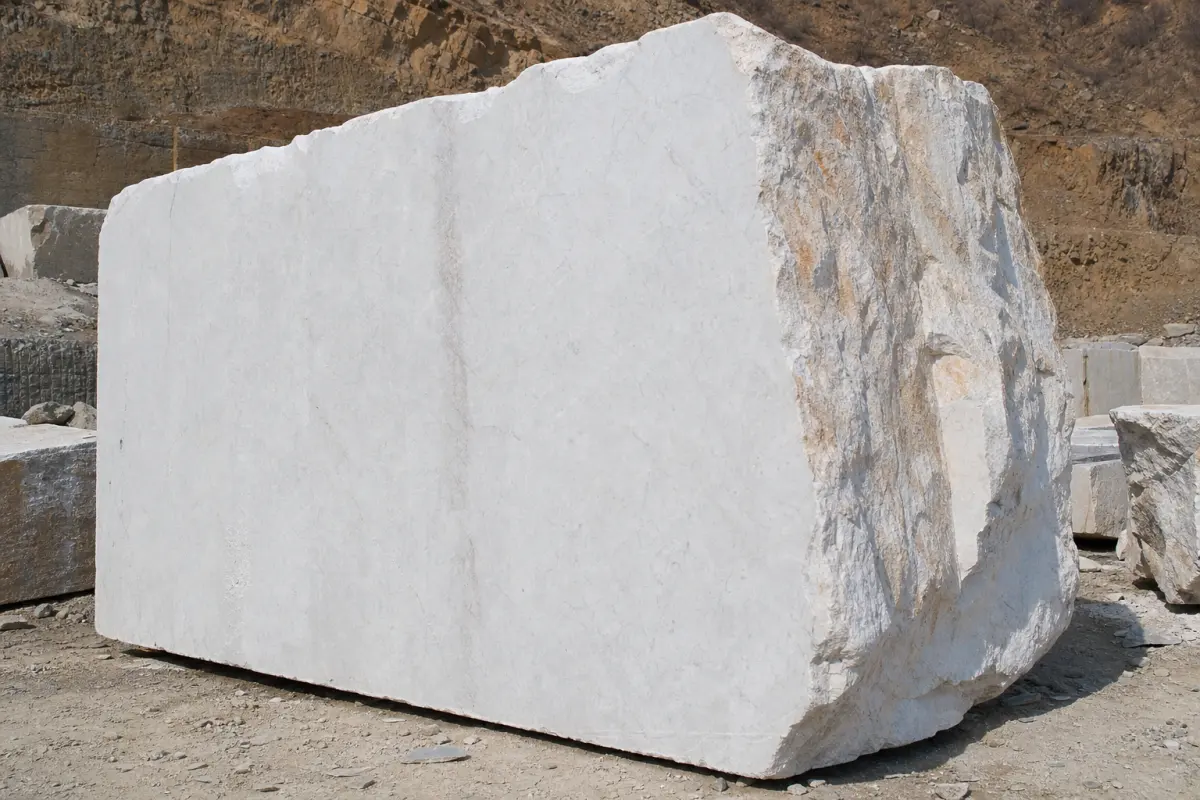
Buner white marble is a commercial family, not a single colour chip. Importers and architects say the words as if they were Carrara, Statuario, or “Pakistan white” in a freight quote, then argue on site when one container runs cooler and the next runs creamy. The stone comes off Buner District faces—especially the Bampokha cluster—and gets sawn in the Torwarsak–Swari belt. What leaves as No.1, Super White, or Sunny White is a sort, a polish, and a promise about how much grey movement you will accept. This page is product-led: grades, uses, 2 cm versus 3 cm, mesh and resin, tiles versus slabs, and the spec sentences a mill can actually price.
It is not a factory census and not a Carrara-cost essay. For look-versus-import pricing, use Super White Buner versus imported Carrara. For how to hire the mill, use the factory-direct playbook. Here you will write a specification that survives a second container: shade lot, thickness, finish, fill, and use. StoneVaults listings exist so you can point at Super White slabs or 60×60 tiles instead of a mood board titled “white luxury.” RFQ is the checkout. The spec is the product.
What buyers mean when they say Buner white marble
In a Gulf meeting, Buner white marble often means “bright Pakistani white that is not as expensive as Italian, with some grey hairline allowed.” In a Karachi trader’s mouth it can mean anything pale that came north of Nowshera. In a Torwarsak shed it means a stack with a lot letter and a commercial name the owner is willing to repeat on an invoice. You want the third meaning. Write the commercial name, the origin cluster, and the reject band. “White from Buner” is how you buy three shades and one argument.
The district also produces greys, blacks, pinks, and onyx. Those are cousins in the truck, not grades of white. Badal grey is a flooring workhorse. Nanser black is a vanity and feature stone. Honey onyx is a backlit or reception piece. Pink fancy slabs are a small lot. If your BOQ says Buner white and the mill ships a friendly grey because the white face is short this month, that is substitution, not help. Put origin cluster and colour family on the same line of the spec so the mill cannot “help” you.
Bampokha No.1 versus Super White versus Sunny White
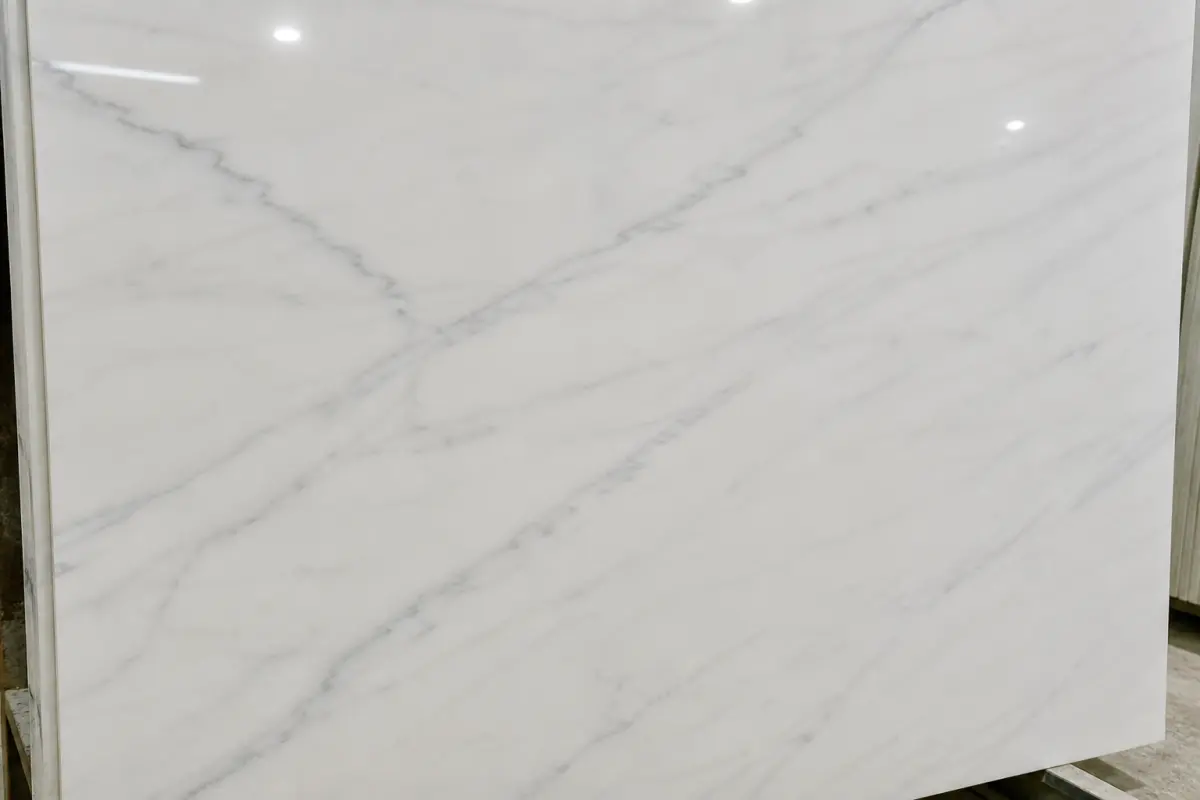
Bampokha No.1 is the reference export white for many repeat buyers: cleaner background, manageable veining, a polish that reads as commercial rather than as a cave. Super White is a brighter sort from the same belt; it wins when the architect’s sample board sits next to paint labelled “cloud.” Sunny White carries more movement and sometimes a warmer ground; Sunny Grey is the honest name when the movement takes over. None of these are laboratory colours. They are shed sorts. Ask for a current bundle photo with the name painted on a card in the frame. Names without cards drift.
Do not stack all three names on one PO “so we have options.” You will get the mill’s leftover of each. Pick a primary and a permitted alternate with a written delta: “Super White preferred; No.1 accepted if lot photo approved; Sunny Grey not accepted for lobby.” Mills understand that sentence. They do not understand “as per sample” when the sample is a phone screenshot of a different year’s face. Link the primary SKU on StoneVaults—Bampokha No.1 or Super White—so the RFQ and the listing share a name.
Grey hairline, yellow oxidation, and what is a defect
Light grey hairline is usually a character of the family, not a fail, unless you paid for a Super White sort that was sold as uniform. Yellow oxidation on the face is a fail for most export programmes; it reads as dirty in photographs of finished lobbies. Open pits are a fail unless you specified filled stone and accepted the fill colour. Cracks that need mesh to hold the slab together are a mill problem, not a design feature. Write those four lines. You have just done more than most WhatsApp buyers do in a month.
Grey cousins and why Badal is not a white
Badal-style grey from Buner is a legitimate SKU for large floors where uniformity of grey beats brightness. It is not a failed white. Designers who try to mix unlabelled grey into a white lobby to “save the container” create a checkerboard that only they think is subtle. If you want a two-tone scheme, specify Badal grey as the field and Buner white as the dado or the lift lobby, with a joint detail. That is a project. Hidden mixing is a claim.
Sunny Grey sits closer to white than Badal and fools more people. Use it where the lighting is even and the client has seen a large mock-up, not a 10 cm chip. For mosque interiors that need calm, No.1 or Super White usually photographs better in the long dado runs. For back-of-house, staff corridors, and parkades, greys earn their keep. Grade follows use. Use does not follow whatever was on the trailer on Tuesday.
Flooring, cladding, and mosque work: matching grade to use
Flooring wants calibre, abrasion honesty, and a shade lot large enough to cover the grid plus spare. Honed often beats polished in wet lobbies and in dusty cities where polish becomes a maintenance contract. Cladding wants thickness discipline, mesh, and an anchor conversation with the façade engineer; marble is not a generic “stone panel.” Mosque work—dados, mihrab surrounds, sahn paving—wants calm sorts and repeatability, because worshippers see the wall at close range for years. A busy Sunny White that looks rich in a villa hallway can look noisy on a long mosque dado.
Hospitality packages often want both: quiet white in guest-room wet areas, more movement in the restaurant feature wall. Split the RFQ by use, not by “the hotel’s marble.” Gulf hotel programmes that treat Buner white as one line item discover the restaurant and the bathroom were sawn from different weeks. For Saudi mosque and villa patterns specifically, continue to Buner marble for Saudi Arabia after you freeze grades here. For international project language on Bampokha, use Bampokha white for international projects. This page stays on how to name the stone.
- Lobbies and large floors: Super White or No.1, honed or polished as the maintenance plan allows, one shade lot, 8–10% spare.
- Wet areas: honed or lightly polished, mesh-backed 2 cm, filled pits, avoid high-contrast fill colour.
- Mosque dados: calm No.1, book-match only if the mill can actually pair; fake book-match is worse than none.
- Feature walls: Sunny White or onyx; do not force No.1 uniformity on a wall that wants drama.
- Exterior cladding: engineer it; acid rain, irrigation overspray, and thermal movement are not WhatsApp topics.
2 cm versus 3 cm, mesh, and resin
2 cm is the workhorse for walls and many floors; it packs more square metres per crate and per rupee of trucking from Buner to Karachi. 3 cm shows up when the specifier is worried about lippage, impact, or a luxury tell. Neither thickness forgives a bad bed. Mesh on the back of whites is normal and should be stated, not hidden as if it were shame. Resin filling should be stated with colour: body-matching fill versus a bright epoxy that flashes under downlights. Export buyers who skip those sentences buy a surprise in the first room that faces Mecca window light—or any low sun.
Tolerance: write millimetres. ±1 mm on 2 cm is a yield conversation. ±2 mm is easier on the mill and harder on the installer. If the installer is a Gulf fit-out firm with laser beds, you can ask for tighter. If the installer is a local crew on a Peshawar villa, do not specify a laboratory and then scream about cost. Buner white marble is a natural stone sawn on belts that also lose hours to PESCO. Thickness discipline is a paid extra, not a moral default.
Book-matching, veins, and when to stop
Book-matching Buner whites is possible on quieter No.1 lots and often disappointing on Sunny movement. Ask for a dry-lay photo of the pairs before polish if book-match is in the design. If the mill has never dry-laid for you, they are guessing. Guessing is expensive on a mihrab. Many commercial floors look better with a consistent random lay from one shade lot than with a forced mirror that almost works. Specify the lay. Installers will otherwise invent a pattern at midnight.
Tiles 60×60 and the calibre problem
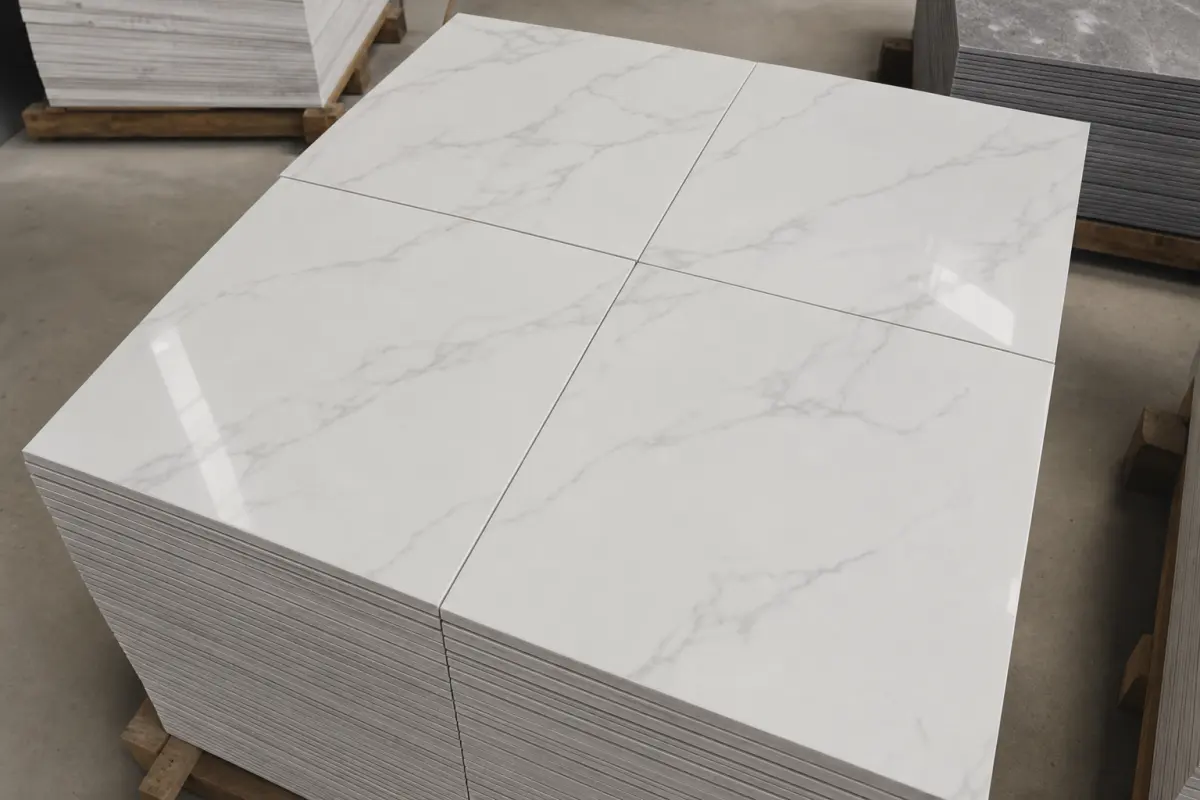
Tile lines in Buner are not automatically the same shade as the slab programme, even when both boxes say white. Calibre (the actual size versus the nominal 60×60) and rectified edges decide whether a large floor looks like a grid or like a complaint. Ask for a calibre statement, thickness of the tile (often 15–18 mm, sometimes 20 mm), finish, and whether the lot was cut from the same family of blocks as your slabs. If the mill cannot say, assume they were not, and design a joint or a different room.
Cartons, palettes, and breakage allowances belong in the RFQ. Tiles travel differently from slab A-frames. A mill that is excellent at 3 cm slabs may treat tiles as a side job. Inspect a carton the way you inspect a bundle: tape, shade, edge. Domestic 60×60 for Mardan housing is not the same product as export tile for a hotel. Say which one you are buying. Link the export SKU—Buner white tiles on StoneVaults—so the mill sees the same name you do.
How to write a specification a mill can price
Use a short sheet, not a novel. Identity: Buner white marble, commercial grade (No.1 / Super White / Sunny White), origin cluster (Bampokha unless approved otherwise). Appearance: shade lot letter, hairline allowed or not, yellow reject, fill allowed or not. Dimensions: 2 cm or 3 cm, tile 60×60 if any, tolerance. Finish: polished / honed, mesh yes/no. Commercial: quantity plus spare, Incoterm (ex-factory Torwarsak/Swari or FOB Karachi / Port Qasim), inspection window. Logistics: crate type, packing town. That sheet is the RFQ body on StoneVaults.
Attach two photos: accept and reject. Attach a note on use (floor, wet wall, mosque dado) because use changes finish. Name the mill town if you already hired; if not, let two mills bid. Profiles such as Zeex Naturals and AYAZ MARBLE are starting points, not the end of comparison. Price only against this sheet. A cheaper quote that drops mesh and changes grade is not cheaper. It is a different stone.
- One primary grade, one written alternate, one reject photo.
- Thickness and finish on every line item, including spares.
- Shade-lot freeze before the second gangsaw week starts.
- No silent substitution of Chamla or mixed white for Bampokha.
- Packing and Incoterm as part of the spec, not a later favour.
Shade lots, book-matching, and container continuity
Container continuity is the unglamorous heart of export white. Lot A should finish the lobby. Lot B can take back-of-house. Do not load A and B into one grid because the truck was ready. Photograph stacks with lot letters before polish when the programme is large. Keep spare in the same lot, not “we will send matching later.” Later is another face. Mills in Torwarsak will hold a lot if you pay like a grown-up and do not ghost them for six weeks. They will not hold it for a WhatsApp maybe.
If a second container is likely, say so in the first RFQ so the mill does not sell the rest of the face out from under you. You will not get a legal option on a mountain. You will get a courtesy if the relationship is real. Factory-direct relationships, as in the supplier playbook, exist for this reason. A trader with a Karachi photo cannot hold a face. A mill that sawed lot A can try. That try is worth more than a 2% discount on container one.
Export packing and what white looks like after a Karachi summer
White slabs sit in heat, dust, and humidity between Swari and the CFS. Plastic, edge guards, and A-frames are not cosmetics. Staining from wet timber, rust from cheap nails, and broken corners from a strap that was never a strap—these show up as “the marble changed colour” in emails that should have been packing claims. Name the packer if FOB. Name the mill’s crate standard if ex-factory. Fumigation certificates for some destinations are the packer’s job; put them in the document list so they are not a pier surprise.
Open-crate photos at stuffing, seal numbers, and a moisture note if the stone sat through monsoon-adjacent weather will save you. Polish can haze in bad storage; a light re-polish at destination is sometimes cheaper than a fight. Specify whether destination re-polish is expected. Gulf fabricators often assume they will finish edges anyway. North American importers may expect a more retail-ready face. Write the assumption. Buner white marble does not change geology in Karachi. It does change surface if you pack like domestic random.
Specifying Buner white on StoneVaults
Open Pakistan marketplace listings for white slabs and tiles, pick the commercial name that matches your sheet, and file one RFQ with the spec above. Cross-link blocks only if you are cutting yourself; otherwise stay on slabs and tiles. Use pink fancy or honey onyx as separate line items when the design needs them—do not bury them inside a white container without a packing list. Keep the RFQ, the lot photos, and the crate marks in one thread so the second project starts from a record, not from folklore.
Say Buner white marble when you mean this family. Then immediately say which grade, which thickness, which use, and which lot. Mills in Torwarsak and Swari can work to that. They cannot work to a Pinterest board titled luxury. Specify like a buyer who has stood in the slurry and knows PESCO will cut the line. The stone is good enough for export hotels and mosques when the spec is honest. The spec is your product. The marketplace is how you send it to people who actually run the saws.