A marble RFQ on a Pakistan B2B marketplace only works when thickness, finish, shade band, MOQ, Incoterm, port, and photos are locked. This spec sheet is what architects and importers copy so Torwarsak factories quote the same job.
A marble RFQ Pakistan that says “one container white marble, best price, FOB” is not a request for quotation. It is an invitation for five factories to answer five different jobs. One mill in Swari prices commercial Bampokha at 2 cm polished, no mesh, packed in reused A-frames. Another mill in Torwarsak prices No.1 Super White at 3 cm, resin-filled, fumigated crates, stuffed at a Karachi yard. Both answers arrive as “USD per square metre.” Neither is comparable. On a B2B marketplace the damage is worse than on WhatsApp, because you will sort those numbers in a table and pick the cheapest line as if it described the same stone.
This article is the operational spec sheet. It is not a mood board and it is not a legal contract. It is the minimum field set that lets a Buner gangsaw owner, a Karachi forwarder, and a Gulf architect read the same job. Pair it with the architect-facing RFQ spec template when design intent still needs translating, and with the platform overview in B2B marketplace for marble in Pakistan when you are deciding why to publish the RFQ online at all. Then fill the fields below so a stone RFQ actually produces a B2B marble quote Pakistan you can award.
Why “container white marble” fails in Buner
White is not a SKU in Malakand Division. Bampokha Sunny White, Super White, Carrara-type selections, and commercial lots with clouding all leave the same hill system and can sit on the same truck. A factory that hears “white” will bid the lot it can saw this fortnight—often whatever block is already on the yard after last week’s quarry run. If your lobby sample is a bright, quiet field and the mill quotes a commercial bundle with gold movement, you have not been cheated yet. You have been vague. The cheat happens later, when you approve the price and reject the stone at stuffing.
Container is not a quantity either. A twenty-foot box of 2 cm slabs is a different square-metre count from a twenty-foot box of 3 cm slabs, and both differ from a mixed load of tiles plus feature onyx. Weight, not volume, usually fills first on 3 cm hotel floors. Factories that run gangsaws in Torwarsak think in bundle count, blade hours, and whether your thickness matches the blocks already marked for that saw. “One container” without thickness is a riddle they solve in their own favour.
Best price is the third failure. Ex-mill Swari, ex-warehouse Karachi, and FOB Port Qasim are not the same number with a shipping add-on. Sales tax on erstwhile PATA industrial supplies, crate timber, mesh, and inland haul can exceed the gap between two mill quotes. If you do not name the Incoterm and the loading point, you are comparing a factory-gate rupee with a port-gate dollar and calling it a tender.
Lock thickness, finish, and shade band before price
Thickness is the first millimetre that changes everything downstream: block selection, gangsaw setup, crate tare, container payload, and fixing system on site. Write 20 mm or 30 mm (or both, as separate lines). Do not write “standard.” In Buner, standard means whatever the last buyer took. If walls and floors differ, split the RFQ. A 2 cm wall package of Bampokha No.1 white slabs is not a 3 cm floor package of the same commercial name, even when both come off one block family.
Finish is the second lock. Polished, honed, leathered, and brushed are different polish-line programmes. A mill with an eight-head line will still guess grit sequence if you only say “good polish.” Attach a sample photograph taken in daylight and a second under warm interior light if the project is hospitality. State whether resin fill and fibre mesh are allowed, required, or forbidden. Soft whites from Bampokha often need fill; a no-resin rule without a yield discussion simply inflates waste and price.
Shade band is where most Pakistan stone RFQs collapse. “No.1” is not an ISO colour. Ask for a named commercial SKU—Bampokha No.1, Super White, Badal grey—and then define the band: background brightness, vein colour (grey versus gold), maximum movement, and whether mixed-block bundles are acceptable. If you have an approved sample, photograph it with a ruler, a date stamp, and a sheet of white paper in frame. Tell the mill that production must stay within that band, not “similar white.” Cross-shop Super White Buner slabs only when the architect has approved a brighter alternate; otherwise you will receive two valid quotes for two different rooms.
Format lines that belong on every stone RFQ
- Format: polished slab, calibrated tile, cut-to-size, or raw block—never mixed on one price line.
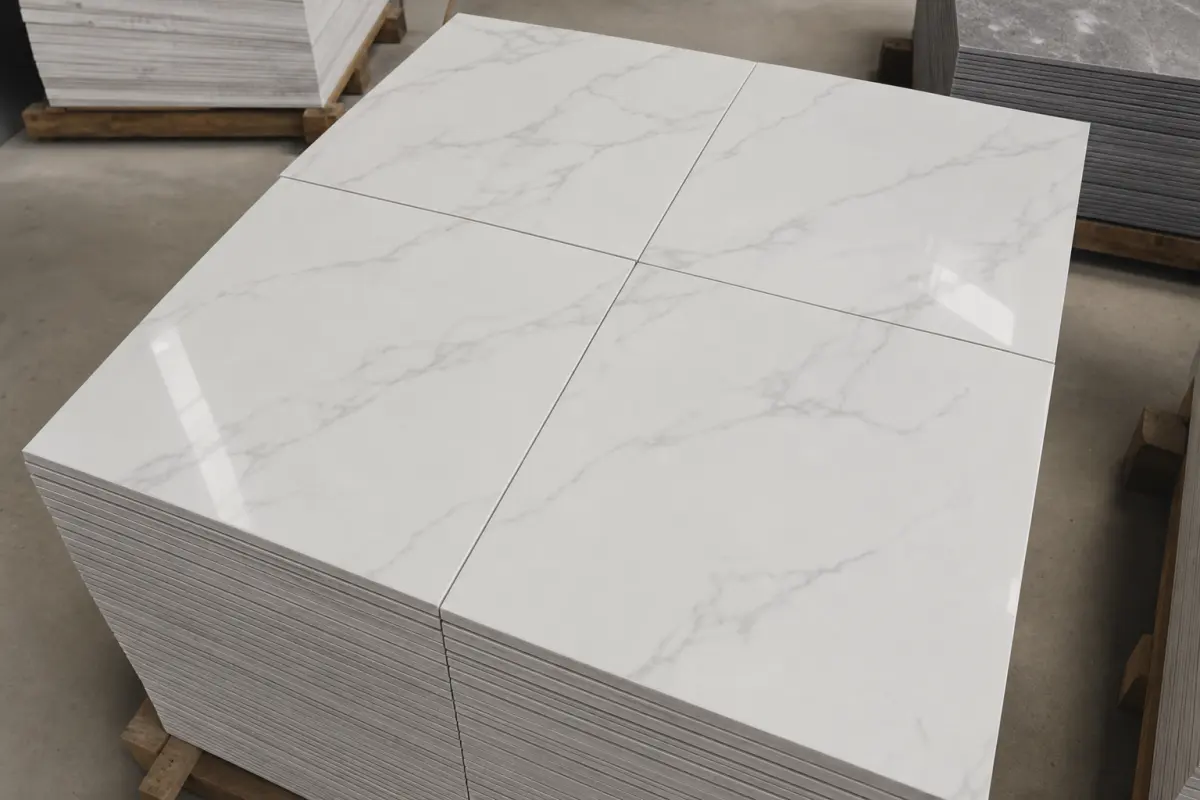
- Nominal size: slab length/width range the mill may ship, or tile module such as 60×60 Buner white tiles.
- Tolerance: thickness ±1 mm on export lines unless you accept job-shop variance.
- Edge: sawn, honed, or bevelled; mesh-backed or not.
- Repair policy: maximum fill area per slab; replacement rule for corner chips before stuffing.
- Book-match: yes/no; if yes, number of matched pairs and whether they must ship in one container.
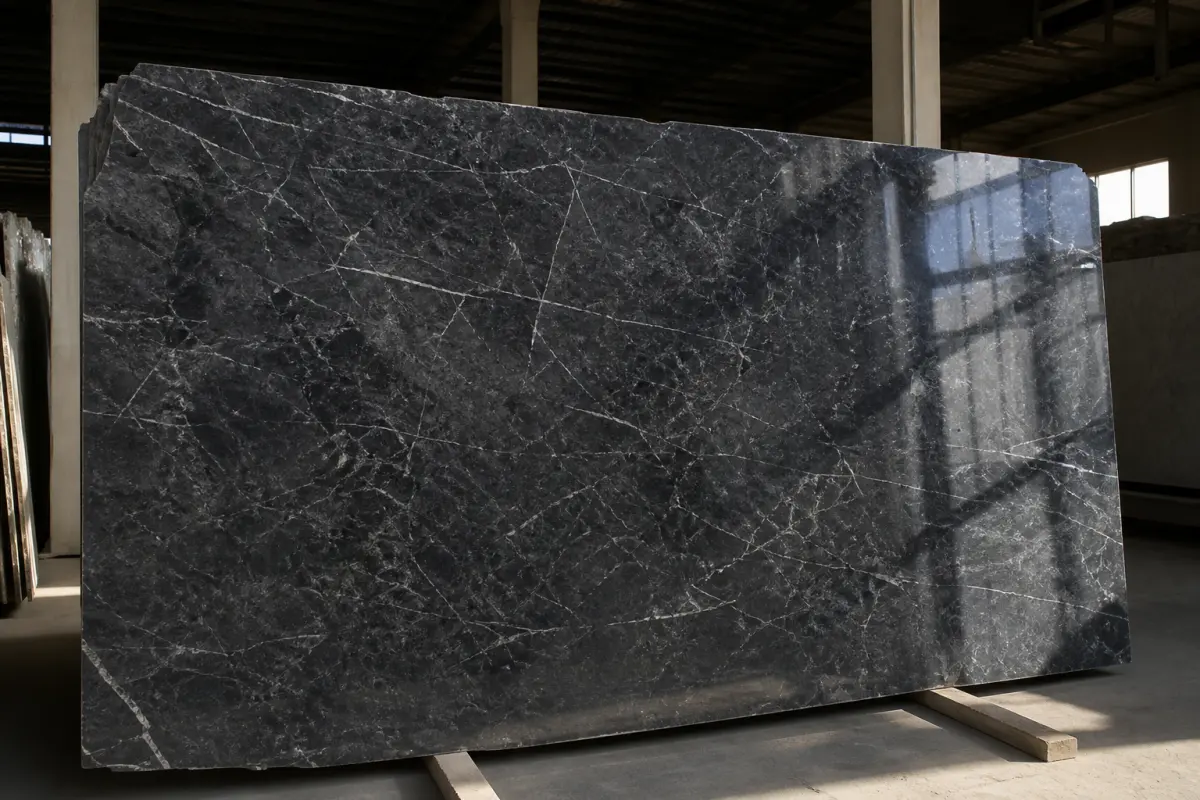
Grey corridors and black feature walls need their own lines. A Badal grey floor RFQ with a white lobby parent is two shade lots, two polish runs, and often two bundle maps. Do not bury the grey inside “also some grey if available.” Factories will either omit it or fill leftover commercial grey that does not sit next to your approved white.
MOQ, Incoterm, and port: the commercial block
Minimum order quantity in Buner is a factory habit, not a statute. Export mills prefer one material and one thickness per container because shade matching and crate stacking are simpler. If you need a trial lot, say so and accept a higher unit price or a mixed container with a declared bundle map. Do not ask for “MOQ flexible” without a square-metre number. Put a target range: for example 220–280 m² of 2 cm slabs, or a named tile pallet count. Wholesale container logic is covered in the MOQ and Incoterms guide; this RFQ sheet only needs you to pick one commercial structure and repeat it to every bidder.
Incoterm must be a named term plus a named place. Useful options for KPK stone: EXW / ex-mill Swari or Torwarsak; FCA Karachi dry-port yard; FOB Karachi or FOB Port Qasim; CIF Jebel Ali, Dammam, or Hamad. If you write FOB without the port, a mill that has never stuffed a container will still send a number, and a Karachi trader will send another. They are not bidding the same risk. Who pays the mountain-to-port gap is a separate commercial article; on the RFQ you only need to force every quote onto one term so the table is honest.
Port and destination country belong in the header, not in a later WhatsApp. A mill quoting for a Peshawar tower will pack differently from a mill quoting for a Doha hotel. Wooden crate fumigation, ISPM-15 stamps, and packing-list language change with the destination. Name the consignee city even if Incoterm stops at Karachi. Factories plan blade time against your opening date; they cannot do that on “soon, Gulf.”
Photos factories can quote against
Stock images of Italian quarries are not a specification. A usable photo set for a Pakistan marble RFQ includes: the approved sample with a scale; one full-slab shot; one close-up of vein and any pitting; and, if you are matching a prior container, a bundle photo with chalk marks and crate stencil visible. Ask bidders to reply with photos of the actual blocks or bundles they intend to saw—not their catalogue hero shot. Date-stamped yard video is better than a PDF brochure.
If you have no physical sample, pick a live listing as the visual reference and say so. Linking Bampokha No.1 or a Super White product page on StoneVaults is clearer than “like the marble in the Marriott lobby.” The mill can then say yes, no, or here is our nearest band. That sentence is worth more than a 10 percent price gap you cannot defend at the mock-up.
Copy-paste spec sheet for a B2B marble quote Pakistan
Paste this block into a StoneVaults RFQ, a PDF, or both. Delete lines that do not apply. Do not delete thickness, finish, shade, quantity, Incoterm, or photos.
- Project / RFQ ID: name, city, install zone (lobby floor / wall / wet / BOH).
- Commercial name: e.g. Bampokha No.1 white; acceptable alternates listed explicitly.
- Format: slab / tile / block. Tile module if applicable.
- Thickness × finish: e.g. 20 mm polished; resin fill allowed; mesh required.
- Quantity: square metres including stated waste factor; slab count estimate if known.
- Shade band: attach sample photos; mixed-block yes/no; vein colour limits.
- MOQ / shipment: one 20 ft or 40 ft; mixed SKU yes/no with bundle map.
- Incoterm + place: e.g. FOB Port Qasim / EXW Swari mill.
- Destination: country, port or site city, required documents (COO, packing list, fumigation).
- Packing: A-frame, fumigated timber, max slabs per crate, corner protection.
- Inspection: pre-shipment photos / third-party at mill or Karachi yard.
- Lead time: production week after shade approval; power-outage buffer acknowledged.
- Payment: deposit / polish-complete / against packing photos or B/L—never 100 percent blind.
- Factory declaration: mill union-council or GPS; NTN on invoice; saw vs trader role.
Architects who still need lighting, slip, and wet-area notes should keep those on the architect spec template and attach it. Importers buying a first container without a design team can publish the commercial block alone on the marketplace and still get comparable mill bids. Online buying mechanics sit in buy marble from Pakistan online; this page is the field list that makes those clicks mean something.
How a Torwarsak mill actually reads your RFQ
The production manager does not read your brand story. He looks for thickness, because that sets the gangsaw. He looks for polish versus hone, because that sets the line. He looks for square metres, because that sets how many blocks to pull from the yard. He looks for FOB versus ex-mill, because that decides whether he must phone a Karachi forwarder. If any of those are missing, he will either not bid, or he will bid a stock lot he already has. Stock lots are not evil. Undeclared stock lots are how shade drift enters a hotel programme.
Load shedding still shapes honest lead times. A mill that promises fourteen days in a PESCO feeder week that only delivers night hours is not lying about skill; it is omitting physics. Ask bidders to state last month’s productive saw hours or to price from existing polished stock. Electricity reality is documented in the district research; on the RFQ you only need a line that says lead time is after shade approval and subject to declared mill hours. Factories that refuse to discuss hours are usually traders relaying someone else’s queue.
Tax language belongs on the invoice line of the RFQ. Ask whether the unit price is exclusive of federal sales tax and whether the mill will issue an FBR-compliant invoice under its NTN. Rock-bottom WhatsApp prices often omit the tax a letter of credit will require. You do not need to lecture the mill about PATA history. You need the same tax treatment on every bid so the table stays comparable.
Failures that make quotes incomparable even when fields look complete
Mixing slab and tile on one unit price is the classic architect error. A 60×60 calibrated tile includes extra sawing, chamfer, and packing density that a gangsaw slab does not. Split the lines. Mixing 2 cm and 3 cm on one average price is the importer error: payload and waste diverge. Mixing EXW and FOB in the same spreadsheet without a logistics add-on is the procurement error. Mixing “No.1” from two mills without a shared sample is the design error.
Another failure is the hidden job-shop. A Karachi letterhead quotes a polished slab; the saw sits in Torwarsak; the polish sits in a third shed; none of that is on the RFQ reply. Require a factory declaration: who owns blade time, who owns the polish line, who issues the invoice. Suppliers such as Zeex Naturals that already publish Buner origin and SKU pages are easier to compare because the listing carries thickness and photos before the RFQ starts. A blank trader profile that only answers in chat has to be forced onto the same fields or excluded.
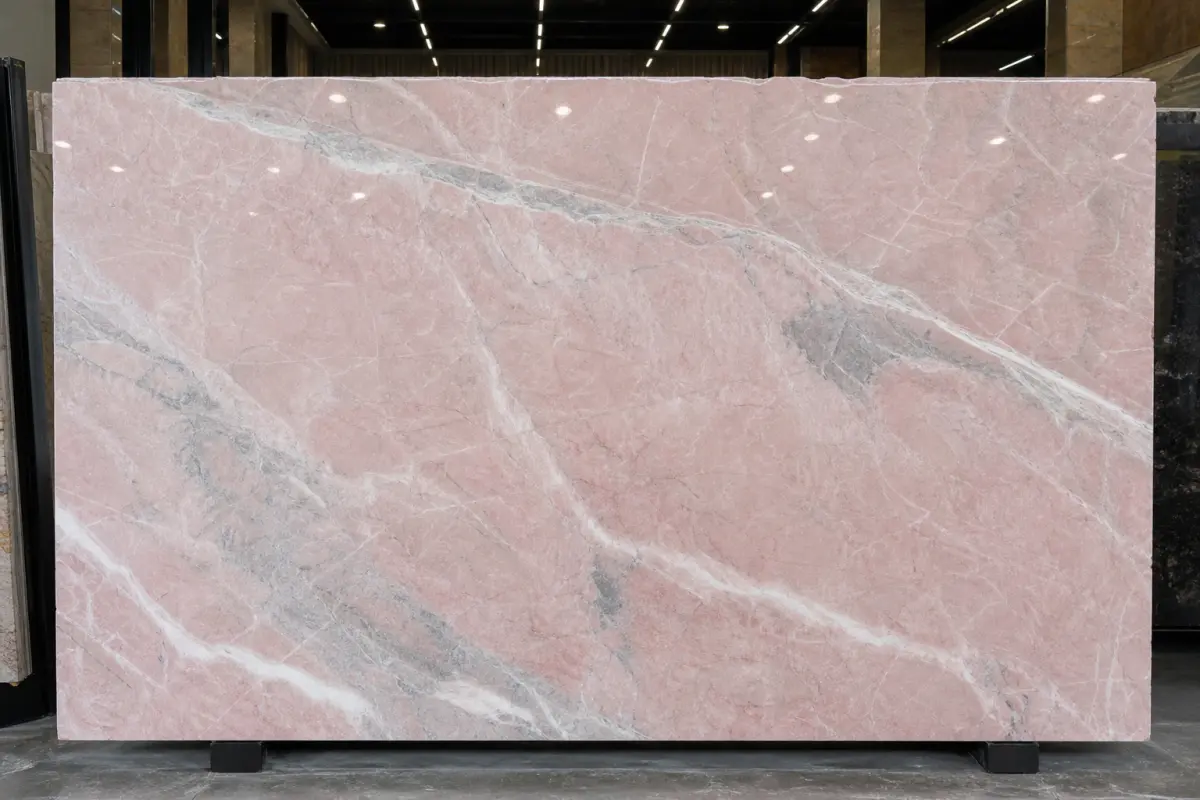
Feature stones need orphan RFQs. Honey onyx, Nanser black, and pink fancy lots do not run on the same polish schedule as a white field tile. If the lobby needs a feature wall, publish a second RFQ with smaller quantity and a higher inspection bar. Dumping “also onyx if cheap” into a white container RFQ gets you leftover pieces that do not match the mock-up lighting.
Publish the RFQ where mills can bid the same job
WhatsApp is how Buner still talks. It is a bad archive. Voice notes do not survive a second container six months later when the architect asks why the shade moved. A marketplace RFQ keeps the spec, the attachments, and the bids in one thread. Filter Pakistan listings first so you see who already stocks the SKU, then publish the RFQ with the copy-paste block above. Invite more than one mill. Three comparable bids beat twelve incomparable chats.
If you are not sure who should receive the RFQ, start from live product pages rather than from a Google list of “marble manufacturers Pakistan.” Those directories are full of Karachi offices. The marketplace path is: pick the stone, attach the spec, collect mill replies, then shortlist for video of the actual gangsaw. For a first conversation without a full BOQ, the contact form still works—but paste the spec sheet into it. An empty “need white marble” ticket recreates the problem this article exists to stop.
How to compare bids once they arrive
Build a table with one row per bidder and columns that match your RFQ fields, not a single price column. Check that every bidder used your thickness, finish, shade reference, quantity, Incoterm, and packing line. If a cell is blank, send it back. Do not mentally “add freight later” unless you add the same freight model to every row. Reject the lowest bid that substituted commercial grade, 18 mm, or EXW when you asked for 20 mm FOB Port Qasim. That bid is not competitive. It is a different product.
Ask for a bundle map on the winning PI: crate count, approximate slab sizes, and a statement that production will come from the photographed blocks. Tie payment to saw start, polish complete, and packing photos. Keep the RFQ ID on every invoice so the second purchase order can repeat the band. Shade history is the only way a Pakistan B2B marble quote stays honest across a hotel that opens in three phases.
Frequently asked questions
Can I send one RFQ for slabs, tiles, and blocks?
You can publish one thread, but you must price three lines. Blocks sell by ton or piece list; slabs by square metre; tiles by module and calibre. A single number for all three is how mills hide the format they prefer to sell this week.
Do I need a physical sample if I attach listing photos?
Listing photos are enough to collect comparable first quotes. Lock production only after a courier sample or a mill video of the actual bundle, especially for lobby stone under warm light. Gulf mock-up rooms still beat phone screens.
What if factories refuse to quote FOB Karachi?
That is useful information. It usually means the mill is ex-works only and you should add a forwarder line yourself—or move the RFQ to FOB bidders. Do not punish an honest EXW mill by comparing it with a trader’s FOB number until logistics sits on both rows.
Should the architect or the importer own the RFQ?
Architects own shade, thickness, finish, and wet-area performance. Importers own Incoterm, MOQ, inspection, and payment. Publish one document with both blocks. Splitting them across two chats is how the mill satisfies the cheaper reader.
A marble RFQ on a Pakistan B2B marketplace is a discipline problem, not a software problem. Write thickness, finish, shade band, MOQ, Incoterm, port, and photos. Make every mill bid that job. Then the cheapest comparable quote is actually cheap—and the expensive one has to explain itself in millimetres, not adjectives.