Doha hotels and fit-out contractors import Pakistani marble from Buner for lobbies, guest bathrooms, and corridor programmes. This guide covers shade continuity, 60×60 tiles versus jumbo slabs, Hamad timing, and when a small lot beats a full container.
Qatar’s hospitality floor is not a catalogue of “white marble.” It is a sequence of mock-ups, operator brand boards, and fit-out calendars that close around Hamad cargo cut-offs. When a Doha contractor searches pakistan marble qatar, the useful answer is a Buner mill that can hold shade across a lobby run, a guest-room tile SKU, and a spare-crate policy—not a Karachi trader with one WhatsApp photo. This guide is for procurement teams, FF&E consultants, and Pakistani marble Doha buyers who already know Super White exists and now need to know whether Torwarsak can feed a hotel programme without a second mock-up after container two arrives grey.
Buner District sits in Malakand Division, Khyber Pakhtunkhwa. Quarry names you will see on packing lists—Bampokha (Pumpoo Khan), Nanser, Chamla, Chagharzai, Elai—feed gangsaws in Torwarsak and Swari, with Daggar as the district seat and Mingora in neighbouring Swat as the trading town where many first meetings still happen. Nothing in that geography is a seaport. Marble import qatar pakistan therefore means saw time in Buner, trucking through Peshawar toward Karachi Port Qasim, then a vessel into Hamad Port—or, still common, a Dubai consolidator who restuffs for the last hop. Get those legs on one calendar or the stone will miss the wet-area close-out even if the mill did its job.
Where Pakistani marble actually lands in Doha hospitality
West Bay towers, The Pearl apartments converted to serviced residences, Lusail hotel keys, Msheireb infill, Education City guest houses, and Katara-adjacent F&B all pull bright calcite whites when the operator will accept a non-Italian name. Pakistani crews already on those sites specify Buner because they have seen the same stone in Peshawar mosques and Islamabad lobbies. That is a real demand channel. It is not the same as a Marriott brand-standard Carrara clause. Read the operator library first. If the finish book names a Tuscan quarry, Buner is a value-engineering conversation, not a silent substitution.
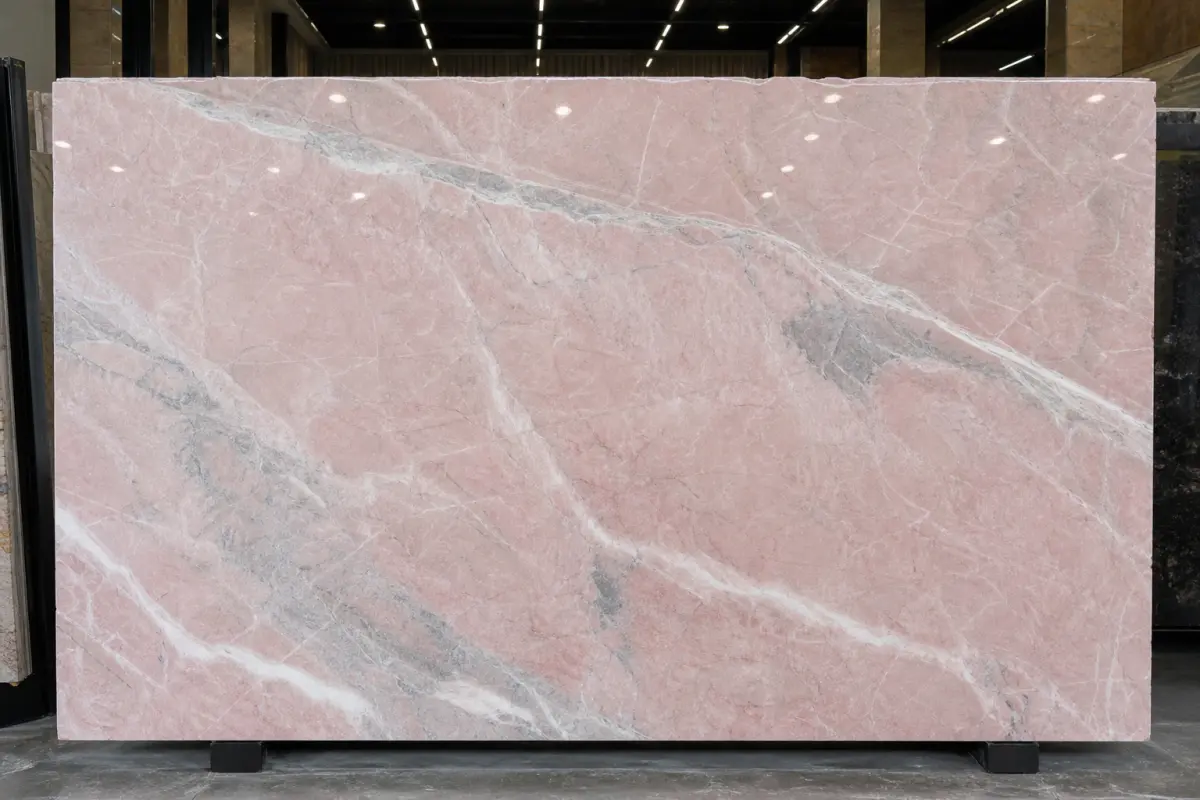
The programmes that fit Buner are large floor fields, corridor runs, and guest bathrooms where replacement pieces matter more than a pedigree stamp. Lobby feature walls that want book-match drama still work when you buy jumbo slabs from one block family and lock the mock-up in Doha before the mill saws the rest. Spa wet rooms and pool decks are a different conversation: calcite marble etches, and Qatar’s cleaning chemicals are not gentle. Honed or treated finishes, honest maintenance notes, and a smaller feature lot of honey onyx for reception desks beat a polished white that the housekeeper will destroy in a year.
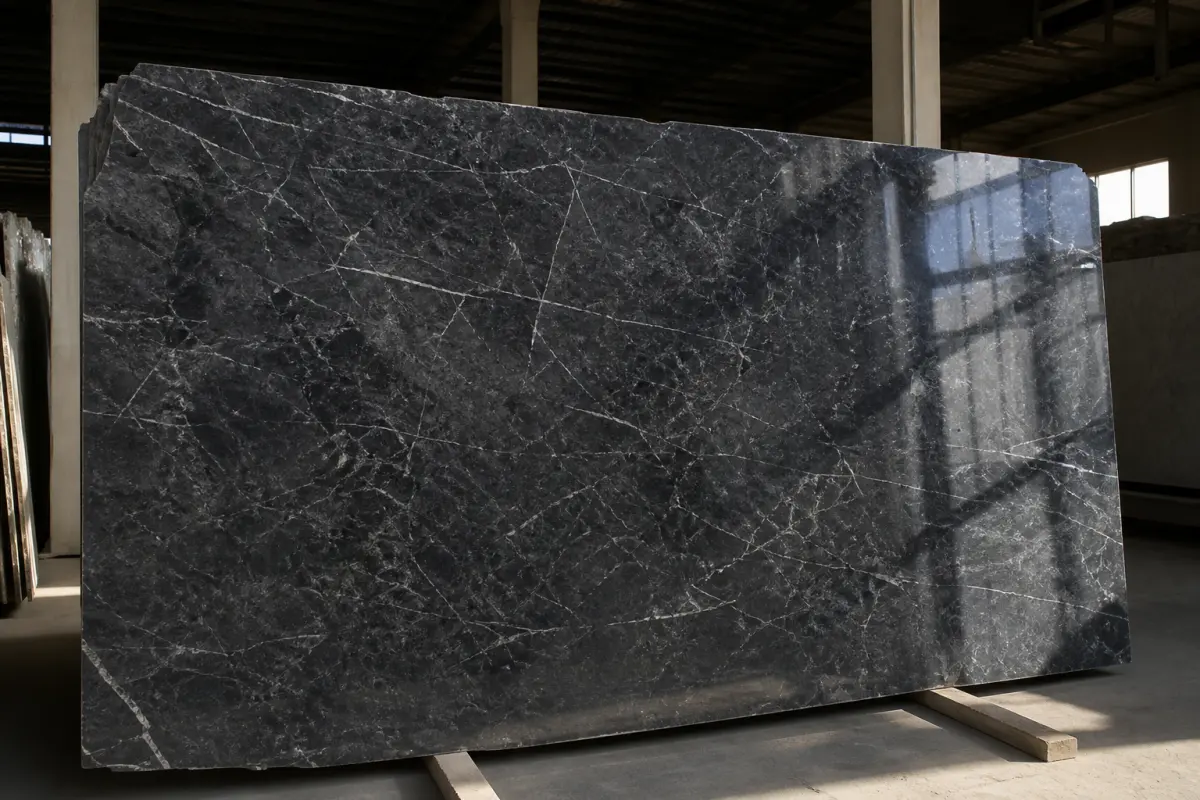
Corridor economics often want a quieter grey. Badal grey from Buner hides traffic better than Super White and costs less per square metre on a 4,000 m² guest-floor package. Split the BOQ by zone the way our northern Pakistan hotel supply note describes: lobby brightness, corridor wear, bathroom calibre, back-of-house tile. One container of “best white” for every zone is how hospitality projects end up with a grey lift lobby that does not match the approved board.
Shade continuity is the hospitality product, not the stone name
A Doha hotel does not buy “Bampokha.” It buys a shade band that must survive three fit-out phases and a snagging walk five months later. Torwarsak factories sort visually. They do not run spectrophotometer lots unless you pay for it. That is workable if you treat sorting as a contract line: one production run for the public realm, bundle IDs photographed against a grey card, and a retained mock-up crate that stays in Doha until practical completion.
Ask which face the mill is sawing. Bampokha No.1 from an upper bench is not interchangeable with a Chamla commercial white that a contractor mixed in to fill a truck. Our mine-level tour of Buner marble mines exists so you can put a face name on the RFQ. If the supplier cannot say Bampokha versus Nanser versus Chamla, you are not buying a hospitality SKU. You are buying whatever was on the yard that week.
Resin fill and mesh backing belong in the spec, not as a surprise on arrival. Soft whites from blasted blocks show hairline webs that a Gulf snagging consultant will reject even if a Pakistani domestic client would accept them. Extraction method is therefore a hotel spec. Link it to the mill: wire-sawn blocks into Bampokha No.1 slabs for visible floors; commercial sorts for service corridors. Do not let a trader relabel both as “export white.”
60×60 tiles versus jumbo slabs on a Qatari hotel BOQ
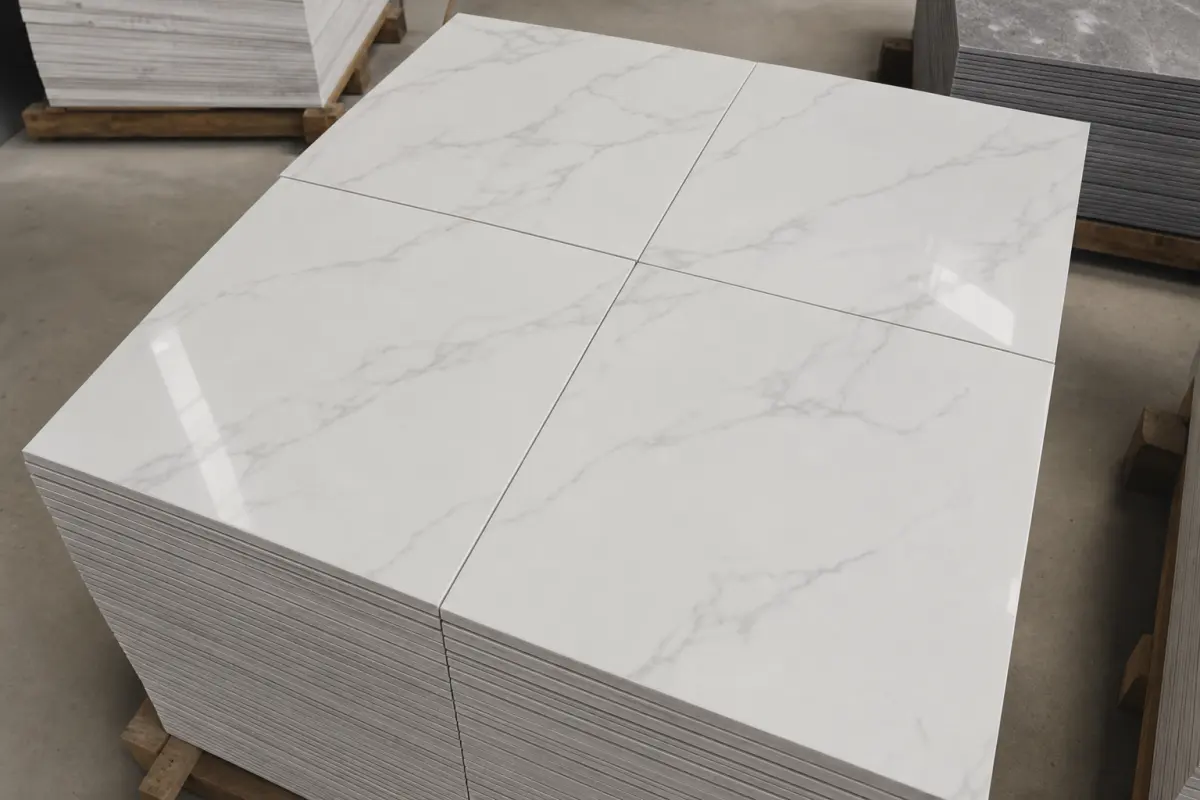
Guest bathrooms and typical keys waste less stone as calibrated tile. A 60×60 cm module from a Buner bridge saw replaces in a night when a slab vanity chips during FF&E. Calibre, bevel, and thickness scatter are the failure modes. Ask for a factory thickness gauge on the sample crate, not a verbal “two centimetre.” Listings for Buner white 60×60 tiles are the right RFQ object for repetitive wet rooms; they are the wrong object for a 12-metre lobby wall that wants a 280 × 160 cm face.
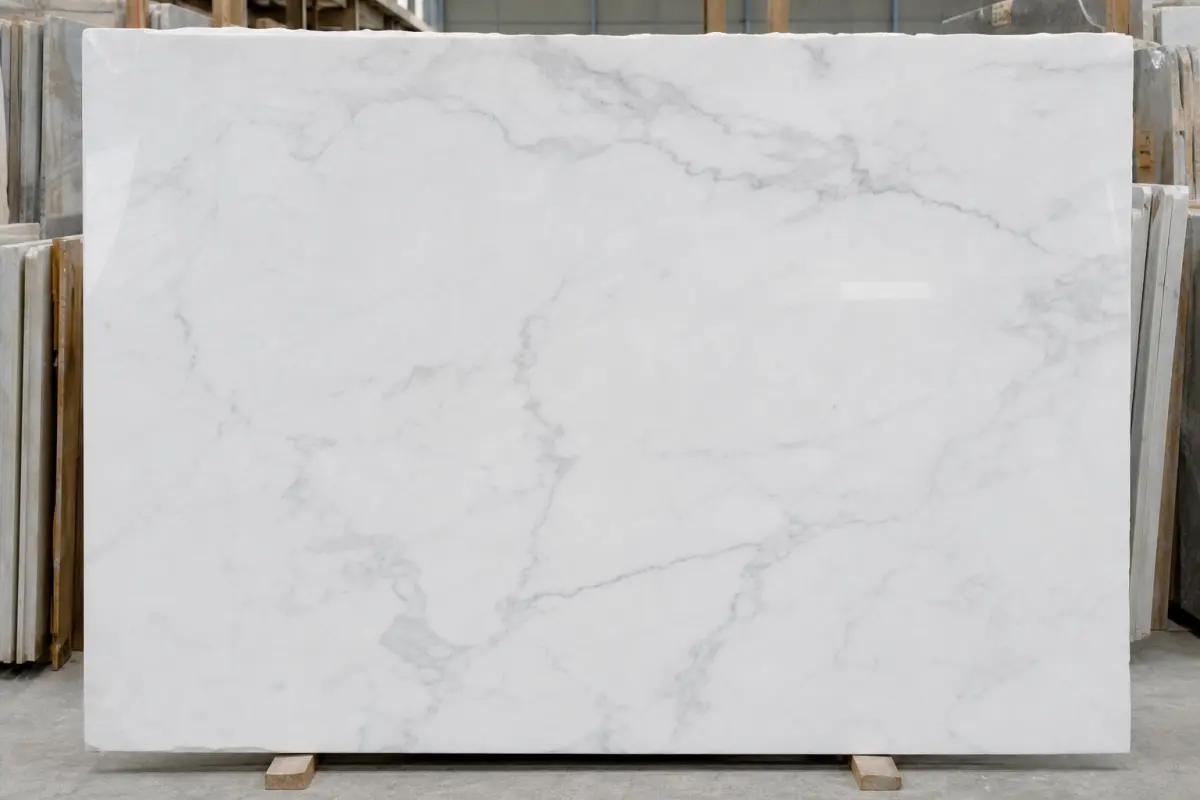
Jumbo slabs earn their keep in arrival halls, ballroom foyers, and lift lobbies where joints are a design decision. Book-matching needs consecutive slabs from the same block. That is a sawing instruction, not a packing afterthought. If the mill’s gangsaw bed cannot take the block height you need, they will subcontract—and shade can drift. Name maximum slab size on the RFQ and reject a tile-line factory that claims it can also do jumbo hospitality without showing the frame.
Stair treads and thresholds often want 3 cm. Qatar’s labour likes a thicker nosing. Do not mix 2 cm field tile and 3 cm treads from unrelated lots and expect the polish to read as one stone under Hamad-terminal lighting, which is colder than a Torwarsak shed. Approve samples under the lighting temperature the operator specified, or under a 4000 K lamp if they did not.
Black feature strips and vanity tops are small lots. Nanser-area black is not a container SKU for most Doha hotels; it is a crate. Schedule it early. Black dust on a white bundle in the same truck is a real packing failure between Swari and Port Qasim. Separate A-frames, separate photos, separate packing-list lines.
Hamad timing: what the calendar actually contains
Fit-out in Doha runs backward from the opening date, not forward from the mill’s optimism. A typical stone path looks like this: sample air-freight to Doha (seven to twelve days door to door if the mill has stock tiles); operator or consultant approval (two to six weeks, longer if a brand standard sits in Europe); production in Torwarsak or Swari (two to six weeks depending on gangsaw queue and PESCO hours—see our Buner electricity note); inland haul to Karachi Port Qasim (several days, more in monsoon or Eid); ocean to Hamad Port (direct sailings exist; transshipment via Jebel Ali is still the default for many consolidators); discharge, customs, and truck to site or a Doha warehouse.
Add those legs without romance and you are looking at ten to sixteen weeks from approved sample to stone on a West Bay floor for a first container. Repeat containers compress if the mill kept the same block family. They do not compress if you change grade names between POs. Pad another two weeks if your forwarder stuffs in a Karachi yard rather than at the factory gate, and pad again if the mill quotes EXW Torwarsak while your contract with the main contractor assumes CIF Hamad.
Hamad Port is not Jebel Ali. Documentation that a Dubai importer waves through can stall in Qatar if consignee, HS description, and packing list crate counts disagree. Read the export document stack in our Pakistan marble export guide and then add Qatar-side agent details on the commercial invoice before the mill packs. ISPM-15 fumigation on wooden A-frames is not optional for many GCC entries. Factories that still nail green timber will cost you a restuff.
Air freight of sample tiles and one vanity slab is cheap insurance. Do not skip it because someone in Mingora said the WhatsApp photo is “same as last villa.” Last villa was not this operator’s lighting. Couriers out of Peshawar or Islamabad beat waiting for a seafreight sample crate that arrives after the mock-up date.
Transshipment through Dubai versus direct to Hamad
A large share of pakistani marble doha still moves as a UAE commercial lot first. That is not always a rip-off. Dubai yards hold mixed SKUs, can break a container into hotel-phase deliveries, and speak the same procurement language as Doha main contractors. It is a rip-off when the Dubai trader relabels Buner commercial as Italian-adjacent and adds two margins. If you already know you want factory-direct Buner, use a Doha or Karachi forwarder and skip the restuff—then read our companion on UAE importers of Pakistani marble so you know what you are choosing not to do.
Direct Karachi–Hamad works for full containers with a named consignee and a Qatari importer of record. Small renovation lots (eight to twenty crates) often still justify LCL via Jebel Ali or a mixed container that a GCC hospitality buyer already has on the water. Do not force a 20-foot exclusive for a 180 m² spa package; you will pay for air in the box. Conversely, do not LCL a 3,000 m² lobby—shade mixing across consolidator cargo is how book-match dies.
Small-lot versus container: the hospitality decision
First-time Doha buyers over-order. They hear “container” from a Buner mill because mills like full gangsaw shifts. A boutique hotel or a restaurant fit-out inside a Pearl tower may need 250–400 m² of white plus 40 m² of feature stone. That is a crate programme with a written option to top up from the same block family, not a 20-foot stuffed with leftovers the mill needed to move. Put a hold quantity in the contract: mill keeps marked bundles for sixty days against a call-off. You pay a holding fee. You do not pay for stone you will cut around a revised MEP drawing.
Full containers make sense for corridor packages and multi-key bathroom tile. They also make sense when one operator is rolling the same shade across two Lusail assets. In that case treat the second building as container three of one programme, not a new RFQ. Archive bundle photos. Our broader GCC hospitality piece, GCC hotel marble from Buner, covers multi-country brand rollouts; Qatar is the tightest calendar of that set because labour camps, visa gates, and site access windows are unforgiving.
Payment should follow production, not charm. Deposit against saw start, inspection photos of polished bundles, balance against packing list and bill of lading. Letters of credit work when the mill has done them before; many Torwarsak units have not. Documentary collection or staged T/T with a surveyor at Port Qasim is more common. If a supplier only wants full cash before the truck leaves Swari, that is a risk flag—see our northern Pakistan marble scam notes before you wire.
What to put on a Qatar hospitality RFQ
Name the city and the asset type (hotel, serviced apartment, F&B, mosque-adjacent guesthouse). Name zones and square metres separately. Name finish: polished lobby, honed wet, tile calibre. Name thickness. Name whether jumbo slabs must come from consecutive blocks. Name Incoterm and the actual handoff—FOB Karachi Port Qasim is not EXW Torwarsak. Name whether a Doha consultant will inspect photos or whether you will fly a surveyor. Attach the approved sample photo with a ruler in frame.
Acceptable origins should be written as a short list, not “Pakistan white.” Example: Bampokha No.1 or Super White for public realm; Badal grey for corridors; Chamla commercial only with written substitution. If Saudi or UAE assets in the same brand already used Buner stone, point to those bundle IDs. Cross-shop Super White Buner slabs against Bampokha No.1 on the same RFQ so mills compete on brightness and vein, not on who answers WhatsApp first.
Verified KPK exporters who already pack for GCC work are easier first partners than a brand-new shed. Start on the Pakistan marketplace, filter origin, and send one structured RFQ. Factory profiles such as Zeex Naturals and Ayaz Marble exist so you can see whether the mill lists slabs, tiles, and blocks separately—hospitality buyers who mix those forms on one PO without a packing map create their own snagging list.
- Approve samples in Doha light, not only in a Buner yard video.
- Split lobby slabs, corridor grey, and bathroom tile into lines with separate shade holds.
- State Hamad or Jebel Ali as the discharge port; do not write “GCC.”
- Require A-frame ISPM-15 crates and bundle IDs on the packing list.
- Keep a mock-up crate in Doha until the defects walk.
- Align mill production with PESCO reality, not with a sales promise.
Lead times versus Buner factory physics
A mill in Torwarsak that already has Super White blocks on the yard can polish a sample crate in days. A mill that must wait on a Bampokha contractor to wire-cut a new bench is on a quarry clock, not a factory clock. Hospitality buyers who treat those as the same “Pakistan lead time” miss openings. Ask whether the stone is yard stock or face-to-saw. If it is face-to-saw, read extraction method in our blasting versus wire-saw guide before you bet a hotel date on a blasted white.
Daggar offices, Swari loading queues, and Elai job shops all sit on the same district roads. Night polish shifts happen when power returns. That is normal. What is not normal is a PI that says “fifteen days FOB Karachi” in July without a power caveat. Build the caveat yourself. Saudi villa and mosque programmes in the same mill’s book will compete for blade time; our Buner marble for Saudi mosques and villas note is worth reading if your Doha hotel shares a supplier with a Riyadh courtyard job.
CPEC did not put a conveyor from Bampokha to Hamad. It slightly improved some north–south habits and raised paperwork expectations. Gulf demand still decides the contract. Pair this Qatar brief with CPEC and Gulf export positioning if you need the regional frame, then come back to the Doha calendar: mock-up, production, Qasim, Hamad, site hoist booking. The hoist slot is often tighter than the vessel.
How StoneVaults is used for Doha stone buys
Publish the BOQ on StoneVaults instead of twelve chat threads. Attach zone drawings, sample photos, and the discharge port. Mills that cannot do jumbo will drop off. Tile-capable lines will bid the bathroom package. Block dealers should not be answering a slab hospitality RFQ; if they do, you will see it in the listing type. Use the marble RFQ workflow so shade, thickness, and Incoterm sit in one record when the main contractor asks why crate 14 does not match crate 3.
Qatar hospitality is a serious market for Buner whites when you treat shade and calendar as the product. It is a poor market if you expect Italian brand cover at Pakistani mill prices with a two-week ocean fantasy. Specify the face, split the formats, time Hamad honestly, and keep the mock-up crate until the snagging list is empty. That is how pakistan marble qatar programmes repeat instead of becoming a one-container experiment that the operator will not let you run again.