Buner’s marble mines are not a single white quarry. This mine-level tour covers Bampokha (Pumpoo Khan), Chamla, Nanser, and neighbouring faces—what they produce, who holds the lease versus who blasts, and why buyers must ask which face filled the truck.
Buyers say “Buner marble” as if the district were one pit. It is not. Marble mines in Buner are a scatter of leased faces in the hills, feeding a dense mill belt on the valley roads. Bampokha (Pumpoo Khan on older tickets), Chamla, Nanser, Chagharzai benches, and the Elai approaches each sell a different mix of white, grey, and black. The mill in Torwarsak or Swari will saw whatever the truck brought. Your packing list will still say “Buner” unless you force a face name. This is a mine-level tour—what each named area actually produces, who holds paper versus who runs the shot, and why a hospitality or China-block RFQ should ask which face. It is not a factory directory. The sheds are mapped elsewhere, in the Torwarsak and Swari mill map and the 2026 quarry-direct factory guide.
Daggar is the district headquarters: offices, some traders, the road logic. Swari is the market town you drive through to see block stacks. Mingora in Swat is where many first cups of tea happen even when the lease is in Buner. Peshawar is banks and forwarders. Karachi Port Qasim is where export blocks and crates eventually sit. None of those towns is a quarry. If a supplier’s pin is a Daggar office and they cannot name the union council of the face, you are buying a desk.
How a Buner marble quarry is actually organised
Khyber Pakhtunkhwa’s mines machinery issues leases and collects royalty on marble by grade bands—super white, ordinary marble, kanda and waste. The person whose name is on the lease is not always the person whose compressor is on the bench. Contractors take faces on a per-ton, per-truck, or seasonal deal. They bring labour, explosives or a rented wire, and a loader. They sell to a yard in Torwarsak, to a mill, or to a Karachi exporter. When a buyer hears “our mine,” the honest follow-up is three names: lease holder, contractor, and the mill that will saw. Our cluster piece on Bampokha suppliers walks the commercial side. Here the point is geological and legal: the face decides colour and fracture. The contractor decides whether you get a cube or a blast pile. The mill decides whether that cube becomes a slab you would show a Doha consultant.
Access roads are jeep tracks that become nalas in monsoon. Winter fog on the valley floor does not stop the hill, but wet clay does. A “we can load next week” from a Chamla contractor in July is a weather bet. Chinese block programmes and Gulf slab programmes both ignore this until a truck does not appear in Swari. Put a weather and road clause in anything that depends on a specific bench.
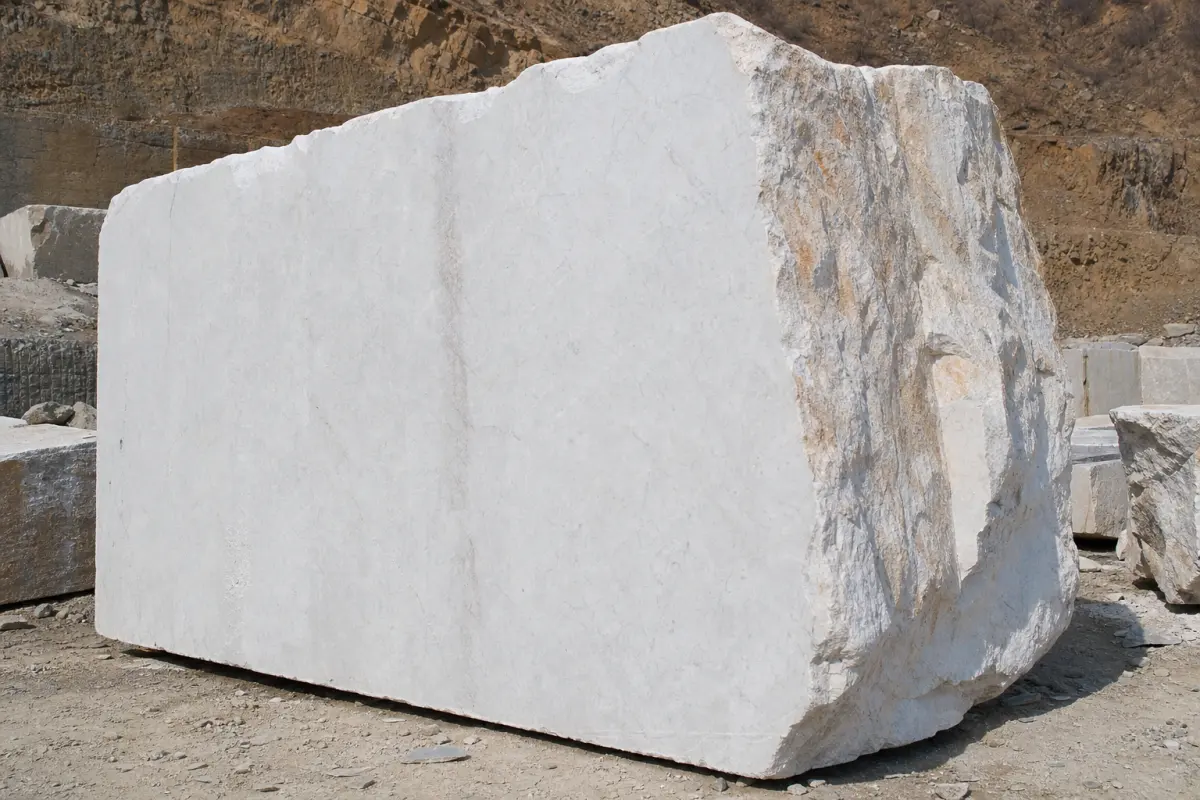
Extraction method is part of the mine, not an optional mill upgrade. Many Buner faces still drill, load, and shoot. Some Bampokha white benches have seen diamond wire, PASDEC rental kit, or a hybrid. The same commercial name on two adjacent leases can therefore be two products. Photograph the face: planar wire cuts versus scalloped blast cups. Then read blasting versus wire saw in Buner before you price the block. A Bampokha raw block listing that cannot say wire or blast is incomplete.
Bampokha / Pumpoo Khan: the white the world already named
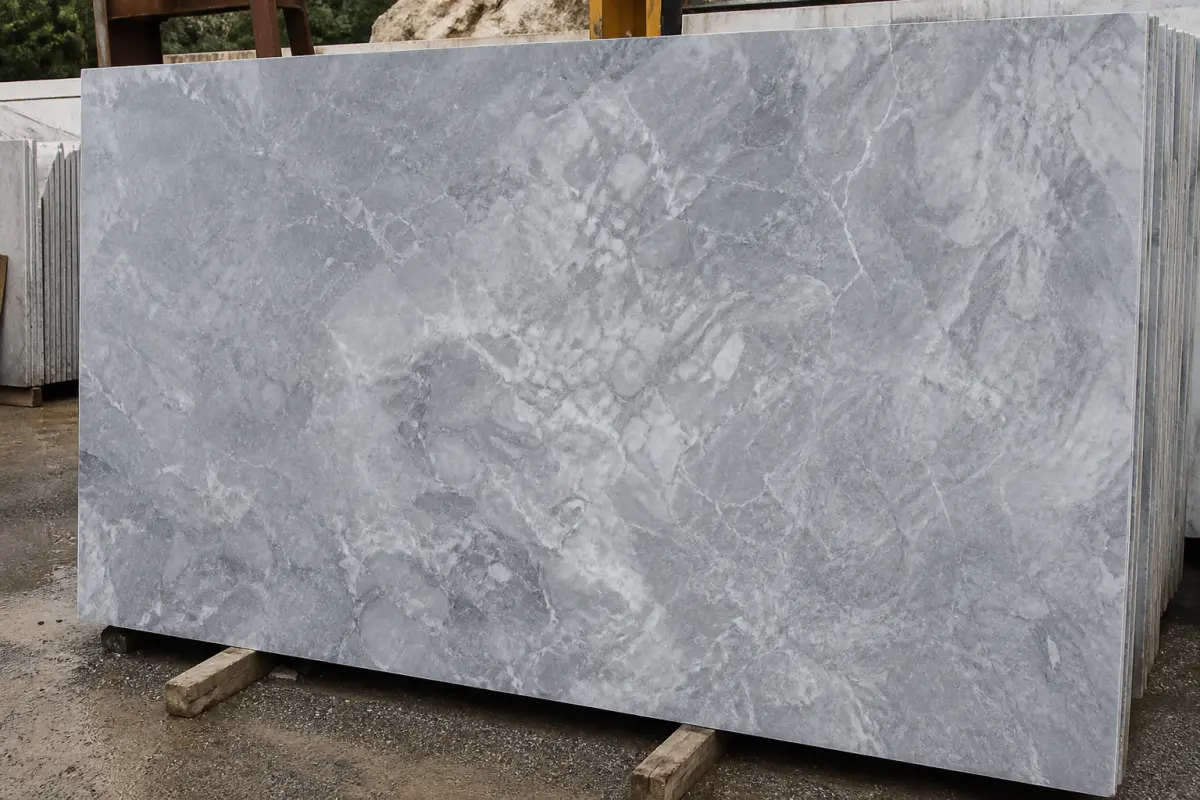
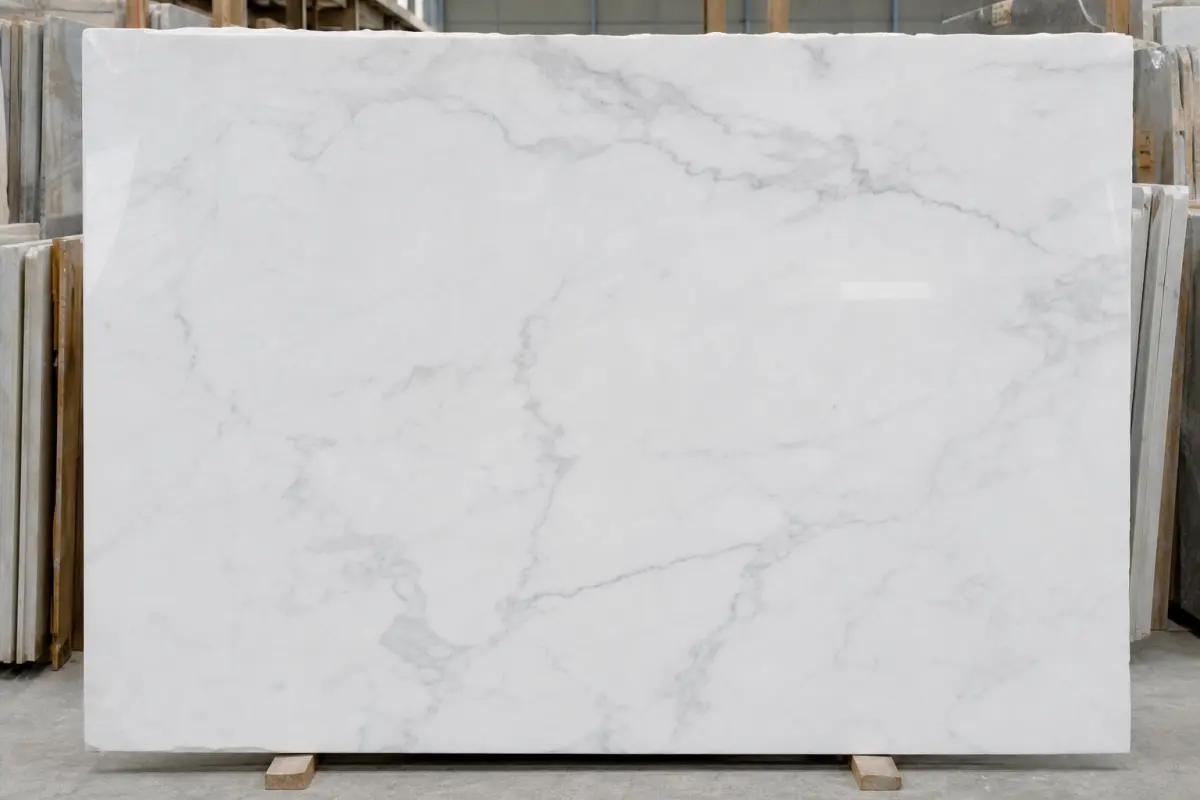
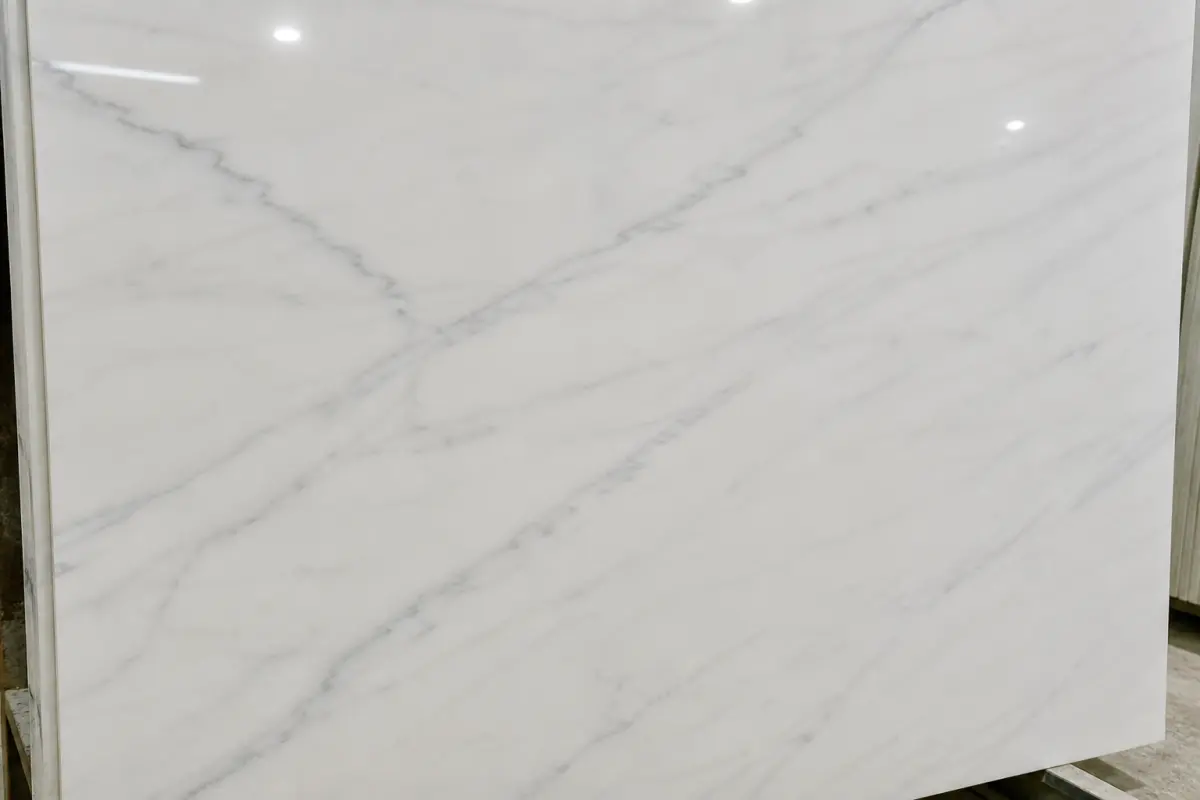
Bampokha is the reference white for the district and for much of Pakistan’s export talk. Pumpoo, Pumpoo Khan, Bampokha No.1, Sunny White—overlapping trade names for material from this hill system. Super-white selections pay a higher royalty tier and should be segregated at the bench, not sorted later with a rag in a Swari yard. Commercial whites with more movement and pinholes fill volume floors. Grey bands (Sunny Grey in the local vocabulary) sit in the same massif and are not a defect; they are a different SKU. Mixing them into a No.1 slab bundle is how a hotel mock-up dies.
What the face sells, in buyer language: bright calcite whites for No.1 slabs and Super White sorts; blocks for China and for Torwarsak gangsaws; some grey that should be sold as grey. What it does not sell, despite WhatsApp: a guaranteed Carrara clone, a freeze-thaw exterior stone, or infinite homogeneous volume from one bench. Benches change with height. The upper face you approved in March is not automatically the face loading in November. Ask for the current bench photo with the block numbers you are buying, not a drone shot from last year.
Bampokha’s advantage is familiarity. Gulf and domestic architects already have a sample in a drawer. The risk is substitution. When No.1 is allocated, a contractor will offer Chamla commercial at a Bampokha price if you only wrote “Buner white” on the PO. Name the face. Visit if the volume is a container. If you cannot visit, require a dated face video that pans from the cut to the painted blocks on the same day.
Nanser: black first, everything else second
Nanser is the name buyers should hear when the BOQ wants jet black or a very dark grey, not when they want a second source of Bampokha white. Industry notes and field papers have long tied Nanser to black marble that Buner mills sell in smaller lots than the white ocean. Black marble slabs from this belt are vanity, feature-wall, and inlay material. They are rarely a 3,000 m² hotel corridor SKU. Treat volume promises with suspicion. Treat blast-versus-wire as even more important: black hides some resin but shows shatter as dull patches and as waste on the gangsaw.
White and grey also come off Nanser-area ground. That does not make them Bampokha. If a supplier offers “Nanser white” as a cheaper No.1, demand a sample next to your approved Bampokha tile. Sometimes it works for commercial floors. Sometimes it is a different grey-white that will fail a shade walk. Invoice origin should say Nanser when the truck left Nanser. Royalty paperwork should match. A black-dust problem on shared trucks is real: do not lash black cubes against white slabs on the same bed without separation.
Nanser access is still a Buner hill road, not a separate logistics universe. Blocks still aim at Swari and Torwarsak saws unless a buyer takes them raw to Karachi. The mill cluster is the same. The face is not.
Chamla: the valley that fills the same gangsaws
Chamla is easy to skip in a sales pitch because it does not have Bampokha’s export brand. It still feeds the same mills. Whites and greys from Chamla leases show up in Torwarsak yards with less ceremony and often a better price for volume flooring. That is useful when the job is a corridor, a Pakistani commercial floor, or a Gulf back-of-house package that should never have been specified as No.1. It is fraud when Chamla commercial is packed as Bampokha No.1.
Chamla marble, in honest mill talk, is often a bit more movement, a bit more grey cloud, a bit less “Sunny” branding. Individual faces vary. Some Chamla whites are clean enough for export commercial. Some are domestic kanda after blasting. The buyer’s job is not to memorise a colour myth. It is to sample the current face and to write Chamla on the RFQ when that is what they want. A fuller supplier picture sits in Chamla and Chagharzai marble suppliers. Here the mine point is simpler: Chamla is a named origin, not a leftover bin.
Logistics: Chamla trucks still have to hit the valley roads toward Swari. Distance is not Karachi distance, but it is not a Torwarsak backyard either. Monsoon and a weak contractor’s loader matter more than on a Bampokha lease that has been running export trucks for years. If your programme is time-critical hospitality, ask whether the Chamla face has loaded in the last thirty days, not whether it exists on a map.
Elai, Chagharzai, and the faces people fold into “Buner”
Elai sits in the processing geography as much as the mining geography: mills, job shops, slurry, the road. Some extraction feeds those sheds from nearby slopes. Buyers who are told “Elai factory stone” should still ask which hill the block climbed down from. Elai is a useful pin for a visit. It is a poor origin name on an export invoice if the rock is Bampokha or Chamla.
Chagharzai is a tehsil and a set of mountain faces, more remote, with whites and greys that research papers have treated as distinct enough to rank for mechanised cutting. Khan’s 2019 work pointed Chagharzai white toward rope cutting for the same reasons it pointed Bampokha No.1 that way: the block is worth the wire. Getting a wire onto a Chagharzai bench is a capital and road problem. A lot of stone still comes off as contractor blast. If you specify Chagharzai, you are specifying a logistics premium and a potential quality premium, not a shortcut around Bampokha prices. Details of who sells it belong in the Chamla–Chagharzai supplier guide; the mine fact is that it is not a suburb of Bampokha.
Other local names—benches, nala names, family nicknames—appear on weighbridge tickets. Ask for the name the Directorate would recognise, plus the GPS or a video. Folk names are fine as a cross-check. They are not a substitute for a lease identifier when two contractors are arguing over a truck.
Lease versus contractor: why the buyer should care
A lease holder can be a family that has held ground for years and sublets the actual cutting. A contractor can be excellent on one bench and gone the next season. Royalty receipts, environmental paperwork, and explosive licences (where blasting continues) sit in different drawers. A China-bound block programme that lasts six months needs whoever controls the next benches, not whoever issued last month’s PI. A one-crate Doha sample does not. Match diligence to volume.
When the contractor changes, colour can change even on the same lease, because the new crew may jump to a cheaper grey band or a more broken zone. Write a face-continuity clause: same bench family, photos every loading week, right to reject a colour step. Mills will say this is difficult. It is less difficult than a rejected container at Hamad or Qingdao.
Labour and safety on Buner faces are uneven. High walls after blast-and-muck, flyrock, and slurry below the lease are documented problems, not NGO slogans. Buyers do not run the mine. Buyers can still refuse blasted high-value white and can still ask whether a wire is on site. That question changes what arrives in the mill more than any polish-head brand.
What to ask before the truck leaves the hill
- Which face, in a name you can put on an invoice: Bampokha, Nanser, Chamla, Chagharzai, other (specify).
- Lease holder name versus contractor name, and who will sign the dispatch.
- Wire-sawn, dressed blast, or unsorted blast—and photos of the face this week.
- Royalty grade claimed: super white, ordinary, kanda. It should match the quote.
- Where the block will be squared: on the lease, in a Swari yard, or not at all.
- Which mill will saw if you are buying slabs, and whether that mill may mix faces in one bundle.
Then decide the product. Raw export blocks for China belong on raw block RFQs with dimensions. Slabs belong on mill RFQs with thickness. Tiles want a bridge saw, not a quarry promise. Greys such as Badal grey may be the honest Chamla or Bampokha-grey product for a floor that does not need No.1. Blacks stay Nanser-led. Feature onyx is a different geology and a different shop—do not assume a marble face produces it because the mill also has a crate of honey onyx in the corner.
How StoneVaults should be used at mine level
Publish origin as a face name, not as “KP white.” Ask suppliers to declare saw location separately. The marketplace and Pakistan filter exist so a Bampokha contractor, a Torwarsak mill, and a Karachi exporter do not look like the same listing. Profiles such as Zeex Naturals help when you need a mill that already talks in SKUs. For a district-wide supplier map rather than a hole in the hill, use the KPK buyer map and the factory-direct Buner guide. For the overlooked valleys, continue to Chamla and Chagharzai.
Weighbridge tickets, royalty, and what Daggar actually does
Stone leaves a Buner face on a truck that will hit a weighbridge. The ticket is a tonnage and a grade story. Super white, ordinary marble, and kanda are not mill marketing words; they are provincial royalty bands. A Chamla commercial white invoiced as super white is a tax problem for someone, and it will become your problem if a later audit or a competing contractor waves the mismatch. Ask for the dispatch grade on the same PDF as the block photos. Daggar’s administrative layer is where lease files live, not where cubes are squared. Do not confuse a visit to the district offices with a visit to Bampokha or Nanser.
Seasonal labour moves between faces. A crew that blasted Nanser black in one month may be on a Chamla white contractor the next. That is normal. What is not normal is assuming the same crew means the same colour. Crews follow pay. Faces stay in the hill. Buy the face, not the crew’s reputation from a previous WhatsApp deal.
Buner marble mines repay a buyer who treats names as faces. Bampokha is the white brand. Nanser is the black. Chamla and Chagharzai fill the same gangsaws with whites and greys that should be specified on purpose. Elai and Swari are where you go to see the saw, not where the mountain was cut. Ask which face. If they cannot tell you, you are not in the mine market yet—you are in the slogan market, and the truck will be loaded with whatever was cheapest on the road from Daggar that morning.