Khyber Pakhtunkhwa is not one marble shop. This buyer map shows how to choose a marble supplier in KPK by district role, job type—blocks, slabs, or tiles—and the road from Buner and Swat down to Peshawar, Mardan, and Karachi, with verification that survives a first container.
A marble supplier in KPK is not a single phone number in Peshawar with a catalogue of “northern white.” Khyber Pakhtunkhwa is a chain: leases in the hills, gangsaws on valley roads, traders in Mingora and Peshawar, and packing that often finishes in Karachi. Buner, Swat, and Dir do different jobs in that chain. If you treat them as one district with prettier mountains, you will buy Swat colour under a Buner name, or Dir granite under a marble line item, and only notice at site. This is a province-level buyer map—how to choose by job type, by road, and by who can actually invoice you—not a second tour of one valley’s factories.
Industry association figures used in planning talk still put something like 500 marble factories in Buner inside a Malakand Division total near 700. Treat those as planning estimates, not a census you can audit from Dubai, but they explain why Buner sits at the centre of most KPK marble conversations. Swat brings mines, colour range, and Mingora offices. Dir is more granite-forward, with marble lots that need extra proof. Your purchase order should name the district role, not a poetic “KP stone.” The rest of this page is how to do that without pretending you have walked every lease.
What marble supplier in KPK should mean on a purchase order
On paper, marble supplier in KPK should mean three coordinates: where the block was extracted, where it was sawn, and who issues the sales-tax invoice. If any one of those is missing, you have a trader story, which can still be a good buy, but it is a different product. A mill in Torwarsak sawing Bampokha blocks is not the same as a Peshawar office subcontracting that mill. Both can be honest. Only one is factory-direct. Write the coordinates into the PO so your second container does not quietly move sawing to a cheaper shed with a different polish line.
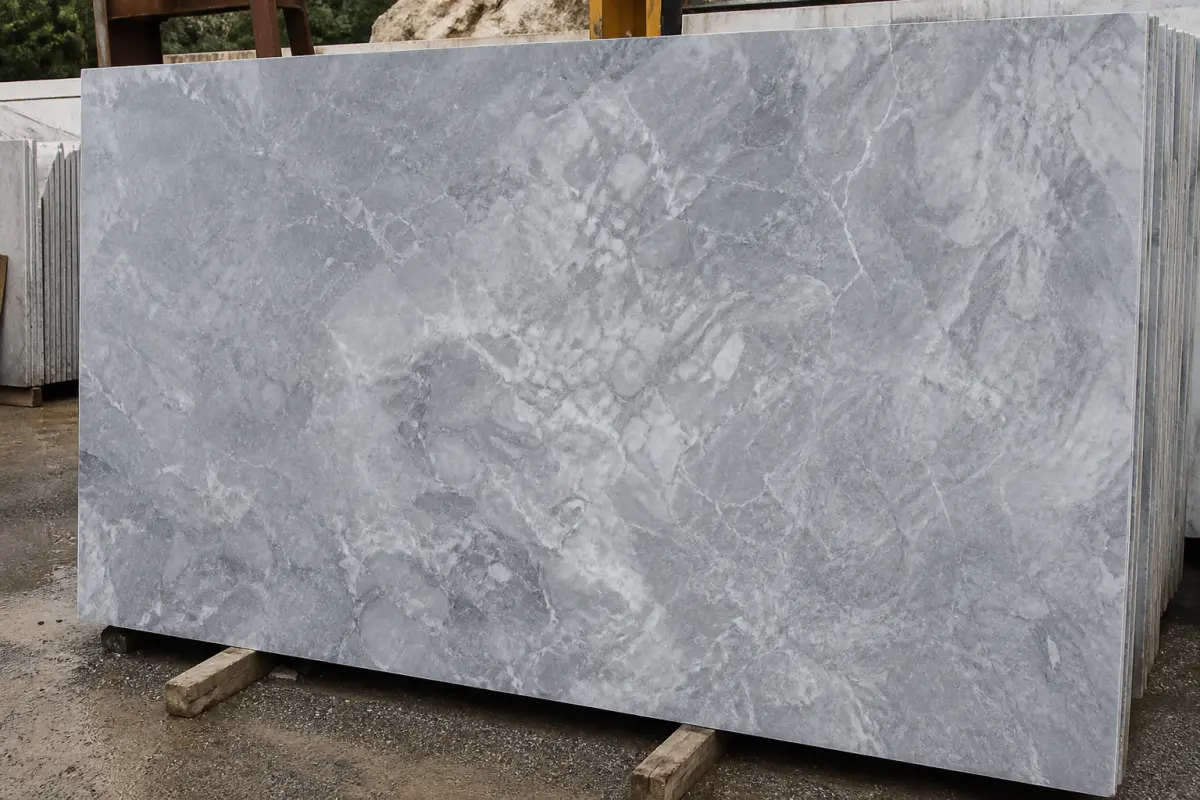
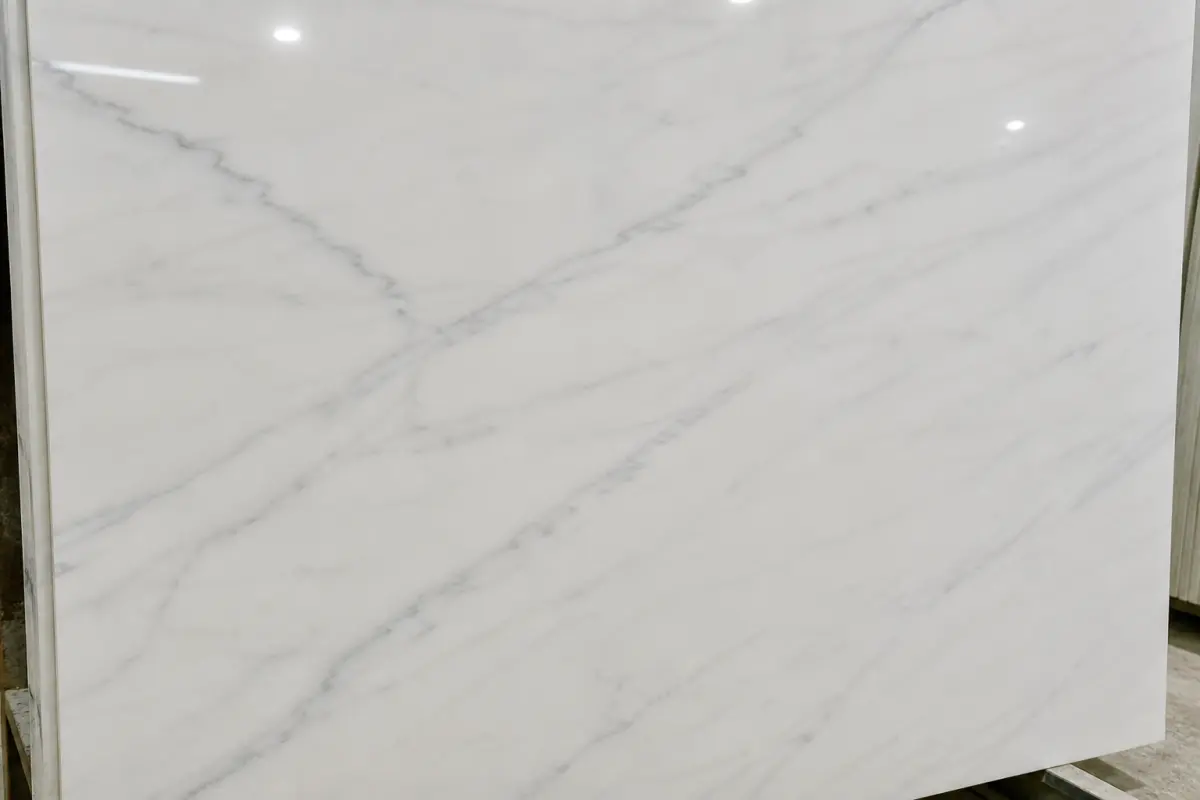
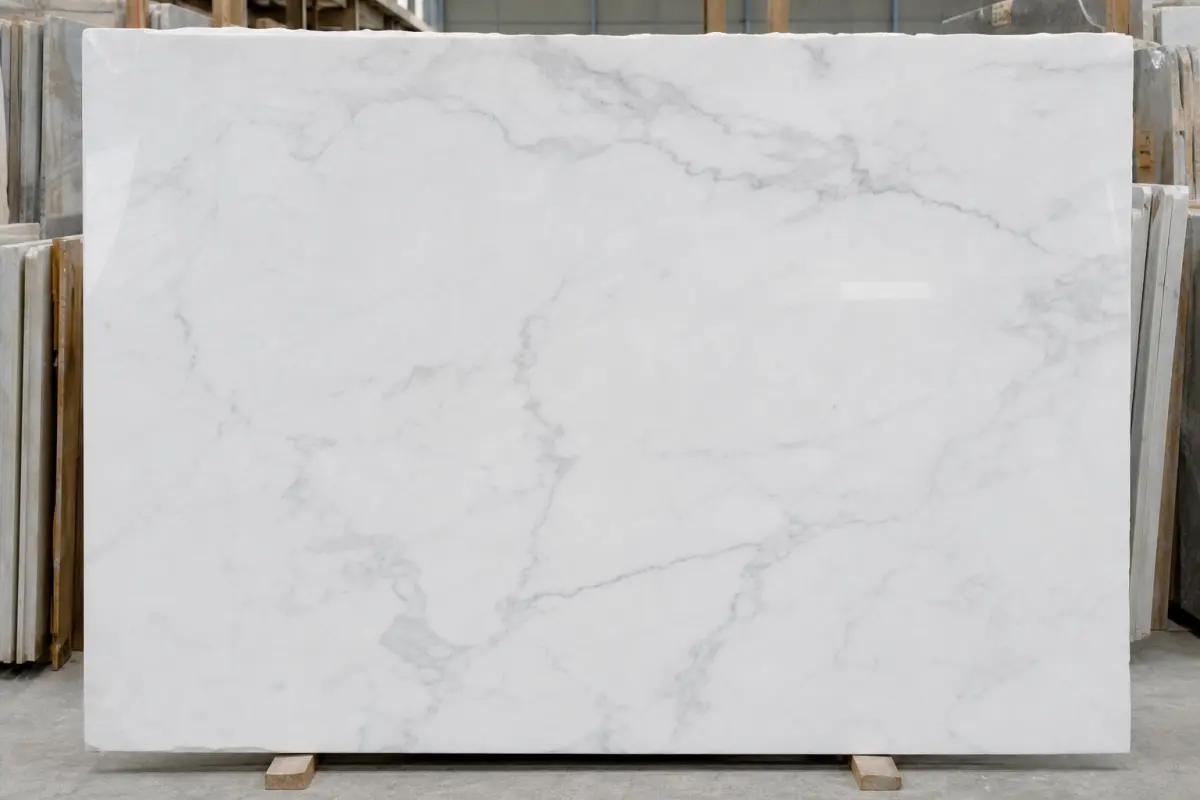
Commercial names travel faster than geography. Super White, Sunny White, Badal grey, Nanser black, honey onyx—these labels get used from Chitral gossip to Karachi yards. A serious KPK marble suppliers shortlist always pairs the name with a place. Super White Buner slabs are a SKU. “KPK white” is a wish. If you need the district-by-district geology tour, use the existing complete guide to marble districts in Khyber Pakhtunkhwa; this article is the buying overlay on top of that map: job type, road, verification.
The province as a chain, not a single quarry district
Think in nodes. Extraction nodes: Bampokha (also written Bampkha, Bumpukha, Pumpoo Khan, Pampu), Nanser, Chamla, Chagharzai in Buner; Swat leases toward Kabal and the hills above Mingora; Dir faces that may be granite-first. Processing nodes: Torwarsak and Swari for density of gangsaws; Mingora for Swat-linked polish and trade; Mardan and Peshawar for some subcontract polish and for banking. Export nodes: Karachi and Port Qasim for most ocean freight, with FOB Karachi as the Incoterm importers actually know how to LC.
Blocks move between these nodes daily. A Swat-leased block can be sawn in Buner. A Buner-sawn slab can be packed in Karachi by a trader who never visited Daggar. That is the supply chain, not a scandal. Scandal starts when the listing pretends all three nodes are one family factory. A marble factory KPK buyer should ask for is the processing node with photos of the current lot, plus a straight answer on the extraction node. If they cannot name the extraction node, you are buying a mix, which is fine for some grey flooring and fatal for a mosque dado that must match last year’s white.
Towns you will actually hear on the phone
In Buner: Daggar (district headquarters), Swari, Torwarsak, Elai. In Swat: Mingora, Kabal. South of the hills: Mardan, Nowshera, Peshawar as trucking and banking towns. If a supplier cannot place themselves on that short list, they are probably a mobile number in a group chat. Ask for a union-council name and a video pan. GPS is better. A pin that sits in a residential street in Hayatabad is not a gangsaw.
Buner’s factory belt versus Swat’s mine-and-Mingora mix
Buner is where you go when you need repeatable white and grey programmes, tile lines, and block volume. The Torwarsak–Swari belt is visible from the road: frames, gantries, block stacks, the smell of slurry. That density is why so many Gulf BOQs that say “Pakistan white” are in practice Buner white. Swat is where you go when the design wants colour that is not the Bampokha family, or when the contractor already has a Mingora relationship. Swat suppliers may be mine-strong and mill-light; they subcontract sawing. Neither district is “better.” They are different tools.
Do not duplicate a Buner factory tour here—that lives in the Buner-specific posts. The provincial question is sequencing. If your job is 8,000 m² of homogeneous lobby flooring, start Buner. If your job is a feature wall with green or banded material, start Swat and keep a Buner white as the field tile so the palette still has a workhorse. Cross-shop on Pakistan marketplace listings with origin declared, so the Swat offer and the Buner offer do not hide under one thumbnail.
Dir, Malakand, and the granite temptation
Upper and Lower Dir sit on a different mineral story. Provincial summaries have long treated Dir as granite-heavier than the marble-dominant Malakand belt. Buyers who type “marble supplier in KPK” and get a speckled grey slab should check the invoice stone type before they approve a sample. Dir granite can be the right answer for exteriors and kitchen tops when import prices spike. It is the wrong answer when the architect signed off on honed Buner white. Lower Dir connects more cleanly toward Chakdara and the road south; Upper Dir adds winter and haul risk. Pad lead times.
Malakand as a division name is not a mill address. It is the administrative bucket that contains Buner’s factory count and neighbouring processing. When a brochure says “Malakand marble,” ask which tehsil. Then ask whether primary sawing is in that tehsil or downstream. KPK marble suppliers who speak clearly about this split are the ones you can put on a second project. The others are selling the word north.
Choose by job type: blocks, slabs, or 60×60 tiles
Job type should pick the supplier more than district pride. Raw blocks (often 12–22 tons) want a lease-side or yard-side seller who can mark dimensions and say blasting versus wire saw. Slab programmes want a gangsaw owner with polish-line capacity and a habit of shade-lot letters. Tile programmes want calibre, bevel, and cartons, which is a different shed even when the stone is the same hill. A mill that is excellent at 3 cm hotel slabs may be careless at 60×60. Ask for the line you are buying, not a tour of the whole premises.
Black vanity lots from Nanser, honey onyx feature slabs, pink fancy pieces—these are small-quantity SKUs. They often sit with specialists rather than with the white-volume mill. You can still RFQ them on the same platform; just do not force one factory to be good at every colour. Buner black marble slabs and white field material can travel in one container if the mill or the Karachi packer knows how to separate crates. They should not share one vague “mixed marble” price without a packing list.
- Blocks: demand dimensions, estimated weight, extraction method, and a face photo with a painted mark.
- Slabs: thickness, finish, mesh, shade-lot code, bundle count, and a tape in the photo.
- Tiles: calibre, thickness, finish, carton count, and a rectified-or-not sentence.
- Feature stone: accept lot-by-lot photography; do not expect Super White uniformity.
- Always name Incoterm and loading town on the same line as the SKU.
The road south: Daggar to Mardan, Peshawar, and Karachi
Stone does not teleport to Port Qasim. From Buner and Swat the usual commercial story is truck to the plains—Mardan, Nowshera, then the southbound haul toward Karachi. Peshawar is the banking and paperwork city more than the stuffing city. Importers who write “deliver Karachi” without saying FOB, CFS, or ex-factory are buying an argument. Factories in Torwarsak often prefer ex-factory because they control the mill, not the highway. Traders prefer FOB because that is what the LC understands. Both are valid. Mix them up and you double-pay fuel.
Seasonality is not a tourist footnote. Summer load shedding slows polish. Winter in Dir and high Swat slows extraction. Political or security closures, when they happen, sit on the same roads as your blocks. Build calendar fat into hospitality programmes. If you need the exporter-shaped version of this geography, continue to Pakistan marble exporter from KPK after you have picked a district role. The exporter is a hat. The road is physics.
Power, tax, and why a cheap mill can miss a container date
PESCO shedding is part of the product in Malakand Division. Night shifts exist because days are not guaranteed. A mill quoting fourteen days on 1,200 m² in June is either running a generator budget you will pay for, or hoping. Ask how they sequence gangsaws when the feeder is down. You do not need to become an electricity engineer. You need a date that has a feeder story behind it. Post-PATA sales tax is the other quiet date-killer: a quote that omits tax looks cheaper until the bank wants a compliant invoice.
Verification at provincial scale is boring on purpose. NTN, sales-tax registration, mill address, and a video of the line beat a claim of “we are the biggest in KPK.” For a factory-direct hire inside Buner, use the playbook in how to buy factory-direct from a Buner marble supplier. For the province, keep two shortlisted mills in different towns when the programme is large enough to justify it. Blade breakage and transformer queues do not respect your opening date.
Verification: lease, gangsaw, NTN, and a video pan
Lease papers prove someone has a right to extract, not that your slab came from that face. Gangsaw photos prove capacity, not that your thickness will be 2 cm. NTN proves the business exists for the taxman. You want all three, plus a pan that starts on a block mark and ends on a bundle. Third-party inspection is cheap compared with a rejected hotel floor. Architects who cannot travel can still require that pan uploaded into the RFQ on StoneVaults. Profiles such as Zeex Naturals and AYAZ MARBLE give you a named starting point; they do not replace the lot photos.
Scams at provincial scale look like rented yards in Karachi with “Swat factory” painted on a banner, or like advance-fee stories that vanish after the deposit. Keep the northern-Pakistan protection checklist in your folder, and treat any supplier who refuses a mill address as a trader at best. Traders can be excellent. They should be labelled traders. A marble supplier in KPK who is proud of the mill will show it.
- Lease or offtake paper, mill video, and NTN before any deposit leaves the country.
- Inspection at the mill, then a second photo if the bundle stages in Mardan.
- Backup mill in another town when the programme is large enough to miss an opening date.
How architects and importers should split the RFQ
Architects should RFQ look and performance: shade band, finish, thickness, wet-area suitability, and a reject photo. Importers should RFQ commercial terms: MOQ, stuffing week, Incoterm, inspection window, and document set. If one person writes both into a single StoneVaults RFQ, the mill gets a document it can price. If the architect sends a Pinterest board to WhatsApp while the importer sends a spreadsheet to a trader, you will get two different stones. Put both on the marketplace under one buyer account.
Domestic KP contractors (Peshawar, Mardan, Abbottabad projects) can skip port language and still should not skip tax language. Ex-factory Torwarsak with the contractor’s own trucks is a clean structure. Import programmes should not copy that structure and then be surprised by Karachi packing invoices. Write the structure once. Repeat it.
Mardan and Nowshera as staging, not origin
Mardan and Nowshera show up on invoices because that is where trucks rest, where some polish is subcontracted, and where a few traders keep yards. They are not marble districts in the Buner sense. If a seller’s pin sits on the GT Road and the story is “our KPK factory,” ask whether the gangsaw is in Torwarsak and the yard is only staging. Staging is useful: you can inspect a sealed bundle closer to the motorway. Staging is also how origin gets laundered. Photograph the bundle at the mill and again at Mardan if both stops exist. A marble supplier in KPK who is comfortable with that double photo is usually comfortable with the stone.
Fuel spikes show up first on this southbound leg, not at the quarry face. When diesel jumps, mills that quoted FOB last month will try to reopen the trucking line while leaving the ex-mill number untouched. Freeze the Incoterm in the RFQ so that fight has a document. If you are running both a Peshawar mosque package and an export container off the same shade lot, split the trucks in Swari—do not send the export crates through a domestic site store and hope the leftover still matches. Shade lots hate being browsed by two projects at once.
Putting the buyer map to work on StoneVaults
Filter natural stone and Pakistan origin, then force yourself to tag each shortlisted seller as Buner mill, Swat mill/trader, Dir source, or Karachi exporter. That tag is the map. Compare two mills on the same SKU before you fall in love with a photo. Use contact if you need the RFQ routed and you do not want to guess the form. The platform will not drive the truck. It will stop you from treating Khyber Pakhtunkhwa as one shop with many WhatsApp faces.
Choose a marble supplier in KPK the way you would choose a fabricator at home: by the machine they own, the stone they can name, and the invoice they can issue. Buner for volume whites and greys, Swat for mine colour and Mingora relationships, Dir when granite or a specific lease is the point, Karachi when LC and stuffing are the point. Keep the road south in the price. Keep PESCO in the calendar. That is the practical province map. Everything else is a brochure.