Marble City Risalpur is KP’s flagship stone estate—and most slabs still originate in Malakand quarries. This guide traces the northern supply chain from lease to Risalpur gangsaw to export pack, and what buyers should ask when a supplier says “Risalpur factory.”
When a supplier says their stone is “from Marble City Risalpur,” overseas buyers picture a single gated industrial park where trucks enter empty and leave loaded with polished slabs. The reality is more useful: Marble City Risalpur is a planned processing estate near Nowshera, promoted by PASDEC and provincial industry departments, while the geology that feeds most gangsaws still comes from Malakand Division—Buner, Swat, and linked quarry districts hours to the north. Understanding that split prevents you from overpaying for a brand name without verifying block origin, saw quality, and export packing.
PASDEC’s public materials describe Risalpur as a cluster with infrastructure for marble and granite units—power, water, and machinery-pool access that scattered Buner sheds compete for on their own transformers. Machinery pools rent wire saws and related kit to discourage blasting on faces—a policy tie-in with our quarry tools research. Risalpur is not a replacement for Buner’s 500-factory density; it is a parallel node where some units relocate or expand when they want estate services and closer access to Peshawar and down-country trucking.
Where Risalpur factory stone actually originates
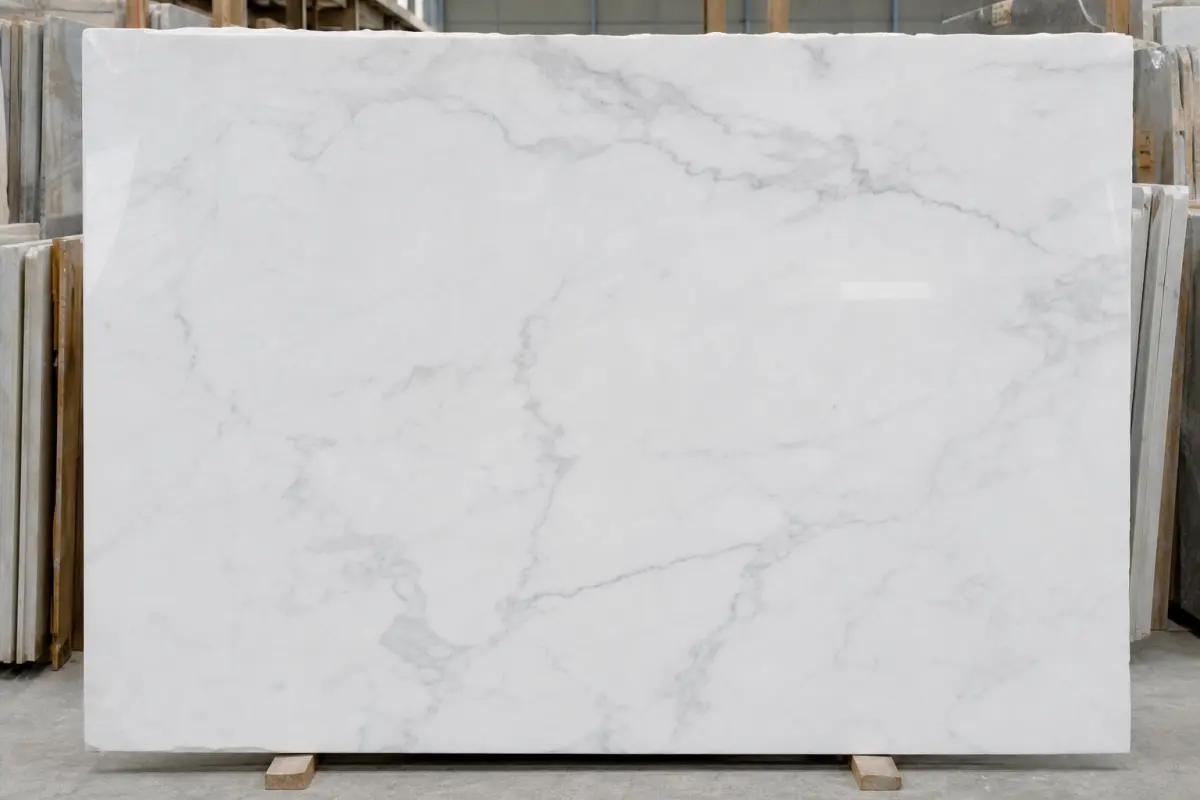
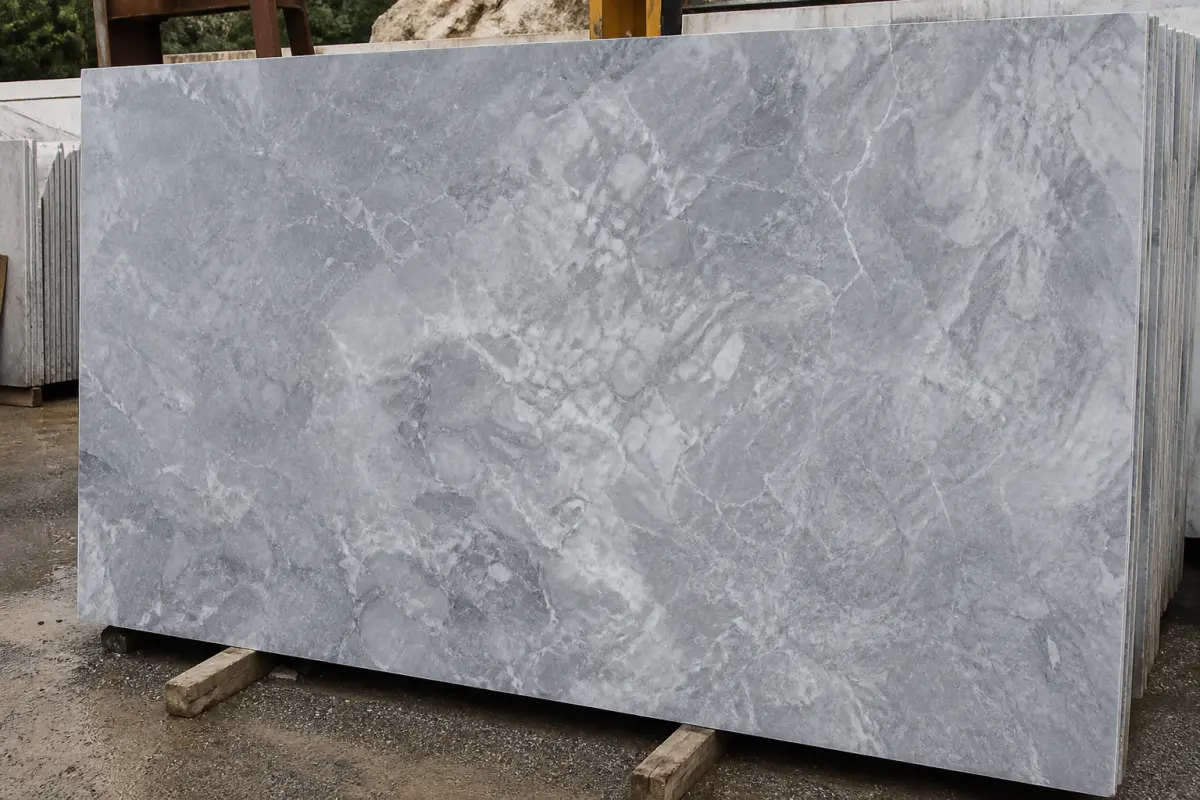
Most Risalpur-bound blocks arrive by road from northern leases. Bampokha and Nanser material may be sawn in Torwarsak or trucked as blocks to Risalpur gangsaws when owners maintain dual lines. Swat-origin stone similarly descends to Mingora consolidation points before heading south. A Badal grey slab labelled Risalpur ex-mill can still be Buner geology; the invoice location is not the quarry location unless the supplier proves both.
Buyers should ask three origin questions on every RFQ: where was the block extracted, where was it primary-sawn, and where was it polished and packed. Risalpur answers the second or third—not automatically the first. For programmes requiring traceable origin for marketing or maintenance manuals, insist on quarry dispatch documentation or block marks photographed before sawing.
Northern supply chain stages
The chain repeats across KP with local variations.
- Lease and extraction: Wire-sawn or blasted blocks leave faces in Buner, Swat, Mardan, or merged districts.
- Primary processing: Gangsaws in Torwarsak, Swari, Mingora area, or Risalpur convert blocks to slabs.
- Finishing: Resin where needed, mesh, polishing to honed or mirror finish.
- Aggregation: Traders in Peshawar or Karachi bundle mixed factories for container fill.
- Port: Karachi Port Qasim or dry-port stuffing for export—detailed in our logistics guide.
Electricity and tax hit differently at each node. A Risalpur unit on a stronger feeder may offer tighter lead times than a Buner shed on eight-hour power—compare our load shedding note when scheduling. Sales-tax treatment after the PATA phase-out applies to industrial units across erstwhile tribal areas; Risalpur’s settled-district status does not automatically describe your block’s upstream factory.
Why Risalpur matters to importers
Estate clustering promises environmental controls, wastewater handling, and safer blasting distances from villages—goals Buner’s scattered rows struggle to meet. For buyers, Risalpur signals a supplier investing in compliance and capacity beyond a backyard wire frame. It is not a guarantee of grade: geology and sorting still determine whether a white matches Bampokha No.1 spec.
Pair Risalpur quotes with northern quarry-direct quotes on StoneVaults. Browse raw blocks when you want to control sawing yourself or ship block to China. The northern supply chain is one river with many branches; Marble City Risalpur is a major confluence, not the only source.
Practical checklist for “Risalpur factory” claims
Request video of the gangsaw line with identifiable estate signage or nearby landmarks—not a stock clip from another province. Confirm whether slabs were polished on the same site or subcontracted back to Buner job shops. Ask packing location: some exporters stuff containers in Karachi regardless of mill address. Use structured RFQs on the Pakistan marketplace so location and product specs stay attached to the bid. Risalpur belongs in your supply map alongside Buner and Swat; it does not replace them.
PASDEC machinery pools and upstream quality
Risalpur’s connection to PASDEC machinery pools matters upstream: wire saws rented from provincial programmes improve block regularity before stone ever reaches estate gangsaws. Buyers who care about crack-free whites should ask whether upstream blocks were wire-cut—even if polishing happens in Risalpur—because blasting faces in Buner still send fractured material south. The supply chain is only as strong as the weakest extraction habit in the chain.
Compare Risalpur ex-mill quotes with Torwarsak quotes for the same commercial name on Badal grey slabs or white selections. Price differences often reflect power reliability and estate overhead, not different geology. Document both in your vendor scorecard for repeat programmes.
Environmental narrative and buyer ESG questions
International developers increasingly ask about wastewater and dust from stone processing. Estate marketing promises central treatment; scattered Buner rows face scrutiny in academic and legal literature. Importers need honest answers for ESG questionnaires—not greenwash. Ask Risalpur suppliers for whatever environmental monitoring exists; ask Buner partners for slurry handling practices. The northern supply chain’s reputation abroad will hinge on these answers as much as on polish quality.
Block traders versus estate factories
Some Risalpur units behave as block traders who only resell northern cubes without owning primary saws; others run full lines. Ask whether the supplier earns margin on block flipping or on value-added polish. Traders can still be honest if they disclose saw subcontractor names. Estate address alone does not prove integrated manufacturing—verify equipment on video the same way you would in Torwarsak.
When in doubt, order a single bundle trial before programme volume. Risalpur and Torwarsak sheds both benefit from buyers who invest in relationship after audit—not from one-off price wars on WhatsApp.