Pakistani white marble reaches US and Canadian yards as a niche, not a flood. This buyer guide is honest about long-haul freight, distributor lot sizes, honed versus polished, freeze-thaw limits, and when Buner stone beats Italian or Turkish on landed cost.
North America is not waiting for a Buner container. Walk a slab yard in New Jersey, Houston, Los Angeles, Toronto, or Vancouver and you will see Italy, Turkey, Brazil, Spain, India, and China long before you see a paint mark that says Bampokha. That is the honest starting point for anyone searching pakistan marble usa or pakistani marble canada. This guide is for the cases where the stone still makes landed sense: a price-sensitive commercial interior, a mosque or community hall whose committee already knows Pakistani names, a designer who wants a white that is not another Carrara lookalike, or a distributor willing to trial one crate. It is not a claim that Buner is about to own the US marble aisle.
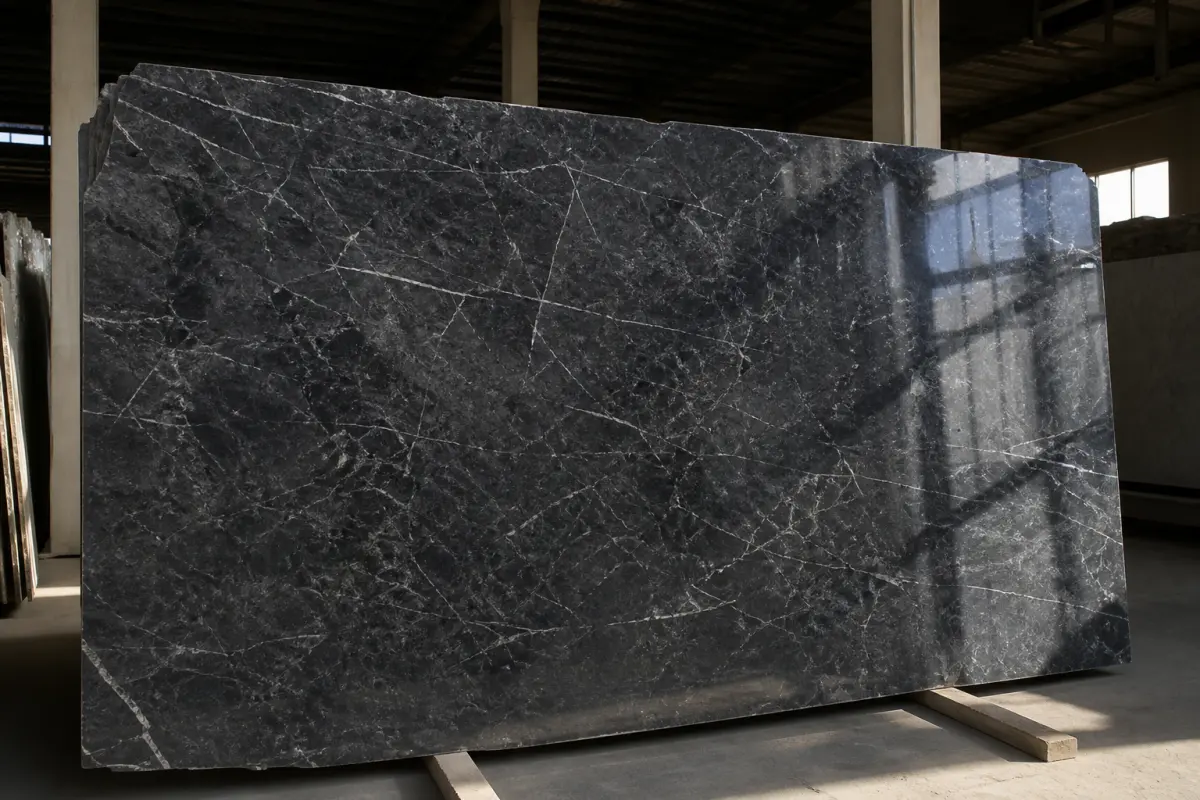
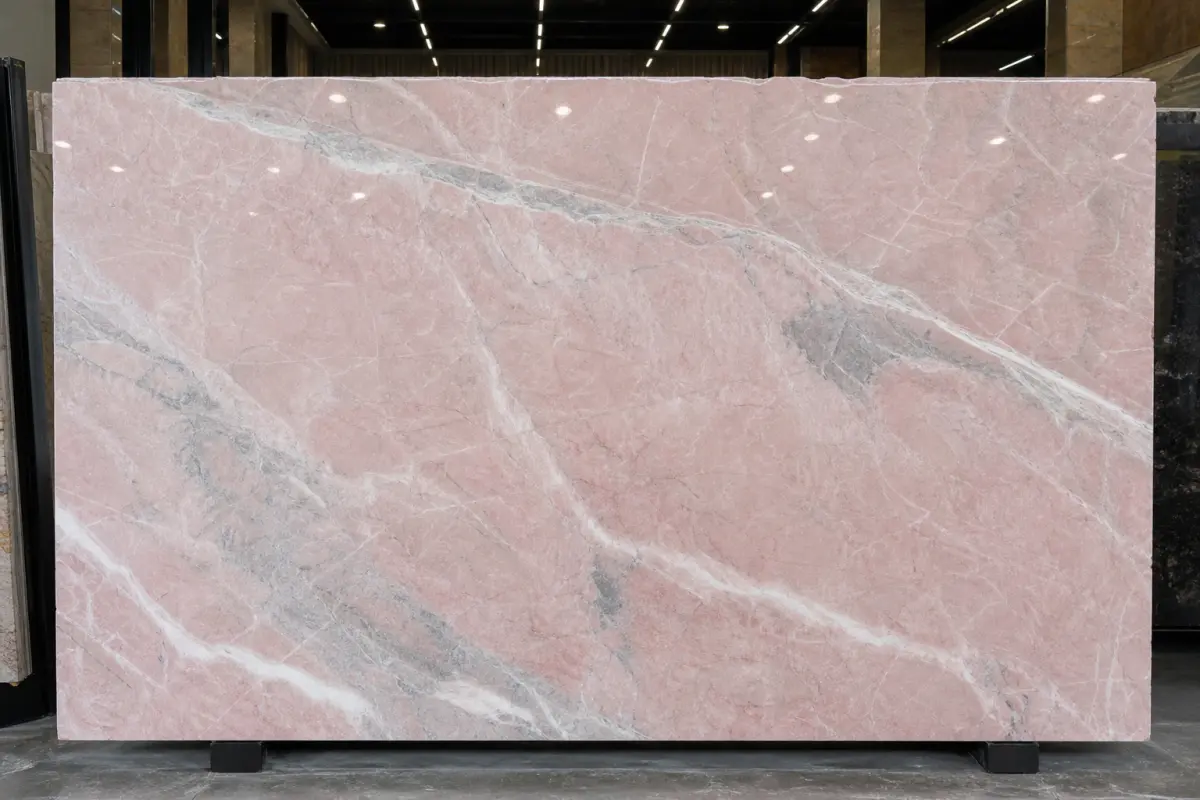
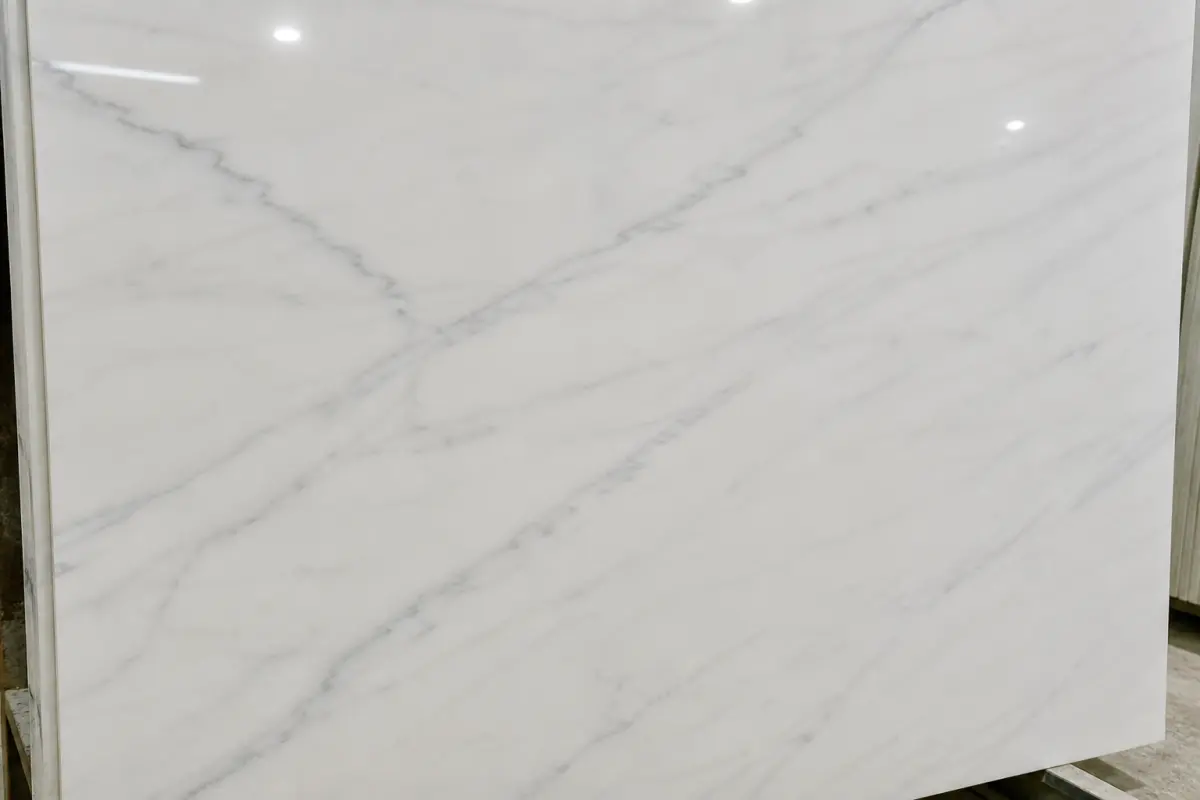
The stone itself is the same calcite white that Gulf hotels already buy: Bampokha (Pumpoo) selections, Super White sorts, commercial greys from Chamla and Chagharzai, occasional black from Nanser. What changes is freight, lot size, finish preference, climate honesty, and the fact that a US architect can specify Italian stone with a phone call while import marble from pakistan still looks like a project. Treat it as a project. Sample first. Count ocean days. Do not promise an exterior plaza in Calgary.
When landed cost actually works
Italian whites carry brand, consistency, and a distributor network that already holds inventory. Turkish whites sit in the middle: good logistics into the East Coast, familiar honed commercial looks, established brokers. Indian marbles compete hard on price into the same ports. Pakistani Buner whites win when the landed number—ex-mill Torwarsak, inland to Karachi Port Qasim, ocean to Newark, Houston, Savannah, Los Angeles, Vancouver, or Montreal, plus duty, trucking, and breakage reserve—undercuts the Italian or Turkish equivalent on a job that will accept a non-European origin. They also win when the buyer already trusts the quarry name from a previous Gulf or Pakistani project and wants continuity.
They lose when the spec is locked to a named Carrara quarry, when the yard needs next-week stock, when the quantity is three vanity slabs, or when the use is freeze-thaw exterior. Our look-and-cost comparison of Super White Buner versus imported Carrara is the right interior conversation. Do not stretch it into a US exterior cladding claim. Calcite marble etches, absorbs, and spalls in northern winters. Canadian building science is not a marketing objection. It is physics. Use granite or a rated exterior stone outside. Keep Buner white inside, away from de-icing salts.
Indian versus Pakistani comparisons belong in a separate brief—Indian marble vs Pakistani marble—because US yards already stock Indian whites. Pakistan’s pitch is not “cheaper than India on every SKU.” It is a different white family, a different mill cluster, and sometimes a better relationship with a specific Buner factory. Run samples side by side under the same light. If the Indian slab is already on the local rack at a similar landed number, the Pakistani container has to win on shade or on a story the client actually cares about. Origin romance is not a story. A mosque committee that wants stone from Khyber Pakhtunkhwa is a story. A hotel procurement office is not.
Long-haul containers and the calendar you should publish
Karachi to the US East Coast is often in the four-to-six-week water band, longer with transshipment. Gulf Coast similar. West Coast via Pacific routing or a long eastbound voyage can stretch further. Vancouver and Prince Rupert add a Canadian rail or truck tail. Montreal via the St. Lawrence is seasonal in a way Karachi–Jebel Ali never is. None of these are Doha times. A Buner mill that quotes “thirty days FOB” is talking about the Pakistani factory-to-port leg plus optimism. Add ocean, add discharge, add a possible exam, add trucking to a fabricator in Mississauga or Long Island. First-time importers should publish nine to fourteen weeks from approved sample to stone on a North American floor, then celebrate if it comes in faster.
Stuffing still happens at Karachi after the Swari or Torwarsak truck. The same inland risks apply: monsoon, Eid, load shedding at the polish line. Read quarry-to-Karachi logistics and Buner electricity before you give a New York GC a date you copied from a Gulf PI. Wooden crates need ISPM-15 heat treatment or fumigation. US and Canadian agriculture inspectors are not theoretical. Green timber from a Buner crate shop will stop a container.
Insurance should start at the factory gate if you can buy it, not at the vessel. Pakistani trucking claims culture is thin. Photograph bundles at the mill, at Qasim stuffing, and at US or Canadian destuff. Mesh-backed 2 cm slabs travel better upright in A-frames than as a flat stack. Onyx and thin whites need more foam than a mill uses for a Peshawar job. Pay for the pack. The ocean will collect otherwise.
Distributor lots versus project lots
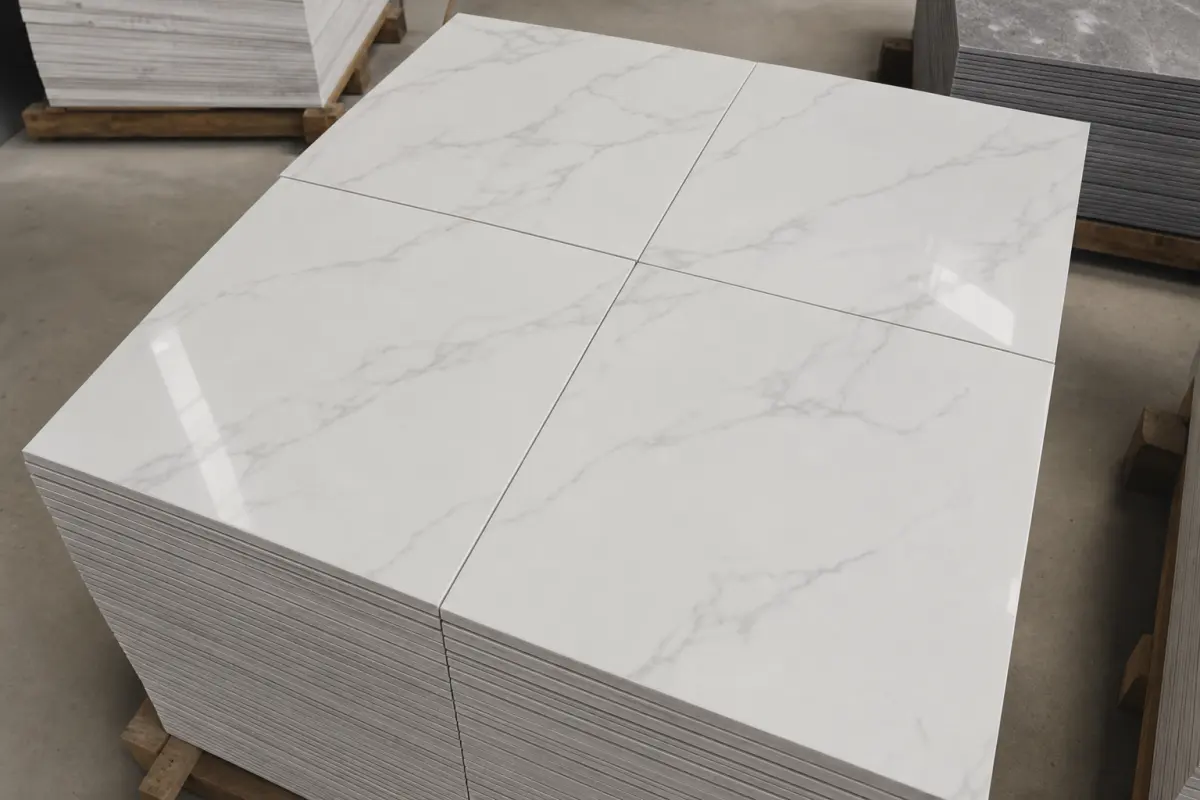
A US distributor rarely wants a 20-foot of one shade on a first date. They want a crate of 2 cm polished, a crate of honed, maybe a 60×60 tile stack, and a conversation. That is a small-lot problem for a Buner mill that thinks in containers. Solve it with a mixed trial: one A-frame of Bampokha No.1, one of Super White, a small tile crate of 60×60 Buner white, all from documented lots. Air-freight a 30 × 30 cm sample set first so the trial container is not the sample.
Project lots—a mosque in the GTA, a commercial lobby in Dallas, a residence in the Lower Mainland—can justify a dedicated container if square metres clear the ocean math. Run the numbers with a freight forwarder who has moved stone, not a general NVOCC who treats marble like garments. Payload on a 20-foot of 2 cm slabs is a design problem: too few slabs and you ship air, too many and you hit weight. Mills in Torwarsak who export to the Gulf already know this math. Ask them to show a prior stow plan. If they cannot, nominate the forwarder yourself.
LCL through a US consolidator sounds attractive for a kitchen dealer. It is how slabs get mixed, chipped, and delayed behind someone else’s cargo. For stone, FCL or a dedicated crate programme with a stone-savvy warehouse on the receiving end beats LCL except for true samples. Canada’s smaller market makes LCL more tempting and more painful. Budget a Toronto or Vancouver stone warehouse that will destuff and rack, not a general transload.
Honed versus polished: finish is a North American spec
Gulf hospitality often wants a mirror. US commercial interiors often want honed: less glare, kinder slip conversation, easier hiding of etch on a reception desk that will see lemon water. Leathered and brushed exist but are not Buner defaults; they are extra passes if the mill has the heads and the will. Put the finish on the RFQ in English the mill uses—honed, polished, 2 cm, 3 cm—and send a reference tile. A “matte” WhatsApp request produces whatever the last polish head left.
Residential US kitchens are a poor first target. Quartz and porcelain already own that fight. Where marble still wins is a feature bath, a fireplace surround, a mosque wudu area (with a serious sealing and maintenance talk), or a commercial floor whose designer wants stone and whose budget will not touch Calacatta. Vanity tops in 3 cm reduce flex. 2 cm needs a proper substrate. None of this is unique to Pakistani stone, but first-time importers skip it because they are busy fighting freight.
Resin fill that a Doha snagging consultant might reject can still fail a US architect who expected a cleaner field. Wire-sawn blocks help. Ask. Our international-projects note on Bampokha white for international work covers sorting habits; North America is simply less forgiving of “commercial export” language because the yard next door is selling Italian at a visible price.
Frost, exteriors, and other honesty
Do not sell Buner calcite as a freeze-thaw paving stone for Chicago, Minneapolis, Montreal, or Edmonton. Water gets in. Ice does the rest. Even a “mild” coastal Pacific Northwest exterior is a stain and etch problem more than a frost problem, and it is still a maintenance contract. Interior floors, walls, and wet rooms with the right finish are the lane. If a Canadian architect asks for exterior cladding, say no or switch materials. Losing the exterior line is how you keep the interior line.
Wet areas: sealers, pH-neutral cleaners, and an owner who will not use vinegar. Write it down. Mosque and community kitchens in particular will clean aggressively. Honed plus sealer plus a spare tile crate is the adult package. Polished white without a maintenance sheet is how you get a callback that no mill in Elai can fix from 11,000 kilometres away.
Seismic and fire assemblies in US commercial work are the architect’s and engineer’s file, not the mill’s. Thickness for floors is usually 2 cm on a proper setting bed. Do not let a mill talk you into 1.8 cm “export” that a US installer has never seen. Calibrate.
Samples, testing, and documents
Air-courier a set of 30 × 30 cm tiles in both finishes, plus a small slab offcut if the mill will cut one, from the actual production family—not from a showroom leftover in Mingora. Peshawar and Islamabad courier counters are the usual exit. Five to ten days to a US office is normal if paperwork is clean. Canada adds a broker on the little box too; use one.
Some commercial specs ask for ASTM C503 marble dimension-stone language, absorption, and flexural numbers. Buner mills do not all keep a test file. Budget a third-party lab on a sample if the GC’s spec sheet requires it. Do not invent a datasheet. A missing test is cheaper than a fake one.
The Pakistan export set is the same spine as any other destination: commercial invoice, packing list, bill of lading, origin if asked, fumigation, and an HS description that matches slabs versus blocks. US customs and CBSA both care that the description matches the box. Our export documents guide is the factory-side list. Add importer-of-record details, a US or Canadian customs broker, and a Product of Pakistan marking habit that the mill may not have used for Gulf work. Letters of credit appear with larger distributors; staged T/T plus inspection photos is more common with a first crate. If a mill wants full cash before production and will not do photos, stop—scam patterns in northern Pakistan stone are not a US-only problem.
Duty rates change and are not this article’s job to freeze in a paragraph. Ask the broker for the current HTS or Canadian tariff line on polished marble slabs or tiles from Pakistan. Do not copy a Gulf landed-cost spreadsheet and change the port name. Ocean, exam risk, and inland US trucking will dominate the gap more than a mill’s rupee quote.
Who should be on the RFQ
Name the receiving warehouse city, not “USA.” Name honed or polished. Name thickness and a calibre tolerance. Name whether 60×60 tile is required. Name crate standard and ISPM-15. Name whether you will accept Chamla commercial if Bampokha No.1 volume is tight—usually no, unless the mock-up says yes. Point mills at Bampokha No.1 and Super White as the two whites worth the ocean. Greys can fill a mixed container if the yard wants a second SKU; they should not replace the white the client approved.
Verified exporters who already crate for long-haul GCC work are better first partners than a domestic-only Swari shed. Browse Pakistan listings, read factory profiles such as Zeex Naturals and Ayaz Marble, and send one RFQ through the online RFQ path. MOQ honesty belongs in that RFQ: see wholesale MOQ and Incoterms. A mill that only wants 20-foot exclusive will not be your sample vendor. A mill that will crate four A-frames and hold the rest of the block family is the one you want on a first US or Canadian date.
- Sample by air from the production family, not from a Mingora showroom.
- Honed for commercial interiors unless the designer insists on polish.
- No freeze-thaw exterior promises on calcite Buner white.
- ISPM-15 crates, factory-gate photos, Qasim stuffing photos, destuff photos.
- Landed-cost model with a stone forwarder before the PI is celebrated.
- Spare crate in the receiving warehouse until the punch list is signed.
Diaspora projects versus distributor shelves
Canadian and US mosque committees, community halls, and Pakistani-owned commercial fit-outs are the demand that already knows Buner names. They will tolerate a longer ocean wait if the stone matches a Peshawar or Islamabad reference they trust. They will not tolerate a surprise grey field. Give them the same mock-up discipline you would give a Doha operator, in English and in Urdu if that is how the committee works, and keep a spare crate in the receiving city for the inevitable extra wudu bench.
A general stone distributor in New Jersey or the GTA is a harder first customer. Their salespeople sell what is on the rack this week. A Pakistani white that arrives in nine weeks as a unique lot has to be pre-sold or it becomes a discount problem. If you want that channel, start with a fabricator who already has a job, not with a consignment hope. Daggar and Torwarsak mills understand job-based POs. They do not understand North American consignment culture, and you should not teach them on your own inventory risk.
Pakistani white marble in the USA and Canada is a niche that pays when you are honest about freight, finish, and climate, and when you treat Buner as a mill you can document rather than a bargain bin. It fails when you copy a Doha hotel PI, change the port to Newark, and hope. Start with samples, a small crate, and a mill that already knows how to pack for salt air. If the landed number still beats the Italian or Turkish slab on that job, ship the container. If it does not, you learned it in a crate, not in a 20-foot of stone you cannot sell.